
Cell Harvesting Device Market Trends, Size & Forecast by 2034
Coverage: By Application (Umbilical Cord, Bone Marrow, Peripheral Blood, Adipose Tissue, Others); End User (Hospitals, Academic Centers, Biotechnology Companies, Others), and Geography (North America, Europe, Asia Pacific, and South and Central America)
- Status : Data Released
- Report Code : TIPRE00014845
- Category : Life Sciences
- No. of Pages : 150
- Available Report Formats :


- Last update date : September 09, 2026


2025 Market Size
US$ 484.16 Mn
Base year value
2034 Forecast
US$ 1,037.3 Mn
Projected by 2034
CAGR 2026-2034
8.83 %
Growth rate
Addressable Market
US$ 6,812.23 Mn
(2026-2034)
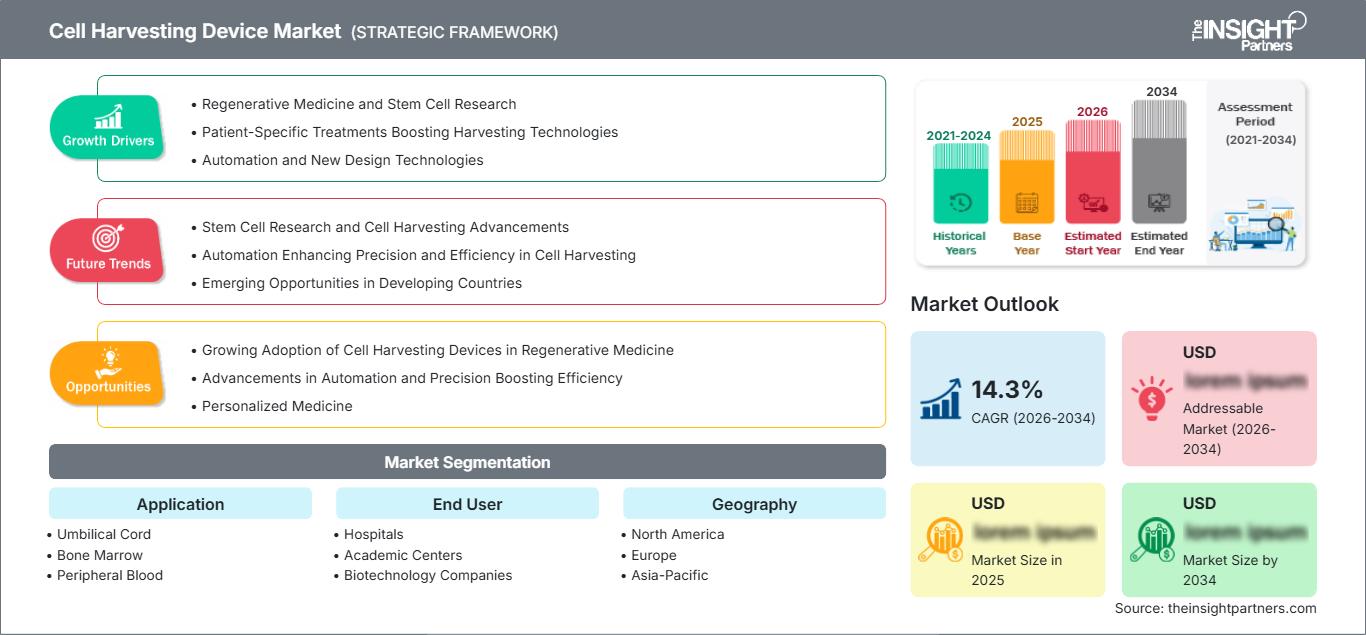
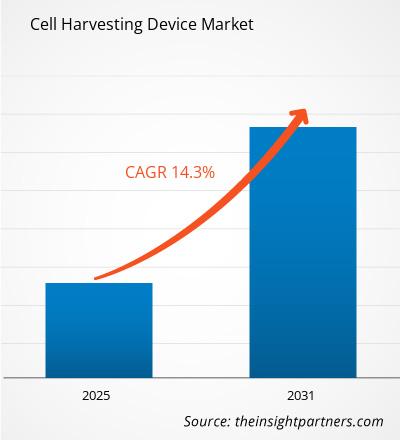
The Cell Harvesting Device Market was valued at US$ 484.16 Million in 2025 and is projected to reach US$ 1,037.3 Million by 2034. It is expected to register a CAGR of 8.83% during 2026–2034. Market expansion reflects increasing requirements for reliable cell collection, separation, concentration, and transfer across transplantation, regenerative medicine, cellular therapy development, biobanking, and translational research workflows.
Across North America, the Cell Harvesting Device Market size is estimated to expand at a CAGR of 8.1–8.7% during 2026–2034. Growth is supported by established transplant infrastructure, rising use of peripheral blood stem cells, and biotechnology investment in closed processing. In 2024, 22,579 hematopoietic cell transplants were reported in the US, while peripheral blood was the most frequently used cell source.
Cell Harvesting Device Market Assessment and Insights
- North America: Accounted for a 36–40% share in 2025 and is projected to grow at a CAGR of 8.1–8.7% between 2026–2034, supported by transplant centers, biotechnology clusters, automated apheresis adoption, and regulated cellular manufacturing.
- US: Represented 82–86% of North American revenue in 2025 and is expected to record a CAGR of 8.2–8.8% during 2026–2034, led by peripheral blood collection and cell therapy manufacturing.
- Europe: Held a 27–31% share in 2025 and is forecast to expand at a CAGR of 7.8–8.4% during 2026–2034. Germany leads regional adoption, followed by the UK and France.
- Asia Pacific: Captured a 22–26% share in 2025 and is likely to register a CAGR of 9.6–10.2% during 2026–2034, with China, Japan, South Korea, and India supporting clinical and manufacturing investment.
- Largest Segment: Peripheral blood accounted for a 38–42% market share in 2025 and is projected to grow at a CAGR of 8.4–9.0% during 2026–2034, reflecting its established collection efficiency.
- High Growth Segment: Biotechnology companies represented a 24–28% market share in 2025 and are expected to register a CAGR of 10.0–10.6% during 2026–2034 as cell therapy pipelines move toward clinical production.
- Key companies analyzed in detail: Argos Technologies, Inc., Revvity, Inc., BRAND GMBH + CO KG, Arthrex, Inc., AVITA Medical, Inc., Tomtec Inc., Terumo Corporation, Teleflex Incorporated, Bertin Technologies SAS, and Sartorius AG.
Source: The Insight Partners' analysis based on proprietary research, government publications, company annual reports, investor presentations, industry databases, and expert interviews.
From mechanical manual systems for aspiration, centrifugation, and manipulation, device architecture has shifted towards programmable closed systems that eliminate variability introduced by the operators. More manufacturers are integrating sterile single-use disposables, automated centrifugation, washing, and process documentation systems. The production process is thus moving towards an equipment-consumables business model where validated single-use systems generate repeat demand. Facilities will also require scalable solutions capable of handling multiple types of cells without costly renovations or additional equipment.
The use of such technology will keep on growing until 2034 in Asian bio-technology centers, local transplant centers, and processing laboratories. The regulatory concerns on traceability, suitability of the donors, contamination control, and reproducibility in manufacturing will favor those suppliers who offer the validated workflow as opposed to the devices alone. The government investment in the cellular therapy equipment, national donor registry, and biobanking infrastructure will fuel the demand, while the collaborative development between the device supplier, therapy developer, and contract manufacturer will fast-track the qualification of the collection to formulation process.
Cell Harvesting Device Market Report Scope
| Report Attribute | Details |
|---|---|
| Market size in 2025 | US$ 484.16 Million |
| Market Size by 2034 | US$ 1,037.3 Million |
| Global CAGR (2026 - 2034) | 8.83% |
| Historical Data | 2021-2024 |
| Forecast period | 2026-2034 |
Cell Harvesting Device Market Analysis
The primary driver contributing towards the expansion of Cell Harvesting Device market is attributable to the growing intersection between hematopoietic transplantation, regenerative medicines and autologous therapies manufacturing. The supply chain begins with the demand side starting from the donors, hospitals, blood banks, tissue laboratories, and cell banks up to the contract manufacturing organizations and therapy developers. These stages are characterized by controlled harvesting, separation, washing, concentrating and transferring. The World Health Organization estimated that 1.5 million hematopoietic stem cell transplants have been done; hence, there is a clinically established basis for harvesting.
Suppliers' supply will be based on precision parts, sterile plastics, pumps, centrifuges, sensors, disposables and other application-specific accessories. Thus, procurement will take into account uptime, availability, technical support, protocol flexibility, documentation and price per batch harvested. Technical support in the region for suppliers will be more beneficial when equipment qualification and training influence installation.
The analysis of the Cell Harvesting Device market report reveals competition between various companies engaged in providing equipment for laboratories, medical technology companies, and bioprocessing platform vendors. The companies Terumo Corporation and Sartorius AG hold an important position in closed cellular workflows, whereas Teleflex Incorporated and Arthrex, Inc. specialize in procedure-based cell collection devices. The firms such as Argos Technologies, Inc., BRAND GMBH + CO KG, Bertin Technologies SAS, Tomtec Inc., Revvity, Inc., and AVITA Medical, Inc. operate in the laboratory equipment segment or processing/analysis/regenerative medicine.
The investments are shifting from mere efficiency of individual products to workflow-oriented solutions. Manufacturers are offering their systems based on reduced open handling, repeatable recovery, digital documentation, and ability to work in downstream expansion/cryopreservation. Sartorius introduced the Eveo Cell Therapy Platform in March 2026, intended to combine selection, activation, expansion, washing, concentration, and formulation in closed production process.
● REPORT CUSTOMIZATION
Tailor This Report To Align With Your Specific Business Requirements
This report can be customized to align precisely with your business objectives, scope, and target markets. Customization options include tailored segmentation, geography, competitive analysis, and strategic insights to support informed decision-making.
Customize This Report →WHAT YOU CAN ADJUST
- ● Segmentations
- ● Geography
- ● Competitive Analysis
- ● Language Preferences
Cell Harvesting Device Market: Strategic Insights
Regional Insights
North America Cell Harvesting Device Market
North America accounted for a 36–40% Cell Harvesting Device Market share in 2025 and is forecast to register a CAGR of 8.1–8.7% during 2026–2034. The region benefits from mature apheresis networks, accredited transplant centers, cord blood registries, advanced biotechnology clusters, and broad clinical use of peripheral blood stem cells. US registry infrastructure contained more than 9.4 million potential adult donors and over 247,900 cord blood units in fiscal 2025, supporting recurring requirements for collection and processing equipment.
The contribution of Canada comes through publicly funded organ transplant programs, university hospitals, and cell-processing research, whereas Mexico offers select chances through private hospitals and clinical laboratories. Automated, closed, and digitized systems have become preferred options when it comes to procurement due to labor availability and batch traceability impacting operations economics. The regional suppliers also gain from the need for sterile disposable sets, preventive maintenance, procedure development, and personnel training.
U.S. Cell Harvesting Device Market
United States constitutes the 82-86% share of revenue in North America and is anticipated to grow at a CAGR of 8.2-8.8% between 2026 and 2034. The application scope includes centers offering comprehensive cancer services, centers of blood collection, centers for biotechnology, academic centers of medicine, and commercial centers of cell therapy. For 2024, the United States centers conducted 22,579 Hematopoietic cell transplants, which include 6,646 from unrelated donors and 3,756 related donor transplants, continuing the use of apheresis, marrow collection and processing machines.
Peripheral blood continues to dominate in regular collections since it constitutes 77% of related donor sources and 86% of unrelated donor sources according to HRSA. Terumo Corporation, Sartorius AG, Revvity, Inc., Teleflex Incorporated, Arthrex, Inc., and Argos Technologies, Inc. have the presence in commercial operations. FDA oversight of cellular therapies and the devices involved promotes closed system solutions, electronic traceability, validated disposables, and scalable platforms, which could link clinical and commercial development.
Europe Cell Harvesting Device Market
Europe accounted for a market share of 27–31% in 2025 and is anticipated to have a CAGR of 7.8–8.4% for the period 2026–2034. In 2023, the region conducted 47,731 hematopoietic cell transplants and 6,042 advanced cellular therapy recipients, indicating established demand for collection and processing processes. Germany dominates due to its hospitals, bioprocessing infrastructure, and implementation of quality-controlled cell manufacturing.
Expertise in transplantation, along with translational research and advanced therapy manufacturing capabilities, exists in the UK. The procurement culture in the UK favors modular machinery which will be capable of facilitating academic processing before moving to production operations. Dominance in Germany is supplemented by life science engineering, contract manufacturing, and technical services in the country.
France provides hospital transplantation and biotechnology manufacturing capabilities, and Italy maintains specialized hematology facilities. Spain provides the contribution via excellent donor and transplantation coordination. These markets emphasize regulatory compliance in accordance with Medical Device Regulation, sterile consumables, safety of operators, and consistent documentation of process. The country leaders are Germany, the UK, and France.
APAC Cell Harvesting Device Market
Asia Pacific held a 22% to 26% market share in 2025 and is expected to witness a CAGR of 9.6% to 10.2% between 2026 and 2034. China holds the leading position via increasing biotechnology capabilities, hospital capacity, and its own pipeline for cell therapy. Japan has a favorable regulatory regime for regenerative medicine and hence has a favorable environment for clinical translation.
South Korea utilizes the combination of advanced hospitals and biologics manufacturing expertise. India presents prospects via the expansion of the transplant market and the affordable laboratory automation. Australia provides clinical research and donor services with accreditation. The growing demands of the region include compact automation, locally available consumables, and systems able to work in both research and clinical settings.
Middle East & Africa Cell Harvesting Device Market
MEA’s forecasted CAGR for 2026–2034 is estimated at 7.0%–7.6%. Leading investment activities include tertiary care hospitals, oncology services, and healthcare infrastructure development in Saudi Arabia; support of private medical centers and specialized laboratories in UAE; and transplantation in sub-Saharan Africa and academic research in South Africa.
In other countries of MEA, adoption of the technology is confined to referral hospitals due to limited financing, shortage of specialists, and import of consumables. Business prospects are expected to arise in the area of devices with extended service life and distributor-oriented business model.
Segmentation Analysis
Application
The Cell Harvesting Device Market scope across application sources reflects differences in collection volume, cell concentration, procedure setting, donor burden, and downstream processing. The application segment is forecast to expand at a CAGR of 8.5–9.1% during 2026–2034. Peripheral blood remains the largest source because mobilized collection is established in transplantation and cellular therapy. Adipose tissue is gaining strategic relevance in regenerative workflows, while marrow and cord blood retain specialized clinical roles.
- Umbilical Cord: Cord blood supports allogeneic transplantation and biobanking because collection is noninvasive and units can be stored for future matching. Demand centers on sterile collection kits, volume reduction, cryopreservation preparation, and traceability.
- Bone Marrow: Bone marrow harvesting remains strategically important for hematologic transplantation, orthopedic biologics, and regenerative procedures. Device selection emphasizes aspiration control, reduced dilution, cell recovery, procedural efficiency, and compatibility with concentration systems.
- Peripheral Blood: Peripheral blood leads application demand owing to repeatable apheresis collection, established mobilization protocols, and suitability for autologous and allogeneic therapies. Its position supports high utilization of collection sets and processing consumables.
- Adipose Tissue: Adipose tissue provides an accessible source for stromal vascular and regenerative research workflows. Adoption depends on standardized tissue dissociation, closed processing, cell viability, regulatory classification, and reproducible separation from heterogeneous material.
End User
End-user segment in the Cell Harvesting Device Market demand is projected to record a CAGR of 8.9–9.5% during 2026–2034. Hospitals represent the principal installed base because transplantation and procedural harvesting require clinical oversight. Biotechnology companies are the fastest-growing users as therapy sponsors internalize process development and pilot manufacturing. Academic centers influence protocol innovation and early validation, creating downstream opportunities when workflows transfer into commercial production.
- Hospitals: Hospitals require dependable systems for transplant collection, marrow aspiration, perioperative processing, and therapeutic cell preparation. Procurement prioritizes clinical evidence, staff usability, infection control, service coverage, and compatibility with existing workflows.
- Academic Centers: Academic centers generate demand through translational studies, investigator-led trials, and process-development programs. Flexible platforms are preferred because laboratories process diverse cell types, small batches, and frequently changing experimental protocols.
- Biotechnology Companies: Biotechnology companies seek closed, scalable, and digitally traceable platforms that support technology transfer from development to clinical manufacturing. Their purchasing decisions emphasize reproducibility, regulatory documentation, automation, and integration with downstream processing.
Opportunity Snapshot
| End User | Revenue Contribution (High/Medium/Low) | Trend Tag | Adoption Stage (Emerging/Scaling/Mature) |
| Hospitals | High | Closed Collection | Mature |
| Academic Centers | Medium | Translational Workflows | Scaling |
| Biotechnology Companies | High | Therapy Scale-up | Scaling |
| Others | Low | Distributed Processing | Emerging |
Cell Harvesting Device Market Growth Drivers and Impact Analysis
Expansion of Hematopoietic Transplant and Donor Infrastructure
Established transplant activity creates recurring demand for harvesting instruments, collection sets, aspiration tools, and cell-processing consumables. HRSA reported more than 8,400 unrelated blood stem cell transplants facilitated during fiscal 2025, including over 7,200 for US patients. Peripheral blood, marrow, and cord blood require distinct collection methods, encouraging hospitals to maintain multiple validated workflows. Expanding donor registries also increases matching opportunities and the number of collections undertaken. The commercial impact extends beyond initial equipment purchases because each procedure consumes sterile tubing, bags, filters, anticoagulant-compatible components, and quality-control materials. Manufacturers that provide protocol support, operator education, and dependable supply continuity can retain accounts over long replacement cycles while generating recurring consumable revenue.
Commercialization of Autologous and Allogeneic Cell Therapies
As cellular therapies progress from clinical trials into routine treatment, harvesting becomes a controlled manufacturing step rather than an isolated clinical procedure. FDA’s licensed product list includes autologous therapies, cord blood products, engineered immune cells, and other cellular products, indicating broadening regulatory experience across cell-based modalities. Therapy developers require consistent starting material, viable cell recovery, documented chain of identity, and minimal contamination risk. These requirements favor closed collection and processing systems with electronic records and validated disposables. The market impact is strongest among biotechnology companies and specialist treatment centers, where failed collections can delay production slots or patient dosing. Equipment suppliers can capture additional value by integrating harvesting with washing, concentration, expansion, formulation, and cryopreservation preparation.
Shift Toward Closed, Automated, and Repeatable Processing
Labor-intensive open processing exposes manufacturers to operator variability, contamination events, documentation burdens, and limitations on facility throughput. Closed automation addresses these constraints by standardizing fluid movement, centrifugation, washing, concentration, and transfer. Terumo Blood and Cell Technologies demonstrated an integrated CAR-T workflow capable of producing more than 12 billion cells in seven to eight days, with a twofold increase in transduction efficiency over manual culture. Although performance depends on the complete workflow, the development illustrates why users are evaluating connected platforms. Automation can reduce cleanroom interventions, enable parallel processing, and support decentralized manufacturing. This shift increases demand for sensors, software, disposable flow paths, and interoperable equipment while raising expectations for cybersecurity, data integrity, and technical service.
Cell Harvesting Device Market Future Trends
Integrated Collection-to-Formulation Workflows
Cell Harvesting Device Market trends will increasingly favor platforms that connect collection with selection, washing, concentration, expansion, and final formulation. Manufacturers are expected to standardize interfaces, data formats, disposable connectors, and process controls so operators can transfer material without repeated open manipulation. Integrated systems could reduce manual documentation, cleanroom occupancy, and batch-to-batch variation while improving chain-of-custody visibility. Sartorius reported that its Eveo configuration enables one operator to process eight patient batches in space conventionally used for two batches, illustrating the direction of platform development. Adoption will initially concentrate among commercial therapy manufacturers and high-volume academic centers before extending to regional treatment networks.
Decentralized and Point-of-Care Cell Processing
Decentralized manufacturing will influence device design as therapy sponsors seek shorter transport times and improved access beyond major production hubs. Future harvesting platforms will require smaller footprints, simplified training, remote monitoring, automated release checks, and preconfigured protocols. Hospitals may process patient-specific starting material near treatment sites while centralized teams supervise data and quality performance. The model is particularly relevant where cell viability declines during logistics or cryogenic transport adds cost. Commercial success will depend on regulatory acceptance of standardized multi-site operations, robust identity controls, and consistent consumable supply. Suppliers able to combine equipment, software, validation packages, and remote support will be positioned to serve distributed networks.
Cell Harvesting Device Market Opportunities
Localization of Systems and Consumables in Asia Pacific
Cell Harvesting Device Market Forecasts identify Asia Pacific as the fastest-growing regional opportunity, with a projected CAGR of 9.6–10.2% during 2026–2034. Manufacturers can address this expansion through localized sterile consumable production, regional repair centers, multilingual software, and protocols adapted to hospital and biotechnology workflows. China, Japan, South Korea, India, and Australia differ materially in regulation, reimbursement, clinical capacity, and purchasing power, making country-specific commercialization essential. Partnerships with distributors, transplant institutions, and contract manufacturers can shorten qualification cycles. Investment should prioritize dependable supply, technician training, and modular systems that allow customers to begin with research applications and add regulated processing capabilities as utilization increases.
Workflow Services for Emerging Biotechnology Companies
Fast-growing biotechnology companies require more than equipment because early development teams may lack internal expertise in collection protocol optimization, device qualification, and technology transfer. Suppliers can create differentiated revenue streams through process characterization, consumable selection, operator training, validation documentation, and manufacturing-readiness assessments. The opportunity is strongest when a therapy advances from academic research into multicenter trials, where inconsistent harvesting can undermine comparability. Vendors can establish long-term positions by supporting protocol design before pivotal studies and maintaining hardware continuity through commercialization. A service-led model also reduces customer switching because validated procedures, digital templates, and trained operators become embedded in the manufacturing system, strengthening recurring demand for compatible single-use materials.
Recent Developments
- May 2026: Terumo Corporation, through Terumo Blood and Cell Technologies, entered a strategic collaboration with Steminent Biotherapeutics to advance late-stage manufacturing readiness for mesenchymal stem cell therapies. The collaboration focuses on automated, scalable cell expansion using Terumo’s platform and addresses process repeatability, clinical scale-up, and transition toward commercial manufacturing.
- March 2026: Sartorius AG launched the Eveo Cell Therapy Platform for integrated autologous cell therapy production and quality control. The modular system combines selection, activation, gene modification, expansion, washing, concentration, and formulation. Sartorius stated that its compact, multi-parallel configuration could increase output within existing cleanroom space and reduce manufacturing costs in CAR-T processes.
- June 2025: Terumo Corporation, through Terumo Blood and Cell Technologies, published an integrated three-in-one CAR-T workflow combining activation, viral transduction, and expansion on its Quantum platform. The protocol consistently produced more than 12 billion CAR-T cells within seven to eight days and demonstrated higher transduction efficiency than manual culture.
Frequently Asked Questions

- Comprehensive Market Sizing and Forecast Analysis
- Detailed Segmentation Analysis
- In-Depth Market Dynamics Assessment
- Regional and Country-Level Insights
- Competitive Landscape and Company Benchmarking
- Strategic Business Intelligence
Recent Reports
Testimonials

The Insight Partners provided valuable market intelligence that supported our global go-to-market strategy. Their team was professional, responsive, and attentive to our feedback, providing thoughtful analysis and helpful methodological clarifications throughout the project.
Junmo Kim Chief Financial Officer (CFO), Enertech Co., Ltd.
The Insight Partners' SCADA System Market report is comprehensive, with valuable insights on current trends and future forecasts. The team was highly professional, responsive, and supportive throughout. We are very satisfied and highly recommend their services.
RAN KEDEM Partner, Reali Technologies LTDs
I requested a report on a very specific software market and the team produced the report in a few days. The information was very relevant and well presented. I then requested some changes and additions to the report. The team was again very responsive and I got the final report in less than a week.
JEAN-HERVE JENN Chairman, Future Analytica
We worked with The Insight Partners for an important market study and forecast. They gave us clear insights into opportunities and risks, which helped shape our plans. Their research was easy to use and based on solid data. It helped us make smart, confident decisions. We highly recommend them.
PIYUSH NAGPAL Sr. Vice President, High Beam Global
The Insight Partners delivered insightful, well-structured market research with strong domain expertise. Their team was professional and responsive throughout. The user-friendly website made accessing industry reports seamless. We highly recommend them for reliable, high-quality research services
YUKIHIKO ADACHI CEO, Deep Blue, LLC.
This is the first time I have purchased a market report from The Insight Partners.While I was unsure at first, I visited their web site and felt more comfortable to take the risk and purchase a market report.I am completely satisfied with the quality of the report and customer service. I had several questions and comments with the initial report, but after a couple of dialogs over email with their analyst I believe I have a report that I can use as input to our strategic planning process.Thank you so much for taking the extra time and making this a positive experience.I will definitely recommend your service to others and you will be my first call when we need further market data.
JOHN SUZUKI President and Chief Executive Officer, Board Director, BK Technologies
I wish to appreciate your support and the professionalism you displayed in the course of attending to my request for information regarding to infectious disease IVD market in Nigeria. I appreciate your patience, your guidance, and the fact that you were willing to offer a discount, which eventually made it possible for us to close a deal. I look forward to engaging The Insight Partners in the future, all thanks to the impression you have created in me as a result of this first encounter.
DR CHIJIOKE ONYIA MANAGING DIRECTOR, PineCrest Healthcare Ltd.Reason to Buy
- Informed Decision-Making
- Understanding Market Dynamics
- Competitive Analysis
- Identifying Emerging Markets
- Customer Insights
- Market Forecasts
- Risk Mitigation
- Boosting Operational Efficiency
- Strategic Planning
- Investment Justification
- Tracking Industry Innovations
- Aligning with Regulatory Trends





 Get Free Sample for