
Cellulite Reduction Device Market Size, Trends & Demand by 2034
Coverage: by Type of Devices (Minimally Invasive Devices, Non-Invasive Devices); End User (Dermatology Clnics, Ambulatory Surgical Centers, Hospitals, Spas and Other Treatment Centers, House hold End USers); Sales Channel (Distributors, Hypermarket and Supermarket, Retail pharmacies, Online Sales), and Geography (North America, Europe, Asia Pacific, and South and Central America)
- Status : Data Released
- Report Code : TIPRE00005540
- Category : Life Sciences
- No. of Pages : 150
- Available Report Formats :


- Last update date : October 26, 2026


2025 Market Size
US$ 425.85 Mn
Base year value
2034 Forecast
US$ 1,002.90 Mn
Projected by 2034
CAGR 2026-2034
9.98 %
Growth rate
Addressable Market
US$ 6,354.60 Mn
(2026-2034)
The Cellulite Reduction Device Market was valued at US$ 425.85 Million in 2025 and is projected to reach US$ 1,002.90 Million by 2034. The market is expected to register a CAGR of 9.98% during 2026–2034, reflecting sustained demand for technologies designed to improve skin texture, release fibrous septa, stimulate collagen remodeling, enhance circulation, and provide visible body-contouring outcomes through minimally invasive and non-invasive treatment protocols.
North America remains the principal commercial center, and the Cellulite Reduction Device Market size in the region is estimated to expand at a CAGR of 9.4–10.2% during 2026–2034. High expenditure on elective aesthetic procedures, extensive medical-spa infrastructure, and access to FDA-cleared systems support adoption. The US performed more than 6.1 million aesthetic procedures in 2024, including over 4 million non-surgical procedures, reinforcing the addressable provider base.
Cellulite Reduction Device Market Assessment and Insights
- North America: The region accounted for a 35–39% Cellulite Reduction Device Market share in 2025 and is growing at a CAGR of 9.4–10.2% during 2026–2034, supported by high procedure volumes, organized medical-spa networks, and established reimbursement-independent spending.
- US: The country represented 82–86% of North American revenue in 2025 and is expanding at a CAGR of 9.5–10.3%, led by dermatology clinics and aesthetic practices.
- Europe: Europe held a 26–30% share in 2025 and is advancing at a CAGR of 8.7–9.5% during 2026–2034. Germany leads regional demand, followed by the UK, France, Italy, and Spain.
- Asia Pacific: Asia Pacific contributed a 21–25% share in 2025 and is forecast to register a CAGR of 11.0–12.0% during 2026–2034. China, Japan, South Korea, India, and Australia are priority markets.
- Largest Segment: Non-Invasive Devices accounted for a 61–65% market share in 2025 and are expected to grow at a CAGR of 10.1–10.9% during 2026–2034.
- High Growth Segment: Online Sales represented a 12–16% market share in 2025 and are projected to expand at a CAGR of 12.2–13.4% during 2026–2034.
- Key companies analyzed in detail: Venus Concept Inc., Beijing KES Biology Technology Co., Ltd., Ulthera, Inc., Zimmer MedizinSysteme GmbH, Home Skinovations Ltd., 3D-lipo Ltd., Cynosure LLC, Pollogen Ltd., Solta Medical, and Endo-Systems, LLC.
Source: The Insight Partners' analysis based on proprietary research, government publications, company annual reports, investor presentations, industry databases, and expert interviews.
Technology evolution has moved from massage devices to radio frequency, acoustic wave, laser, ultrasound, vacuum assisted, and septum release devices. The industry is beginning to see integration of tissue heating, suction, electromagnetic impulses, and temperature control capabilities in multi-capability machines. This trend increases utilization efficiency for clinics by allowing one device to provide cellulite reduction, circumferential reduction, skin tightening, and muscle stimulation. Production is still limited to aesthetic devices manufacturers, while regional distributors offer installation services, training for operators, consumables, maintenance, and clinical marketing assistance.
During the forecast period, expansion will occur beyond major US and Western European metropolitan areas into the Asia Pacific, Gulf region, and second-tier metropolitan areas. Future investment will focus on compact devices, reduced consumables requirements, flexible financing, and protocols tailored to various skin types. Clear medical device regulation regarding medical claims and post-marketing surveillance will favor producers that have safety records, standardized training procedures, and controlled energy output. Consumer devices will develop in a manner of digital guidance and automated setting selection and not try to mimic physician administered technology.
Cellulite Reduction Device Market Report Scope
| Report Attribute | Details |
|---|---|
| Market size in 2025 | US$ 425.85 Million |
| Market Size by 2034 | US$ 1,002.90 Million |
| Global CAGR (2026 - 2034) | 9.98% |
| Historical Data | 2021-2024 |
| Forecast period | 2026-2034 |
Cellulite Reduction Device Market Analysis
Growth in the Cellulite Reduction Device Market is driven by growing demand for low-downtime body treatments, especially by consumers that see no need to consider a surgical solution to address their cosmetic skin texture issue. The prevalence of cellulite in around 85-90% of all adult women creates an expansive potential treatment demographic regardless of age and body mass. Demand is then addressed by offering repeat treatment packages, follow-ups, and combined treatments that include either skin tightening or local fat reduction.
The value chain starts with energy generators, handpieces, sensors, applicators, software, and treatment disposables. Original Equipment Manufacturers combine these parts and market through direct sales force or distributors. Supply chain robustness is dependent on availability of electronics, quality assurance of cartridges, spare parts, and qualified field engineers. Clinics evaluate the cost of purchase against life expectancy of applicators, treatment duration, personnel needs, patient flow, and revenue per treatment.
According to the Cellulite Reduction Device Market report, there is a fragmented competitive landscape where product differentiation goes beyond energy modality. Venus Concept Inc. leverages multifunction body contouring equipment based on technologies of radio frequency, pulsed electromagnetic field and other supporting practice-related services. On the other hand, Zimmer MedizinSysteme GmbH differentiates through radial pulse, radio frequency and muscle stimulation systems, whereas Cynosure LLC and Solta Medical leverage their existing relationships with med aesthetic practices and well known energy-based technologies.
On the other hand, Beijing KES Biology Technology Co., Ltd. and 3D-lipo Ltd. cater to the needs of price sensitive and distributor driven markets using diverse body contouring equipment. Ulthera, Inc., Pollogen Ltd., Home Skinovations Ltd. and Endo-Systems, LLC occupy specialty niches ranging from professional energy systems to consumer devices and accessories. Current investment focus in the sector involves clinical proof, multifunction capabilities, lease programs, training for operators and geographic coverage. Suppliers that can show results and provide favorable economics will be able to better defend prices compared to hardware only players.
● REPORT CUSTOMIZATION
Tailor This Report To Align With Your Specific Business Requirements
This report can be customized to align precisely with your business objectives, scope, and target markets. Customization options include tailored segmentation, geography, competitive analysis, and strategic insights to support informed decision-making.
Customize This Report →WHAT YOU CAN ADJUST
- ● Segmentations
- ● Geography
- ● Competitive Analysis
- ● Language Preferences
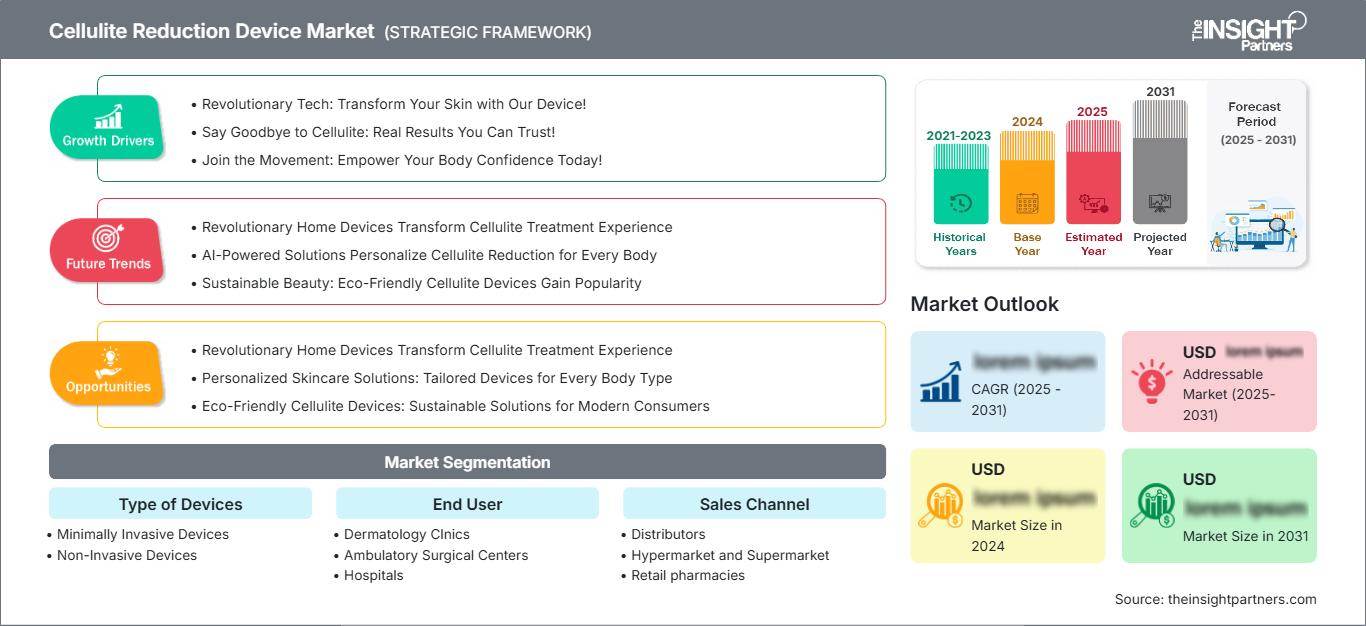
Cellulite Reduction Device Market: Strategic Insights
Regional Insights
North America Cellulite Reduction Device Market
North America held a 35–39% share in 2025 and is forecast to expand at a CAGR of 9.4–10.2% during 2026–2034. Market share of the Cellulite Reduction Device is attributed to the large amount of spending on aesthetics, high density of dermatologists and plastic surgeons, and mature medical spa networks. In the US, regulatory procedures offer a systematic approach to establishing substantial equivalence and managing device labels. Canada's contribution comes from clinics in Toronto, Vancouver, and Montréal, where there are body treatments along with facial treatments that do not involve surgery. The purchasing of equipment is driven by the need for multipurpose machines that cater to different indications and reduce underutilization. Finances, service agreements, clinical training, and applicator availability, besides efficacy, play an important role. The requirement for multiple treatment sessions is another factor that drives the market.
U.S. Cellulite Reduction Device Market
The US represented 82–86% of North American revenue in 2025 and is projected to grow at a CAGR of 9.5–10.3% during 2026–2034. Its leadership is supported by a large self-pay aesthetic economy, frequent introduction of energy-based systems, and extensive networks of dermatology clinics, plastic-surgery practices, ambulatory centers, and medical spas. Non-surgical skin tightening was among the country’s leading non-surgical procedures in 2024.
Venus Concept Inc., Cynosure LLC, Solta Medical, Ulthera, Inc., and Endo-Systems, LLC all have commercial or distribution presence in the country. Application trends are leaning towards custom combination therapies which deal with skin laxity, localized fat, muscle tightening, and cellulite in an integrated manner. Operators are employing standard photographic and tissue assessments along with staged follow-ups to demonstrate results. FDA approval, marketing claim control, practitioner education, availability of disposables, and technical support responsiveness continue to be important supplier selection criteria.
Europe Cellulite Reduction Device Market
Europe accounted for a 26–30% share in 2025 and is forecast to register a CAGR of 8.7–9.5% through 2034. Germany dominates due to its advanced medical technology base, specialist clinics, and desire for clinically supported systems. Zimmer MedizinSysteme GmbH profits from its domestic manufacturing credibility and body care technology expertise, whereas European Union medical device regulations promote structured evidence, risk management, and post-marketing control.
The UK market favors high-end clinic and beauty chains that purchase capital assets based on cost-benefit analysis of utilization and maintenance. France integrates doctor-led aesthetics with the well-established drug store and beauty retail distribution network. Italy and Spain are aided by their body-aware consumers, tourism-related health services, and strong spa infrastructure. Germany is likely to maintain dominance, but Spain and Italy present attractive growth prospects for distributors. France, Italy, and Spain collectively provide support to demand for non-invasive platforms based on comfort care, minimal disruption, and seasonality of treatment programs.
APAC Cellulite Reduction Device Market
Asia Pacific held a 21–25% share in 2025 and is expected to post a CAGR of 11.0–12.0% during 2026–2034. China excels by manufacturing domestically, developing aesthetic clinics, and expanding distribution. South Korea has energy-based treatments expertise, whereas Japan stresses safety, small equipment, and control of procedures. India adds scale via dermatology chains in metropolitan cities, and Australia contributes through regulated spending professionals.
Localization of manufacturing, e-commerce, disposable incomes, and medical tourism enhance accessibility. The policy focus of the region on device registrations and qualifications of operators will favor suppliers who offer training and localized technical documentation.
Middle East & Africa Cellulite Reduction Device Market
The Middle East & Africa market is projected to grow at a CAGR of 8.5–9.5% during 2026–2034. The UAE leads through medical tourism, premium aesthetic clinics, and internationally connected distributors. Saudi Arabia is gaining importance as healthcare infrastructure investment and private wellness services expand.
South Africa anchors sub-Saharan professional demand, whereas the Rest of MEA remains distributor-dependent. Energy availability, temperature-controlled logistics, service coverage, and imported-device costs affect adoption. High-income Gulf markets favor multifunction premium platforms, while African buyers prioritize durability, portable designs, low consumable requirements, and dependable maintenance.
Segmentation Analysis
Type of Devices
Type of Devices is forecast to advance at a CAGR of 9.6–10.4% during 2026–2034. The Cellulite Reduction Device Market scope covers professional platforms that release fibrous bands or deliver radiofrequency, laser, ultrasound, acoustic, suction, and electromagnetic energy. Purchasing decisions vary by invasiveness, downtime, operator credentials, session frequency, outcome durability, treatment-area flexibility, and capital cost.
- Minimally Invasive Devices: These systems address structural dimples through subdermal laser delivery or controlled septa release. They serve patients seeking longer-lasting improvement and support premium pricing, but require trained medical personnel and procedural safeguards.
- Non-Invasive Devices: This category leads adoption because radiofrequency, acoustic wave, ultrasound, vacuum, and electromagnetic technologies fit outpatient workflows. Repeat-session models, limited downtime, and compatibility with combined contouring protocols strengthen strategic importance.
End User
End User demand is expected to rise at a CAGR of 9.4–10.2% during 2026–2034. Dermatology clinics and specialized treatment centers dominate professional placement because they combine patient assessment, trained operators, follow-up, and access to complementary procedures. Spas expand treatment availability, while household users support a separate market for lower-energy, convenience-oriented devices with simpler controls and lower prices.
- Dermatology Clnics: Dermatology clinics command strong professional demand through clinical assessment, treatment personalization, adverse-event management, and cross-selling with skin tightening, laser procedures, injectables, or post-weight-loss skin programs.
- Ambulatory Surgical Centers: These centers primarily support minimally invasive procedures requiring sterile technique, local anesthesia, controlled recovery, and physician supervision, making them strategically relevant for higher-value septa-release and laser-assisted interventions.
- Hospitals: Hospitals represent a smaller but clinically important channel, particularly where aesthetic dermatology is integrated with plastic surgery. Procurement emphasizes regulatory documentation, biomedical engineering support, safety protocols, and multidisciplinary oversight.
- Spas and Other Treatment Centers: Medical spas and specialized centers broaden access through packaged services, convenient scheduling, and wellness positioning. Their purchasing decisions emphasize throughput, operator simplicity, financing availability, versatility, and visible short-term outcomes.
- House hold End Users: Household users favor affordable, compact, non-invasive products with automated settings and clear safety instructions. Demand is digitally influenced, but professional systems retain an advantage in energy intensity and treatment personalization.
Sales Channel
Sales Channel revenue is projected to expand at a CAGR of 9.8–10.6% during 2026–2034. Professional equipment depends on consultative selling, demonstrations, installation, service, and operator training, whereas household devices can move through omnichannel retail. Online sales are growing fastest because comparison tools, reviews, instructional content, direct-to-consumer promotions, and recurring digital engagement improve product discovery.
- Distributors: Distributors remain strategically essential for professional systems by providing local registration support, demonstrations, financing coordination, installation, training, maintenance, and replacement parts across markets without manufacturer-owned sales operations.
- Hypermarket and Supermarket: This channel supports accessible household products where established retailers provide physical visibility and immediate purchase. Shelf competition, consumer education constraints, and limited technical consultation restrict suitability for sophisticated devices.
- Retail pharmacies: Retail pharmacies add health-oriented credibility to home-use systems and facilitate assisted product selection. Their relevance is strongest for compact devices supported by clear contraindications, usage schedules, warranties, and recognizable brands.
- Online Sales: E-commerce enables wide geographic reach, product comparison, digital demonstrations, and direct customer support. It is particularly important for household systems, replacement accessories, promotional bundles, and manufacturers pursuing first-party consumer relationships.
Opportunity Snapshot
| End User | Revenue Contribution (High/Medium/Low) | Trend Tag | Adoption Stage (Emerging/Scaling/Mature) |
| Dermatology Clnics | High | Clinical Bundling | Mature |
| Ambulatory Surgical Centers | Medium | Septa Release | Scaling |
| Hospitals | Low | Specialist Care | Mature |
| Spas and Other Treatment Centers | High | Body Packages | Scaling |
| House hold End USers | Medium | Guided Homecare | Emerging |
Cellulite Reduction Device Market Growth Drivers and Impact Analysis
Preference for Treatments with Limited Downtime
Consumers today have high expectations of visible aesthetic improvements without the use of general anesthetics, overnight stays at the hospital, or prolonged recovery periods. This consumer trend can be met using non-invasive technologies in an out-patient procedure that can be conveniently timed within busy schedules. For the provider, reduced downtime translates into a broader market base and repeat business opportunities. For companies producing these devices, the commercial impact is especially high in the case of radio frequency, acoustic wave, ultrasound, vacuum, and electromagnetic technologies which are compatible with currently used treatment facilities. However, the companies will need to manage consumer expectations of what can be realistically accomplished using such technologies.
Large Addressable Population Across Weight Categories
Cellulite is characterized by structural connections with fibrous septa, dermal features, and subcutaneous tissues and not simply obesity. The market therefore caters not only to obese people but also to those who are slim and active and those undergoing comprehensive body shaping treatments. Clinical research shows that weight loss may not necessarily remove cellulite; hence, there is need for special treatment different from body fat removal. The wider addressable market allows the treatment protocols to be divided according to the severity of cellulite, skin looseness, tissue thickness, and expectations of treatment. It is advantageous for manufacturers to provide information showing that cellulite is different from fat and the type of patient suitable for treatment.
Expansion of Medical Spas and Aesthetic Service Networks
Medical spas and multisite aesthetic clinics provide an increasingly scalable route for device placement. Their standardized menus, centralized marketing, financing programs, and high customer engagement can accelerate utilization more effectively than isolated equipment sales. These operators often prefer multifunction systems capable of cellulite reduction, skin tightening, circumferential treatment, and muscle stimulation because diversified indications improve equipment productivity. Manufacturers can influence adoption through clinical education, launch campaigns, operator certification, protocol libraries, and responsive field service. The resulting market impact includes larger fleet orders, predictable replacement cycles, and faster diffusion into secondary cities. Suppliers must still adapt distribution and supervision models to jurisdiction-specific rules governing medical ownership, delegated procedures, advertising, and energy-based device operation.
Cellulite Reduction Device Market Future Trends
Algorithm-Guided Energy Delivery and Outcome Tracking
Cellulite Reduction Device Market trends will increasingly center on software that recommends parameters according to tissue characteristics, treatment area, skin type, and prior response. Connected handpieces can document energy delivery, temperature, session duration, and operator selections, providing a more consistent record across treatment courses. Image-based assessment may improve before-and-after comparison and help providers identify whether dimpling, laxity, or localized fat is the principal concern. These capabilities will not replace clinical judgment, but they can reduce protocol variability and support training across multisite practices. Suppliers will differentiate through usable interfaces, secure data handling, remote diagnostics, software updates, and evidence connecting automated settings to reproducible outcomes.
Combination Protocols for Post-Weight-Loss Aesthetics
Growing use of medically supervised weight-management programs will create demand for body treatments addressing residual laxity, uneven texture, and localized contour concerns. Cellulite systems will increasingly be positioned within staged protocols that combine radiofrequency, muscle stimulation, acoustic energy, or minimally invasive septa release according to tissue condition. Clinics can build longitudinal programs beginning during weight stabilization and continuing through maintenance. Commercial success will depend on assessment tools that separate cellulite from loose skin and residual adiposity, preventing unnecessary or poorly targeted treatment. Manufacturers should develop evidence-based sequencing guidance, contraindication frameworks, and training materials that help practitioners combine modalities without excessive energy exposure or unrealistic claims.
Cellulite Reduction Device Market Opportunities
Localized Platforms for Asia Pacific Clinics
Asia Pacific offers an investment opportunity for manufacturers able to balance clinical functionality with localized pricing, compact footprints, multilingual interfaces, and regional service coverage. Cellulite Reduction Device Market Forecasts indicate that the region will outpace mature geographies, but expansion requires more than exporting premium Western systems. Companies should develop distributor certification, market-specific regulatory files, treatment protocols suitable for diverse skin types, and financing for independent clinics. Assembly partnerships can reduce lead times and import exposure, while remote diagnostics can support markets with limited field engineers. Priority commercialization should focus on China, South Korea, Japan, India, and Australia, with distinct channel strategies for professional systems and household devices.
Evidence-Led Consumer Device Portfolios
Household products create an opportunity to reach consumers unwilling or unable to purchase repeated professional sessions. Manufacturers can differentiate through conservative energy controls, skin-contact sensors, automated treatment schedules, connected tutorials, and transparent explanations of expected improvement. Online channels enable direct education, subscription accessories, warranty registration, and post-purchase engagement without dependence on clinical distributors. Investment should prioritize usability studies, electrical safety, contraindication screening, and substantiated claims rather than aggressive comparisons with medical systems. Partnerships with retail pharmacies can add credibility, while professional referral pathways can direct unsuitable or nonresponsive users toward clinical assessment. A tiered portfolio can therefore preserve professional positioning while expanding participation in guided homecare.
Recent Developments
- July 2026: Venus Concept Inc. obtained exclusive US and Canadian distribution rights for HIRONIC Co., Ltd.’s Doublo 2.0 platform. The system combines cold plasma and radiofrequency microneedling through separate handpieces and had received US FDA 510(k) clearance. Venus Concept indicated that commercial availability in the US was planned for the second half of 2026.
- February 2026: Zimmer MedizinSysteme GmbH highlighted clinical protocols combining its ZShape multipolar radiofrequency and fractional vacuum platform with ZStim muscle stimulation. The integrated approach targets skin quality, contour, muscle tone, and cellulite appearance, illustrating the market’s movement toward multimodal body-treatment planning rather than isolated, single-indication sessions.
- April 2024: Solta Medical presented physician education involving Thermage FLX and Fraxel at the American Society for Laser Medicine and Surgery annual meeting. The program emphasized combined tightening and skin-quality protocols, supporting growing provider interest in complementary energy-based treatments and capital platforms that can be incorporated into broader aesthetic-care pathways.
Frequently Asked Questions

- Comprehensive Market Sizing and Forecast Analysis
- Detailed Segmentation Analysis
- In-Depth Market Dynamics Assessment
- Regional and Country-Level Insights
- Competitive Landscape and Company Benchmarking
- Strategic Business Intelligence
Recent Reports
Testimonials

The Insight Partners provided valuable market intelligence that supported our global go-to-market strategy. Their team was professional, responsive, and attentive to our feedback, providing thoughtful analysis and helpful methodological clarifications throughout the project.
Junmo Kim Chief Financial Officer (CFO), Enertech Co., Ltd.
The Insight Partners' SCADA System Market report is comprehensive, with valuable insights on current trends and future forecasts. The team was highly professional, responsive, and supportive throughout. We are very satisfied and highly recommend their services.
RAN KEDEM Partner, Reali Technologies LTDs
I requested a report on a very specific software market and the team produced the report in a few days. The information was very relevant and well presented. I then requested some changes and additions to the report. The team was again very responsive and I got the final report in less than a week.
JEAN-HERVE JENN Chairman, Future Analytica
We worked with The Insight Partners for an important market study and forecast. They gave us clear insights into opportunities and risks, which helped shape our plans. Their research was easy to use and based on solid data. It helped us make smart, confident decisions. We highly recommend them.
PIYUSH NAGPAL Sr. Vice President, High Beam Global
The Insight Partners delivered insightful, well-structured market research with strong domain expertise. Their team was professional and responsive throughout. The user-friendly website made accessing industry reports seamless. We highly recommend them for reliable, high-quality research services
YUKIHIKO ADACHI CEO, Deep Blue, LLC.
This is the first time I have purchased a market report from The Insight Partners.While I was unsure at first, I visited their web site and felt more comfortable to take the risk and purchase a market report.I am completely satisfied with the quality of the report and customer service. I had several questions and comments with the initial report, but after a couple of dialogs over email with their analyst I believe I have a report that I can use as input to our strategic planning process.Thank you so much for taking the extra time and making this a positive experience.I will definitely recommend your service to others and you will be my first call when we need further market data.
JOHN SUZUKI President and Chief Executive Officer, Board Director, BK Technologies
I wish to appreciate your support and the professionalism you displayed in the course of attending to my request for information regarding to infectious disease IVD market in Nigeria. I appreciate your patience, your guidance, and the fact that you were willing to offer a discount, which eventually made it possible for us to close a deal. I look forward to engaging The Insight Partners in the future, all thanks to the impression you have created in me as a result of this first encounter.
DR CHIJIOKE ONYIA MANAGING DIRECTOR, PineCrest Healthcare Ltd.Reason to Buy
- Informed Decision-Making
- Understanding Market Dynamics
- Competitive Analysis
- Identifying Emerging Markets
- Customer Insights
- Market Forecasts
- Risk Mitigation
- Boosting Operational Efficiency
- Strategic Planning
- Investment Justification
- Tracking Industry Innovations
- Aligning with Regulatory Trends





 Get Free Sample for