
Central Nervous System Lymphoma Treatment Market Size, Trends & Growth by 2034
Coverage: By Type (Chemotherapy, Radiation Therapy, Steroid Therapy, Targeted Therapy, Others); Application (Hospitals, Clinics, Ambulatory Surgical Centers, Others), and Geography (North America, Europe, Asia Pacific, and South and Central America)
- Status : Data Released
- Report Code : TIPRE00015590
- Category : Life Sciences
- No. of Pages : 150
- Available Report Formats :


- Last update date : September 28, 2026


2025 Market Size
US$ 1.34 Bn
Base year value
2034 Forecast
US$ 2.75 Bn
Projected by 2034
CAGR 2026-2034
8.34 %
Growth rate
Addressable Market
US$ 18.39 Bn
(2026-2034)
The Central Nervous System Lymphoma Treatment Market was valued at US$ 1.34 Billion in 2025 and is expected to reach US$ 2.75 Billion by 2034, registering a CAGR of 8.34% during 2026–2034. Market expansion reflects continued clinical reliance on chemotherapy, increasing adoption of targeted therapies, and broader treatment access through hospitals, clinics, and ambulatory surgical centers across developed and emerging healthcare systems.
Within North America, the Central Nervous System Lymphoma Treatment Market size is projected to advance at a modelled CAGR of 7.8–8.4% during 2026–2034. Concentrated neuro-oncology expertise, reimbursement for complex infusion protocols, and growing evaluation of blood-brain barrier-penetrating agents support regional demand. Multidisciplinary treatment networks also enable faster integration of molecular diagnostics, cellular therapies, and evidence-based consolidation strategies.
Central Nervous System Lymphoma Treatment Market Assessment and Insights
- North America: The region represented an estimated 39–42% Central Nervous System Lymphoma Treatment Market share in 2025 and is expected to grow at a 7.8–8.4% CAGR between 2026–2034, supported by specialist centers, clinical research infrastructure, and access to high-cost oncology therapies.
- US: The country accounted for approximately 84–87% of North American revenue in 2025, with an anticipated 7.9–8.5% CAGR between 2026–2034, led by hospital-based treatment and clinical trial participation.
- Europe: Europe held an estimated 27–30% share in 2025 and is projected to expand at a 7.3–7.9% CAGR between 2026–2034. Germany, France, the UK, Italy, and Spain are leading treatment markets.
- Asia Pacific: Asia Pacific represented approximately 21–24% of revenue in 2025 and is forecast to record an 8.9–9.7% CAGR between 2026–2034, led by China, Japan, South Korea, India, and Australia.
- Largest Segment: Chemotherapy held an estimated 47–51% market share in 2025 and is projected to register a 6.9–7.5% CAGR during 2026–2034, reflecting its first-line role in methotrexate-based induction regimens.
- High Growth Segment: Targeted therapy accounted for approximately 18–22% market share in 2025 and is expected to expand at a 10.8–11.6% CAGR during 2026–2034, supported by BTK inhibitors and molecularly guided combinations.
- Key companies analyzed in detail: Amgen Inc., Dr. Reddy’s Laboratories Ltd., F. Hoffmann-La Roche Ltd, Bristol Myers Squibb, Cipla Limited, Merck & Co., Inc., Novartis AG, AbbVie Inc., Fresenius SE & Co. KGaA, and Sanofi.
Source: The Insight Partners' analysis based on proprietary research, government publications, company annual reports, investor presentations, industry databases, and expert interviews.
The change in treatment approaches is evolving from a predominantly radiotherapy-based management strategy to one with high-dose methotrexate induction, immunochemotherapy combinations, autologous transplants, and properly chosen consolidation therapy. Consequently, production needs have changed in favor of injectable manufacturing with sterile capabilities, oncology-grade APIs, supportive medications, and cold-chain shipping. The molecular profiling of MYD88, CD79B, BCR pathway, and mechanisms of immune evasion is compelling drug manufacturers to design brain-permeable targeted therapies in the face of increased pharmacist controls in hospitals.
Investments are expected to focus on targeted combinations, ambulatory treatment strategies, and pathways of treatment for elderly patients and those unfit for transplant during the forecast period. Trial capacity is expanding in the Asia Pacific region, and tertiary oncology care facilities are being built in Gulf countries. Orphan drug programs and expedited review processes could make development easier; however, small number of patients poses a problem with recruiting participants. Harmonized responses, real-world registries, and collaborative multicenter studies will be crucial.
Central Nervous System Lymphoma Treatment Market Report Scope
| Report Attribute | Details |
|---|---|
| Market size in 2025 | US$ 1.34 Billion |
| Market Size by 2034 | US$ 2.75 Billion |
| Global CAGR (2026 - 2034) | 8.34% |
| Historical Data | 2021-2024 |
| Forecast period | 2026-2034 |
Central Nervous System Lymphoma Treatment Market Analysis
Diagnosis in older populations and increased awareness of neurological manifestations contribute to the expansion of Central Nervous System Lymphoma Treatment Market. In over 95% of primary tumors, there is B-cell phenotype, which means that B-cell targeting treatment forms an essential part of product development. High dose methotrexate continues being used as treatment basis due to the necessity to provide adequate exposure in CNS.
This value chain consists of suppliers of active pharmaceutical ingredients, brands/generic producers, specialized distributors, hospital pharmacies, neuro-oncologists, hematologists, radiologists, and transplantation facilities. Stability becomes especially critical for injectable methotrexate, therapies with rituximab, leucovorin rescue, hydration products, and supportive drugs. Scheduling of treatment and renal monitoring become easier when carried out by organizations that have integrated laboratories and oncology pharmacists.
Central Nervous System Lymphoma Treatment Market analysis reveals that the competition depends more on evidence within clinical settings rather than on the product volumes. F. Hoffmann-La Roche Ltd stays relevant through its B-cell directed oncology products, Bristol Myers Squibb and Novartis AG bring in cellular therapy and hematology strengths. AbbVie Inc., Merck & Co., Inc., Amgen Inc. and Sanofi add oncology development strengths.
Access to generic products remains strategically important. Dr. Reddy’s Laboratories Ltd., Cipla Limited and Fresenius SE & Co. KGaA help in obtaining established drugs and procurement. The companies are developing their portfolios with a focus on compatibility of the combinations, effectiveness in the Central Nervous System, tolerability and convenience of administration. The areas of investment increasingly include biomarker-driven studies, investigator-led studies and collaborations with specialized centers able to conduct studies on rare diseases.
● REPORT CUSTOMIZATION
Tailor This Report To Align With Your Specific Business Requirements
This report can be customized to align precisely with your business objectives, scope, and target markets. Customization options include tailored segmentation, geography, competitive analysis, and strategic insights to support informed decision-making.
Customize This Report →WHAT YOU CAN ADJUST
- ● Segmentations
- ● Geography
- ● Competitive Analysis
- ● Language Preferences
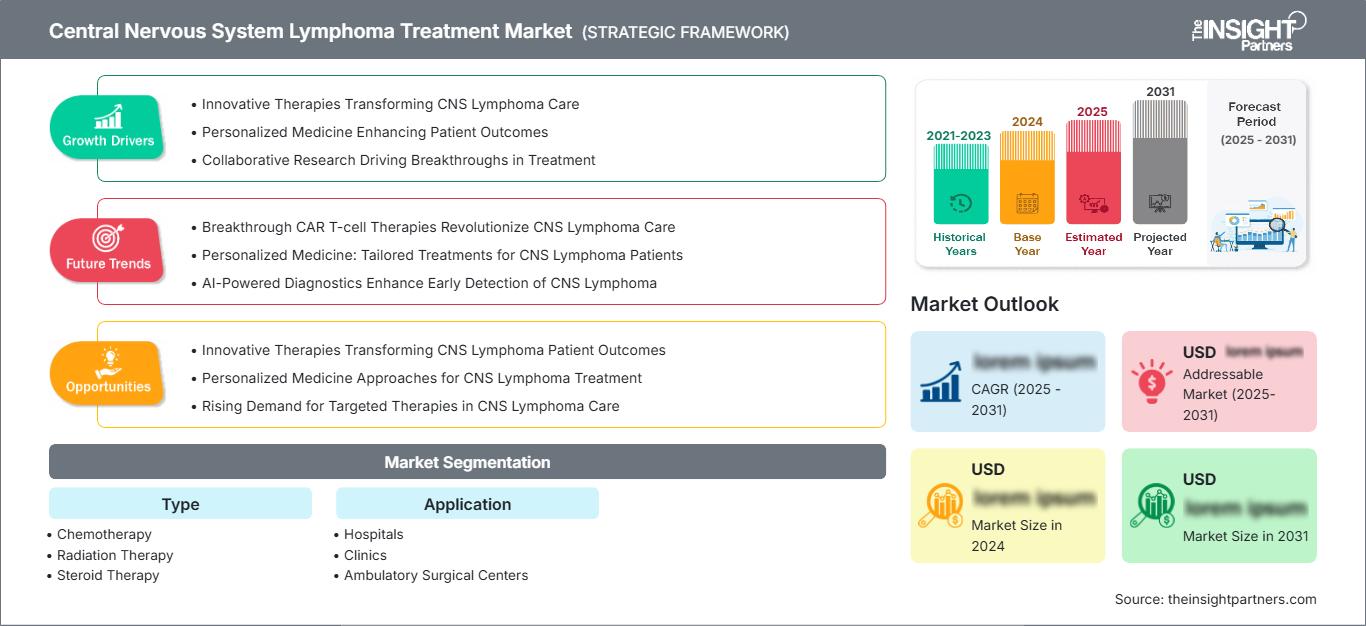
Central Nervous System Lymphoma Treatment Market: Strategic Insights
Regional Insights
North America Central Nervous System Lymphoma Treatment Market
North America held a modelled 39–42% share in 2025 and is forecast to expand at a 7.8–8.4% CAGR during 2026–2034. The CNS lymphoma market share is characterized by extensive neuro-oncology networks, transplantation experience, imaging capability, and high clinical trial activity. Formulary coverage also provides relatively good availability of combination chemotherapies, monoclonal antibody studies, and cellular therapies.
Regional market demand benefits from the aging demographic as well as a growing awareness of the disease manifestations among immune-competent patients. The treatment is limited to academic centers due to the need for close pharmacokinetic monitoring, kidney function tests, and hydration in patients receiving high-dose methotrexate. Provincial cancer care networks of Canada provide standardized pathways, while orphan drug policy in the United States encourages research in relapsing and refractory cases.
U.S. Central Nervous System Lymphoma Treatment Market
The US generated approximately 84–87% of North American revenue in 2025 and is expected to record a 7.9–8.5% CAGR during 2026–2034. The demand centers around comprehensive cancer centers that have the expertise in neuro-oncology, hematology, neuroradiology, ophthalmology, and transplantation. Hospital institutions have an upper hand in administration since methotrexate excretion, neurotoxicities, and infections need coordination in monitoring.
Some large companies that manufacture and sell oncology drugs in the US include F. Hoffmann-La Roche Ltd, Bristol Myers Squibb, AbbVie Inc., Merck & Co., Inc., and Novartis AG. In addition, some institutional buyers purchase products from Amgen Inc., Fresenius SE & Co. KGaA, and generics companies. Although hospitals are major settings where the application takes place, some clinics take care of maintenance, targeted oral therapy, survivorship, and laboratory work.
Europe Central Nervous System Lymphoma Treatment Market
Europe accounted for an estimated 27–30% share in 2025 and is projected to register a 7.3–7.9% CAGR during 2026–2034. Germany is leading the way due to its university hospitals, transplant capability, reimbursement structures, and involvement in cooperative research for lymphomas. European clinical guidelines recommend a multidisciplinary approach to diagnostics, methotrexate induction, response-adapted consolidation, and evaluation of elderly patients.
The United Kingdom has centralized hematological pathways and national commissioning systems; however, capacity issues might delay referrals. France offers specialized centers for neuro-oncology combined with a strong research network. Italy and Spain provide experience in treatment centers and transplantation. Differences between countries in reimbursement structures, budget of hospitals, and new drugs impact implementation; thus, pricing on scientific grounds and multicountry registry could be developed.
APAC Central Nervous System Lymphoma Treatment Market
The Central Nervous System Lymphoma Treatment Market forecast shows that Asia Pacific held an estimated 21–24% share in 2025 and is expected to grow at an 8.9–9.7% CAGR during 2026–2034. China leads regional revenue through hospital expansion, local manufacturing, and rising lymphoma diagnosis. Japan contributes mature reimbursement and experience with targeted B-cell therapies.
South Korea and Australia provide advanced trial infrastructure, while India benefits from expanding private oncology networks and generic medicine capacity. Policy support for rare diseases, stronger diagnostic imaging, and investment in tertiary hospitals are widening access. Affordability and uneven specialist distribution nevertheless constrain adoption outside metropolitan centers.
Middle East & Africa Central Nervous System Lymphoma Treatment Market
The Middle East and Africa market is projected to expand at a 6.5–7.3% CAGR during 2026–2034, with Saudi Arabia leading through tertiary hospital investment and health-sector modernization. The UAE is strengthening specialist oncology referral pathways and pharmaceutical logistics.
South Africa provides the region’s broadest established academic oncology base, while the Rest of MEA remains constrained by imaging access, pathology capacity, and treatment affordability. Energy-funded infrastructure programs in Gulf economies support new cancer centers, but fragmented procurement and limited neuro-oncology expertise continue to favor regional referral hubs.
Segmentation Analysis
Type
The Type segment is projected to expand at a 7.9–8.7% CAGR during 2026–2034. The Central Nervous System Lymphoma Treatment Market scope by type reflects continued dependence on chemotherapy alongside increasing use of molecularly targeted agents. Treatment selection varies according to age, renal function, disease location, response status, and transplant eligibility. Radiation and steroids retain defined roles but are increasingly positioned within individualized, toxicity-conscious pathways.
- Chemotherapy: Methotrexate-based combination therapy remains the primary induction approach, sustaining the segment’s leading position. Institutional demand is reinforced by established protocols, physician familiarity, and applicability across newly diagnosed patients.
- Radiation Therapy: Radiation is strategically used for consolidation, palliation, or disease that remains unsuitable for intensive systemic therapy. Demand is moderated by concern over delayed neurotoxicity, particularly among older patients.
- Steroid Therapy: Corticosteroids provide rapid reduction of edema and neurological symptoms, but pre-biopsy exposure can obscure diagnosis. Their importance therefore centers on stabilization, supportive management, and carefully timed administration.
- Targeted Therapy: BTK inhibitors, immunomodulatory agents, monoclonal antibodies, and cellular approaches are reshaping relapsed-disease strategies. Adoption depends on central nervous system penetration, durable response evidence, safety, reimbursement, and biomarker alignment.
Application
The Application segment is forecast to register a 7.7–8.5% CAGR during 2026–2034. Complex induction protocols keep hospitals central to treatment delivery, while clinics are gaining importance for maintenance and survivorship. Ambulatory surgical centers occupy a narrower procedural role. Application growth will depend on referral efficiency, infusion infrastructure, pharmacy safeguards, neurological monitoring, and the ability to coordinate treatment across inpatient and outpatient settings.
- Hospitals: Hospitals dominate due to requirements for intravenous chemotherapy, hydration, leucovorin rescue, imaging, toxicity surveillance, and multidisciplinary decisions. Academic centers also concentrate transplantation and access to investigational therapies.
- Clinics: Clinics support follow-up, oral therapy management, routine infusions, laboratory monitoring, and survivorship services. Their strategic importance rises as lower-intensity and outpatient-compatible regimens enter clinical pathways.
- Ambulatory Surgical Centers: These facilities contribute through stereotactic biopsy support, vascular access procedures, and selected diagnostic interventions. Their participation remains complementary because intensive systemic treatment generally requires hospital-level monitoring.
Opportunity Snapshot
| Application | Revenue Contribution | Trend Tag | Adoption Stage |
| Hospitals | High | Integrated Care | Mature |
| Clinics | Medium | Oral Monitoring | Scaling |
| Ambulatory Surgical Centers | Low | Biopsy Access | Emerging |
Central Nervous System Lymphoma Treatment Market Growth Drivers and Impact Analysis
Increasing Clinical Need in Older and Relapsed Patients
It becomes more and more prevalent among older patients, who tend to suffer from renal dysfunction, frailty, and poor suitability for transplantation. Thus, standard high-dose treatments will be inappropriate for many diagnosed patients. Additionally, relapses after methotrexate treatment are common, requiring the use of salvage chemotherapy, targeted drugs, radiation therapy, and cellular therapy. The need for such studies in the patient populations of interest will allow addressing a clinically significant issue. From the business perspective, the benefit will go beyond drug sales, since those patients need imaging, infection prevention, neurologic evaluation, rehabilitation, and follow-up. It means that the centers prefer regimens with optimal efficacy-toxicity ratio.
Expansion of Molecularly Targeted Treatment Strategies
Recognition of MYD88, CD79B, B-cell receptor, BTK, and immune-evasion mechanisms is improving biological segmentation of the disease. This knowledge supports development of small molecules, antibodies, immunomodulatory combinations, and cellular therapies intended to overcome limited central nervous system exposure. Targeted treatments are set to surpass traditional forms of treatment as data accumulates in relapse and refractory settings. Successful implementation will depend upon permeability through the blood-brain barrier, treatment longevity, neurological safety, and compatibility with methotrexate or rituximab-based regimens. The use of biomarkers in development could help optimize patient selection and minimize variability in treatment response. As a result, diagnostic laboratories, genetic sequencers, and specialized pharmacies take on greater significance in the treatment value chain.
Growth of Specialist Neuro-Oncology Infrastructure
Investment in comprehensive cancer centers is expanding access to magnetic resonance imaging, stereotactic biopsy, hematopathology, cerebrospinal fluid analysis, ophthalmic evaluation, and transplantation. These capabilities shorten diagnostic pathways and allow more patients to receive protocol-driven therapy. Infrastructure growth is particularly relevant in China, India, Saudi Arabia, and other markets building tertiary oncology capacity. Hospitals with integrated pharmacy and laboratory services can safely administer high-dose methotrexate and monitor clearance, renal function, and neurological complications. Centralized referral models also improve recruitment for rare-disease trials. The market impact is a gradual increase in treated prevalence, higher use of combination protocols, and stronger demand for supportive medicines, infusion systems, diagnostics, and specialist follow-up services.
Central Nervous System Lymphoma Treatment Market Future Trends
Movement Toward Brain-Penetrating Combination Regimens
Central Nervous System Lymphoma Treatment Market trends will increasingly center on combinations that address multiple survival pathways while maintaining clinically meaningful central nervous system exposure. BTK inhibition may be paired with IRAK4 inhibition, immunomodulation, anti-CD20 therapy, or checkpoint blockade to reduce pathway escape. Development programs will emphasize pharmacokinetic sampling, cerebrospinal fluid exposure, molecular response, and durability rather than short-term radiographic response alone. Dose optimization will be essential because overlapping infection, hematologic, and neurological risks can limit combination intensity. Successful regimens are likely to enter relapsed settings first before being evaluated as additions to induction, consolidation, or maintenance therapy.
Greater Use of Cellular Therapy in Defined Patient Groups
Cellular therapy research is expected to expand for patients with relapsed or refractory B-cell disease who have limited conventional options. Updated regulatory labeling, investigator-sponsored evidence, and improved management of neurotoxicity may encourage specialist centers to evaluate CAR T-cell therapy more consistently. Future adoption will remain selective because manufacturing time, lymphodepletion, hospitalization, and neurological surveillance create substantial operational demands. Trials will focus on identifying suitable patients, measuring central nervous system activity, and determining whether earlier intervention improves outcomes. Partnerships between treatment centers, cell-processing networks, and manufacturers will be necessary to reduce referral delays and maintain product quality.
Central Nervous System Lymphoma Treatment Market Opportunities
Developing Lower-Intensity Pathways for Transplant-Ineligible Patients
An investable opportunity exists in regimens designed for older, frail, or transplant-ineligible patients who cannot tolerate intensive consolidation. Developers can prioritize oral agents, reduced-intensity combinations, maintenance schedules, and dosing strategies adapted to renal function. Programs should incorporate geriatric assessment, cognition, quality of life, and treatment-free intervals alongside conventional response endpoints. Payers are more likely to support higher-cost therapies when evidence demonstrates reduced hospitalization, fewer severe adverse events, or delayed progression. Collaboration with large hospital networks can accelerate recruitment and generate real-world evidence. Companion monitoring tools may further support adherence, toxicity detection, and structured outpatient management.
Building Trial and Access Networks in Emerging Markets
Asia Pacific and Gulf markets offer opportunities to establish multicenter research and treatment networks around rapidly expanding tertiary hospitals. Sponsors can invest in pathology standardization, imaging review, investigator training, and electronic registries to improve identification of eligible patients. China, India, South Korea, Saudi Arabia, and the UAE provide differing combinations of patient availability, clinical capability, and policy support. Local manufacturing or licensing partnerships can improve affordability and procurement resilience. Action-oriented strategies should include regional pharmacovigilance, protocol translation, and referral agreements between community hospitals and specialist centers. These investments can widen treatment access while improving enrollment for globally relevant rare-disease studies.
Recent Developments
- July 2026: Curis, Inc. reported updated data from the TakeAim Lymphoma study of emavusertib in primary central nervous system lymphoma. The company disclosed responses among both BTK inhibitor-naïve and BTK inhibitor-experienced patients, supporting continued development of the oral IRAK4 and FLT3 inhibitor in a registrational program.
- February 2026: Kite Pharma, Inc., a Gilead company, announced that the US Food and Drug Administration approved a Yescarta prescribing-information update removing the previous limitation of use for patients with relapsed or refractory primary central nervous system lymphoma. The decision was supported by an investigator-sponsored Phase 1 safety study.
- May 2025: Ono Pharmaceutical Co., Ltd. presented Phase 2 PROSPECT results for tirabrutinib in US patients with relapsed or refractory disease. The 48-patient study reported a 67% overall response rate and 44% complete response rate, supporting regulatory development of the selective BTK inhibitor.
Frequently Asked Questions

- Comprehensive Market Sizing and Forecast Analysis
- Detailed Segmentation Analysis
- In-Depth Market Dynamics Assessment
- Regional and Country-Level Insights
- Competitive Landscape and Company Benchmarking
- Strategic Business Intelligence
Recent Reports
Testimonials

The Insight Partners' SCADA System Market report is comprehensive, with valuable insights on current trends and future forecasts. The team was highly professional, responsive, and supportive throughout. We are very satisfied and highly recommend their services.
RAN KEDEM Partner, Reali Technologies LTDs
I requested a report on a very specific software market and the team produced the report in a few days. The information was very relevant and well presented. I then requested some changes and additions to the report. The team was again very responsive and I got the final report in less than a week.
JEAN-HERVE JENN Chairman, Future Analytica
We worked with The Insight Partners for an important market study and forecast. They gave us clear insights into opportunities and risks, which helped shape our plans. Their research was easy to use and based on solid data. It helped us make smart, confident decisions. We highly recommend them.
PIYUSH NAGPAL Sr. Vice President, High Beam Global
The Insight Partners delivered insightful, well-structured market research with strong domain expertise. Their team was professional and responsive throughout. The user-friendly website made accessing industry reports seamless. We highly recommend them for reliable, high-quality research services
YUKIHIKO ADACHI CEO, Deep Blue, LLC.
This is the first time I have purchased a market report from The Insight Partners.While I was unsure at first, I visited their web site and felt more comfortable to take the risk and purchase a market report.I am completely satisfied with the quality of the report and customer service. I had several questions and comments with the initial report, but after a couple of dialogs over email with their analyst I believe I have a report that I can use as input to our strategic planning process.Thank you so much for taking the extra time and making this a positive experience.I will definitely recommend your service to others and you will be my first call when we need further market data.
JOHN SUZUKI President and Chief Executive Officer, Board Director, BK Technologies
I wish to appreciate your support and the professionalism you displayed in the course of attending to my request for information regarding to infectious disease IVD market in Nigeria. I appreciate your patience, your guidance, and the fact that you were willing to offer a discount, which eventually made it possible for us to close a deal. I look forward to engaging The Insight Partners in the future, all thanks to the impression you have created in me as a result of this first encounter.
DR CHIJIOKE ONYIA MANAGING DIRECTOR, PineCrest Healthcare Ltd.Reason to Buy
- Informed Decision-Making
- Understanding Market Dynamics
- Competitive Analysis
- Identifying Emerging Markets
- Customer Insights
- Market Forecasts
- Risk Mitigation
- Boosting Operational Efficiency
- Strategic Planning
- Investment Justification
- Tracking Industry Innovations
- Aligning with Regulatory Trends





 Get Free Sample for