
Chitin and Chitosan Derivatives Market Size, Growth & Trends by 2034
Coverage: By Type (Chitin, Chitosan, Glucosamine, Others); Application (Food and Beverages, Pharmaceuticals and Nutraceuticals, Animal Feed, Agriculture, and Others), and Geography (North America, Europe, Asia Pacific, and South and Central America)
- Status : Data Released
- Report Code : TIPRE00017382
- Category : Chemicals and Materials
- No. of Pages : 150
- Available Report Formats :


- Last update date : August 28, 2026


2025 Market Size
US$ 12.18 Bn
Base year value
2034 Forecast
US$ 36.63 Bn
Projected by 2034
CAGR 2026-2034
13.01 %
Growth rate
Addressable Market
US$ 212.28 Bn
(2026-2034)
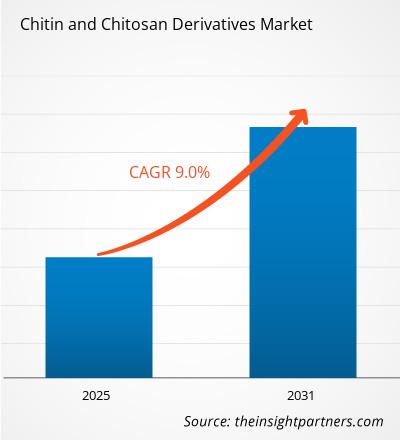
The Chitin and Chitosan Derivatives market is valued at US$ 12.18 Billion in 2025 and is projected to reach US$ 36.63 Billion by 2034, registering a CAGR of 13.01% during 2026–2034. The market encompasses naturally derived polysaccharides and their functional derivatives used across food, pharmaceutical, nutraceutical, agriculture, and animal feed applications. Increasing interest in biodegradable, biocompatible, and multifunctional materials is strengthening commercialization opportunities across established and emerging end uses.
North America remains an important production, formulation, and application hub, with its Chitin and Chitosan Derivatives Market size supported by pharmaceutical research, functional ingredients, agricultural biostimulants, and biomaterial development. Regional expansion is expected at approximately 11.5–13.5% CAGR between 2026–2034, supported by demand for bio-based functional materials, regulatory acceptance of selected chitosan applications, and investment in higher-purity grades for specialized formulations.
Chitin and Chitosan Derivatives Market Assessment and Insights
- North America: North America is expected to account for a 27–31% Chitin and Chitosan Derivatives Market share in 2025 and expand at a CAGR of 11.5–13.5% between 2026 and 2034, supported by pharmaceutical development, agricultural biostimulants, food preservation, and advanced biomaterial applications.
- U.S.: The U.S. represents approximately 82–86% of North America's 2025 share and is expected to grow at a CAGR of 11.8–13.8% between 2026–2034, supported by biotechnology and pharmaceutical demand.
- Europe: Europe is estimated to have a 24–28% share in 2025, with a CAGR of 10.8–12.8% between 2026 and 2034. Germany, France, the UK, Italy, and Spain support demand through pharmaceutical, food, agriculture, and sustainable-material applications.
- Asia Pacific: Asia Pacific is projected to hold a 32–36% share in 2025 and register a CAGR of 14.0–16.0% between 2026 and 2034, led by China, Japan, India, South Korea, and Australia through processing, agriculture, nutraceutical, and pharmaceutical applications.
- Largest Segment: Chitosan is estimated to command a market share of 42–46% in 2025 and expand at a CAGR of 13.2–14.7% between 2026 and 2034, reflecting broad functional applications.
- High Growth Segment: Pharmaceuticals and Nutraceuticals is estimated at a 30–34% share in 2025, advancing at a CAGR of 14.5–16.5% between 2026–2034 as functional delivery systems expand.
- Key companies analyzed in detail: Advanced Biopolymers AS, Agratech, G.T.C. Bio Corporation, Golden-Shell Pharmaceutical Co., Ltd., Heppe Medical Chitosan GmbH, KitoZyme S.A., Kunpoong Bio Co., Ltd., Meron Biopolymers Pvt. Ltd., Primex EHF, Zhejiang Candorly Pharmaceutical Co., Ltd.
Source: The Insight Partners' analysis based on proprietary research, government publications, company annual reports, investor presentations, industry databases, and expert interviews.
Advancements in technology have seen developments that move production away from traditional shell-derived methods towards the process of controlled deacetylation, purification, functionalization, and diversification of sources. Chitosan grades may be manufactured to suit different applications through customization to achieve specific properties such as molecular weight, degree of deacetylation, viscosity, solubility, and biological activity. Non-animal fungal and microbial sources are attracting interest since they would minimize reliance on crustacean shells and aid in non-animal positioning. There is ongoing research in green extraction techniques to address the environmental challenges posed by current chemical procedures.
Going forward, investment will focus on high purity materials used in pharmaceuticals, biocontrol in agriculture, functional foods, and chemistry. The emerging production sites in Asia will take advantage of abundant seafood processing by-products, while European producers focus on traceability and bio-source feedstocks. Regulatory approval will still be an issue, as applications vary widely from food, agriculture, pharmaceuticals, to nutraceuticals.
Chitin and Chitosan Derivatives Market Report Scope
| Report Attribute | Details |
|---|---|
| Market size in 2025 | US$ 12.18 Billion |
| Market Size by 2034 | US$ 36.63 Billion |
| Global CAGR (2026 - 2034) | 13.01% |
| Historical Data | 2021-2024 |
| Forecast period | 2026-2034 |
Chitin and Chitosan Derivatives Market Analysis
The Chitin and Chitosan Derivatives market growth trajectory is tightly linked to the rising popularity of bio-based functional materials that possess the properties of biodegradability, antimicrobial, film formation, adsorption, and encapsulation. Value chain of the industry includes biological sources (shellfish, fungi, etc.), extraction of chitin, deacetylation, purification, drying, milling, and functionalization. End users use the materials to produce ingredients, coatings, delivery systems, agro products, and specialty biomaterials.
Vertical integration is one of the approaches used by companies in the value chain as a way to enhance the level of traceability and reduce the reliance on intermediate producers. Fungi-based production represents another approach to production of chitin and chitosan derivatives, especially in cases when non-animal positioning is essential. An example of such company is KitoZyme, which uses fungi to produce chitosan and chitin-glucan for various industries.
As per the Chitin and Chitosan Derivatives Market analysis, the market structure appears to be fragmented, and differentiation in this case relies more on source technology, purity, molecular composition, regulatory clearance, application expertise, and formulation know-how. For instance, Advanced Biopolymers AS, Heppe Medical Chitosan GmbH, Primex EHF, and KitoZyme S.A. focus on specialized chitosan, whereas other large chemical and life sciences players have wider technical expertise and customer reach.
Positioning in the market is shifting from commodity chitosan to application-specialized forms and derivatives. Investment in particle size control, functionalization, better solubility, and specific delivery systems is taking place. The 2025 development project at KitoZyme focused on controlled chitosan microparticles shows the need for particle engineering in the pharmaceutical delivery applications. Strategic alliances, regulatory registrations, pilot scale manufacturing, and working together with formulators is becoming an important way of turning innovations into consistent business.
● REPORT CUSTOMIZATION
Tailor This Report To Align With Your Specific Business Requirements
This report can be customized to align precisely with your business objectives, scope, and target markets. Customization options include tailored segmentation, geography, competitive analysis, and strategic insights to support informed decision-making.
Customize This Report →WHAT YOU CAN ADJUST
- ● Segmentations
- ● Geography
- ● Competitive Analysis
- ● Language Preferences
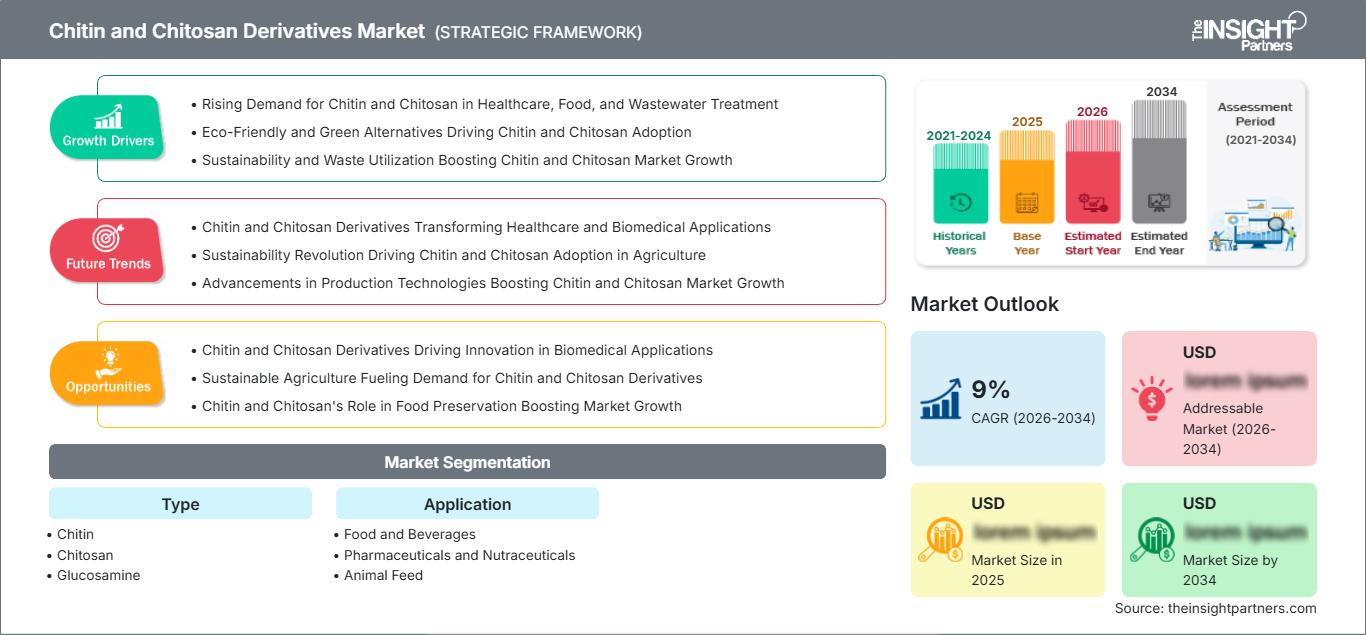
Chitin and Chitosan Derivatives Market: Strategic Insights
Regional Insights
North America Chitin and Chitosan Derivatives Market
The North American region accounts for 27-31% in 2025 and regional demand growth due to pharmaceutical research, nutraceutical products, agricultural ingredients, food preservation, and advanced biomaterials. The region is anticipated to grow at a CAGR of 11.5-13.5% in 2026-2034. The US is the major contributor, due to well-developed infrastructure in biotechnology, research facilities, specialty ingredients producers, and the huge pharmaceutical R&D ecosystem. The biocompatibility and functionalization of chitosan account for its applications from encapsulation to controlled delivery.
Canada is contributing via food processing capacity, agriculture research and biotechnology initiatives. Regional manufacturers pay increasing attention to high-quality materials and molecular specification of the product because of strict requirements to the quality of pharmaceutical and biomedical applications compared to conventional applications. The agricultural demand is driven by the growing interest to the biological plant protection and plant defense technologies. The regulatory environment is application-specific; thus, technical documentation and product validation are competitive requirements. Growing interest to renewable sources is expected to promote the development of fungal and fermentation-derived chitosan along with conventional shellfish-derived one.
U.S. Chitin and Chitosan Derivatives Market
The United States will make up roughly 82-86% of North America’s share in Chitin and Chitosan Derivatives Market in 2025 and is expected to grow at a CAGR of 11.8-13.8% from 2025 to 2034. The importance of pharmaceutical and nutraceutical applications is retained due to the properties of chitosan in providing encapsulation, controlled release, mucoadhesion, and functional ingredients. Applications in agriculture consist of bio-stimulants and bio-control products.
The differentiators for the companies operating in the U.S. market comprise pharmaceutical-grade purification, non-animal sources, and product formulation as per the application. The level of regulatory approval depends on the application for which the product will be used, hence making it imperative for the companies to meet their specifications. The research going on in nanoparticles, microparticles, coatings, and delivery systems has increased the potential market opportunity.
Europe Chitin and Chitosan Derivatives Market
The Europe region is expected to capture 24-28% market share in 2025 and is forecast to grow at a CAGR of 10.8-12.8% during the period 2026-2034. The Germany market is one of the leaders driven by specialty biomaterials, pharmaceutical manufacturing, food industry, and R&D. The UK is contributing through pharmaceutical and biotechnology R&D, France is contributing through agricultural and food industry, Italy and Spain are contributing through food industry, agriculture, nutraceuticals, and fish feedstock.
Demand in Germany is especially driven by medical grade and specialty chitosan development; consistency, purity and documentation are important in procurement decisions. There are efforts to introduce circular feedstock in Europe in which value-added polymers can be extracted from food industry waste streams. The sustainability factor is increasing demand for non-animal-based and renewable materials. Scrutiny through regulations is increasing traceability, controlled production, and safety documentation; this limits opportunities for lower specifications suppliers and favors specialists.
APAC Chitin and Chitosan Derivatives Market
APAC is estimated at a 32–36% share in 2025 and is projected to register a CAGR of 14.0–16.0% during 2026–2034, making it the fastest-growing major region. China leads regional consumption and production, followed by Japan, South Korea, India, and Australia. Seafood-processing activity provides significant feedstock opportunities, while pharmaceutical, agriculture, nutraceutical, and food industries broaden demand.
China benefits from manufacturing scale and domestic downstream industries. Japan and South Korea emphasize specialty materials and pharmaceutical applications, while India offers expanding agricultural and nutraceutical opportunities. Australia combines seafood resources with agricultural innovation. Regional policy support for bio-based materials, waste valorization, and sustainable agriculture is expected to encourage investment in extraction technologies, functional derivatives, and higher-value formulations.
Middle East & Africa Chitin and Chitosan Derivatives Market
The Middle East & Africa represent a smaller but developing opportunity, with Saudi Arabia and the UAE supporting specialty food, pharmaceutical, and agricultural applications, while South Africa provides opportunities linked to food processing and agricultural inputs. Regional growth is expected at approximately 10.0–12.0% CAGR during 2026–2034, supported by diversification and sustainable-material initiatives.
Saudi Arabia is positioned as a leading Gulf opportunity through food and pharmaceutical investment, while the UAE benefits from logistics and specialty manufacturing infrastructure. South Africa contributes through agricultural and biotechnology demand. The rest of MEA remains dependent on localized feedstock availability and import channels. Water efficiency, crop productivity, food security, and industrial diversification can create demand for chitosan-based agricultural and functional solutions.
Segmentation Analysis
Type
The Type segment covers Chitin, Chitosan, Glucosamine, and Others. Chitosan is expected to remain the largest category, with a CAGR of 13.2–14.7% during 2026–2034, because deacetylation creates functional groups suitable for formulation, encapsulation, coatings, and biological applications. Chitin remains important as the principal feedstock, while glucosamine benefits from established nutraceutical demand.
- Chitin: Chitin provides the foundational polymer for downstream deacetylation and derivative production. Demand is supported by shellfish recovery, fungal sourcing, biomaterials research, and applications where native polymer characteristics are strategically valuable.
- Chitosan: Chitosan represents the most versatile type because its cationic functionality supports antimicrobial activity, film formation, adsorption, encapsulation, and controlled delivery. It is increasingly tailored for application-specific molecular characteristics.
- Glucosamine: Glucosamine benefits from established use in joint-health supplements and nutraceutical formulations. Its mature consumer-health positioning provides a stable downstream application base while encouraging continued sourcing and purification improvements.
Application
The Application segment includes Food and Beverages, Pharmaceuticals and Nutraceuticals, Animal Feed, Agriculture, and Others. Pharmaceuticals and Nutraceuticals are expected to expand at a CAGR of 14.5–16.5% during 2026–2034, reflecting the development of delivery systems, functional ingredients, and biomaterials. The Chitin and Chitosan Derivatives Market scope, therefore, increasingly extends toward higher-value formulations.
- Food and Beverages: Demand centers on edible coatings, preservation, clarification, encapsulation, and functional ingredients. Natural-origin positioning and biodegradable characteristics strengthen interest in chitosan-based food technologies.
- Pharmaceuticals and Nutraceuticals: This application offers substantial value potential through controlled release, encapsulation, mucoadhesive systems, nutraceutical delivery, and specialized biomaterials requiring defined molecular and purity characteristics.
- Animal Feed: Chitosan-related ingredients are being investigated for gut-health, microbial management, feed efficiency, and functional supplementation, creating opportunities as producers seek alternatives to conventional additives.
- Agriculture: Agricultural demand is linked to plant-defense elicitation, biocontrol, seed treatment, and stress management. Chitosan's biological activity supports its positioning within lower-chemical-input farming systems.
Opportunity Snapshot
| Application | Revenue Contribution (High/Medium/Low) | Trend Tag | Adoption Stage |
|---|---|---|---|
| Food and Beverages | Medium | Edible Coatings | Scaling |
| Pharmaceuticals and Nutraceuticals | High | Drug Delivery | Scaling |
| Animal Feed | Medium | Gut Health | Emerging |
| Agriculture | High | Biocontrol Inputs | Scaling |
Chitin and Chitosan Derivatives Market Growth Drivers and Impact Analysis
Expansion of Bio-Based Functional Materials
Growing preference for renewable and biodegradable materials is increasing the commercial relevance of chitin and chitosan. Their combination of biodegradability, biocompatibility, film-forming capacity, and antimicrobial functionality allows manufacturers to address applications where conventional synthetic materials face sustainability or performance limitations. The impact is strongest where a single ingredient can deliver several functions, such as coating, preservation, encapsulation, or plant-defense stimulation. Food processors can use chitosan-derived systems to develop protective coatings, while agricultural formulators can use biological activity to complement crop-protection programs. Pharmaceutical developers value the ability to modify molecular structure for delivery applications. This multifunctionality encourages producers to move toward higher-value grades and application-specific derivatives, improving revenue opportunities without requiring equivalent increases in raw-material volume.
Increasing Pharmaceutical and Nutraceutical Utilization
Pharmaceutical and nutraceutical developers are expanding research into chitosan-based delivery systems because the polymer can be processed into films, particles, gels, membranes, and other structures. Recent biomedical literature highlights continued work across preclinical, clinical, and commercialization pathways, particularly where functionalization can alter physicochemical behavior. The commercial impact is a gradual shift from basic bulk material toward higher-purity grades with controlled molecular characteristics. Suppliers capable of demonstrating reproducibility, safety, and application performance can secure stronger positions with formulation companies. Development of microparticles and nanoparticles further expands potential applications in controlled release and targeted delivery. Consequently, pharmaceutical demand can improve the value mix of the industry while stimulating investments in purification, particle engineering, analytical testing, and specialized manufacturing infrastructure.
Growth of Chitosan-Based Agricultural Inputs
Agricultural applications are gaining importance as growers and input manufacturers seek biological approaches to crop protection, plant resilience, and resource efficiency. Chitosan can act as an elicitor of plant-defense mechanisms and can be incorporated into formulations designed to manage fungal and bacterial pressures. Research has identified applications in crop productivity, plant defense, microbial activity, and pathogen management. The commercial impact extends beyond direct material sales because suppliers can develop branded formulations, treatment protocols, and crop-specific products. Regulatory acceptance can materially accelerate adoption by enabling use within biological or lower-risk crop-protection programs. Manufacturers with validated efficacy data, stable formulations, and local registrations are therefore positioned to capture recurring agricultural demand while reducing reliance on commodity-grade polymer sales.
Chitin and Chitosan Derivatives Market Future Trends
Expansion of Non-Animal and Fungal Chitosan Platforms
The Chitin and Chitosan Derivatives Market trends landscape is increasingly shaped by non-animal sourcing. Fungal chitosan can address concerns associated with shellfish-derived materials, including allergen management, vegan positioning, feedstock traceability, and supply diversification. KitoZyme markets fungal chitosan for agriculture and consumer applications, illustrating the transition toward renewable biological production platforms. As customers increasingly assess raw-material origin alongside technical performance, suppliers are likely to invest in fermentation, fungal biomass recovery, and purification technologies. Non-animal materials can become especially relevant in cosmetics, nutraceuticals, and specialized food applications where consumer preferences influence ingredient selection. Over time, source diversification may reduce exposure to seafood-processing fluctuations while enabling differentiated products with defined origin and sustainability attributes.
Integration of Green Extraction and Circular Feedstocks
Future production will increasingly integrate chitin recovery with food-processing waste management. Shellfish processing generates substantial by-products, and recent research identifies opportunities to recover chitin and chitosan through more resource-efficient chemical and biological approaches. Manufacturers are likely to evaluate enzymatic treatment, fermentation-assisted processing, reduced-chemical extraction, and integrated recovery of co-products. Such technologies can improve resource utilization while addressing environmental limitations associated with conventional processing. The trend also creates regional opportunities because production can be located closer to seafood-processing clusters, reducing transportation requirements for bulky raw materials. Commercial adoption will depend on whether green extraction achieves competitive yields, consistent molecular characteristics, and acceptable production costs. Suppliers that combine circular sourcing with standardized quality could strengthen their position with customers seeking measurable sustainability improvements.
Chitin and Chitosan Derivatives Market Opportunities
Development of High-Purity Pharmaceutical Derivatives
The Chitin and Chitosan Derivatives Market Forecasts indicate an opportunity for manufacturers to prioritize pharmaceutical-grade derivatives rather than relying primarily on conventional bulk chitosan. Controlled molecular weight, degree of deacetylation, particle size, solubility, and impurity profiles can support differentiated applications in drug delivery, wound care, tissue engineering, and specialized formulations. Recent research continues to examine chitosan across biomedical commercialization pathways, reinforcing the potential for application-specific materials. Companies can pursue partnerships with pharmaceutical developers, contract manufacturers, and research institutions to validate performance in defined delivery systems. Investment priorities should include analytical characterization, reproducible production, regulatory documentation, and pilot-scale manufacturing. Successful suppliers can create higher-value recurring revenue by selling validated grades designed around specific formulation requirements instead of competing solely on commodity polymer pricing.
Scaling Chitosan-Based Agricultural Biocontrol Products
Agriculture presents an attractive commercialization pathway because chitosan can support plant-defense activation and biological crop-protection strategies. Companies can develop concentrated formulations, seed treatments, foliar products, and integrated crop programs that target specific pathogens or stress conditions. KitoZyme's KitoGreen platform demonstrates how fungal chitosan can be positioned for sustainable agriculture and biocontrol applications, with regulatory status varying by jurisdiction. Investment should focus on field validation, crop-specific efficacy, formulation stability, registration, and distributor partnerships. Regional commercialization can be accelerated by aligning products with organic agriculture and biological-input programs where permitted. This opportunity can create repeat consumption because agricultural formulations are applied seasonally, while differentiated performance claims can reduce direct exposure to commodity-grade material competition.
Recent Developments
- February 2025: Tidal Vision completed an oversubscribed US$140 million Series B financing round to scale its chitosan-based technologies globally. The funding is being used to expand production capacity and research and development resources, with new infrastructure planned in Europe, Texas, and Ohio. The investment is expected to strengthen the commercial-scale supply of chitosan chemistries for water treatment, agriculture, and materials applications.
- September 2025: Greenitio secured US$1.5 million in seed funding to scale its mushroom-derived chitosan biopolymer platform for cosmetics and specialty chemicals. The financing is supporting manufacturing scale-up, regulatory approvals, and commercial partnerships. Greenitio is developing functional biopolymers containing mushroom-based chitosan as bio-based alternatives to petrochemical polymers and microplastic ingredients in personal care and other formulations.
Frequently Asked Questions

- Comprehensive Market Sizing and Forecast Analysis
- Detailed Segmentation Analysis
- In-Depth Market Dynamics Assessment
- Regional and Country-Level Insights
- Competitive Landscape and Company Benchmarking
- Strategic Business Intelligence
Recent Reports
Testimonials

The Insight Partners' SCADA System Market report is comprehensive, with valuable insights on current trends and future forecasts. The team was highly professional, responsive, and supportive throughout. We are very satisfied and highly recommend their services.
RAN KEDEM Partner, Reali Technologies LTDs
I requested a report on a very specific software market and the team produced the report in a few days. The information was very relevant and well presented. I then requested some changes and additions to the report. The team was again very responsive and I got the final report in less than a week.
JEAN-HERVE JENN Chairman, Future Analytica
We worked with The Insight Partners for an important market study and forecast. They gave us clear insights into opportunities and risks, which helped shape our plans. Their research was easy to use and based on solid data. It helped us make smart, confident decisions. We highly recommend them.
PIYUSH NAGPAL Sr. Vice President, High Beam Global
The Insight Partners delivered insightful, well-structured market research with strong domain expertise. Their team was professional and responsive throughout. The user-friendly website made accessing industry reports seamless. We highly recommend them for reliable, high-quality research services
YUKIHIKO ADACHI CEO, Deep Blue, LLC.
This is the first time I have purchased a market report from The Insight Partners.While I was unsure at first, I visited their web site and felt more comfortable to take the risk and purchase a market report.I am completely satisfied with the quality of the report and customer service. I had several questions and comments with the initial report, but after a couple of dialogs over email with their analyst I believe I have a report that I can use as input to our strategic planning process.Thank you so much for taking the extra time and making this a positive experience.I will definitely recommend your service to others and you will be my first call when we need further market data.
JOHN SUZUKI President and Chief Executive Officer, Board Director, BK Technologies
I wish to appreciate your support and the professionalism you displayed in the course of attending to my request for information regarding to infectious disease IVD market in Nigeria. I appreciate your patience, your guidance, and the fact that you were willing to offer a discount, which eventually made it possible for us to close a deal. I look forward to engaging The Insight Partners in the future, all thanks to the impression you have created in me as a result of this first encounter.
DR CHIJIOKE ONYIA MANAGING DIRECTOR, PineCrest Healthcare Ltd.Reason to Buy
- Informed Decision-Making
- Understanding Market Dynamics
- Competitive Analysis
- Identifying Emerging Markets
- Customer Insights
- Market Forecasts
- Risk Mitigation
- Boosting Operational Efficiency
- Strategic Planning
- Investment Justification
- Tracking Industry Innovations
- Aligning with Regulatory Trends





 Get Free Sample for