
Electronic Logging Device Market Growth, Trends & Forecast by 2034
Coverage: By Vehicle Type (Light Commercial Vehicle, Truck, Bus); Component (External Display, Telematics Unit); Form Factor (Embedded, Integrated); Services (Entry-Level Services, Intermediate, High-End Services) , and Geography (North America, Europe, Asia Pacific, and South and Central America)
- Status : Data Released
- Report Code : TIPRE00004016
- Category : Electronics and Semiconductor
- No. of Pages : 150
- Available Report Formats :


- Last update date : August 12, 2026


2025 Market Size
US$ 15.86 Bn
Base year value
2034 Forecast
US$ 21.87 Bn
Projected by 2034
CAGR 2026-2034
3.64 %
Growth rate
Addressable Market
US$ 171.41 Bn
(2026-2034)
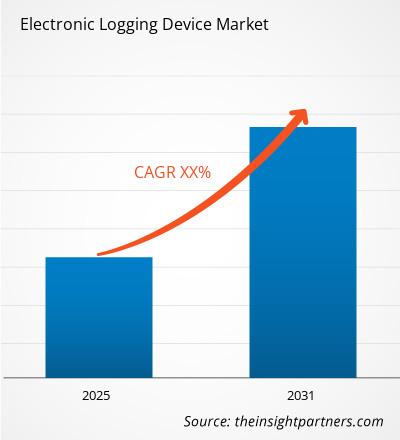
The Electronic Logging Device market size will be valued at US$ 15.86 billion in 2025 and will grow further to touch US$ 21.87 billion in 2034 with an average annual growth rate of 3.64% from 2026 to 2034. This is owing to the continued presence of stringent regulation enforcement, fleet digitization and the use of advanced integrated telematics systems in global commercial transport networks.
North America continues to remain the largest regional market for the global Electronic Logging Device size, with the region growing at a compound annual growth rate range of 3.2-3.8% from 2026 to 2034. Contributing factors include the FMCSA compliance regulations, well-established infrastructure for fleet management and ongoing technological upgrades among large commercial fleets.
Electronic Logging Device Market Assessment and Insights
- North America: The region commands approximately 38–42% Electronic Logging Device Market share in 2025 and is growing at a CAGR range of 3.2–3.8% between 2026–2034, driven by stringent regulatory mandates and advanced logistics infrastructure supporting widespread ELD adoption across commercial fleets.
- US: The United States accounts for 85–90% share in 2025 and is growing at a CAGR range of 3.0–3.6% between 2026–2034, reflecting mature market conditions with continuous compliance-driven replacement cycles.
- Europe: The region holds approximately 26–30% share in 2025 and is growing at a CAGR range of 3.4–4.0% between 2026–2034, with Germany, the UK, and France leading adoption through digital tachograph regulations and cross-border freight monitoring requirements.
- Asia Pacific: The region represents approximately 14–18% share in 2025 and is growing at a CAGR range of 4.5–5.2% between 2026–2034, with China, Japan, India, and South Korea driving growth through logistics modernization and emerging regulatory frameworks.
- Largest Segment: The Truck segment holds approximately 52–56% market share in 2025 and is growing at a CAGR range of 3.4–3.9% between 2026–2034, reflecting dominant commercial vehicle adoption for long-haul freight operations.
- High Growth Segment: The Bus segment represents approximately 14–18% market share in 2025 and is growing at a CAGR range of 4.2–4.8% between 2026–2034, driven by public transportation modernization and intercity passenger transport compliance requirements.
- Key companies analyzed in detail: Donlen, Geotab Inc., HEM Data Corporation, Influx Technology, Intrepid Control Systems, Inc., Masternaut Limited, Omnitracs, RACELOGIC GmbH, Trimble Inc., and Vector Informatik GmbH.
Source: The Insight Partners' analysis based on proprietary research, government publications, company annual reports, investor presentations, industry databases, and expert interviews.
The development of the Electronic Logging Device market has seen evolution from mere compliance solutions into complex telematic solutions that incorporate GPS, analysis of driver behavior, and fleet management solutions. The innovation within hardware solutions has seen the development of in-built solutions with cellular technology support, while that in software has been directed towards cloud technology and AI-powered solutions to enhance routes, fuel consumption, and maintenance scheduling for different types of commercial vehicles.
Electronic Logging Device Market Trends suggest growth in the regulatory acceptance in the Asia Pacific and Latin American regions in addition to significant investment in new devices that will be able to integrate EVs and automated driving systems. Favorable tailwinds from the regulatory changes from the improvements made by FMCSA and EU Mobility Package continue to push replacement cycles and premium service tiers adoption.
Electronic Logging Device Market Report Scope
| Report Attribute | Details |
|---|---|
| Market size in 2025 | US$ 15.86 Billion |
| Market Size by 2034 | US$ 21.87 Billion |
| Global CAGR (2026 - 2034) | 3.64% |
| Historical Data | 2021-2024 |
| Forecast period | 2026-2034 |
Electronic Logging Device Market Analysis
According to the Electronic Logging Device Market report, primary drivers of demand consist of regulatory requirements for mandatory compliance in North America and Europe, increased operational efficiencies resulting from real-time visibility, and insurance-based incentive programs that reward fleets with proven safety records. Value chain participants include hardware vendors who manufacture the telematics device itself and any accompanying displays, software vendors who develop fleet management systems, and service providers who provide installation, training, and other managed services. Supply chain dynamics include improved access to semiconductors, 5G technology that facilitates reliable data transmission, and pricing pressures from established competitors and emerging specialists.
Distributors include direct partnerships between OEMs and manufacturers of commercial vehicles, authorized dealerships that serve local fleets, and online distributors that allow for quick deployment among small and medium-sized fleets. Integration with the customer’s enterprise resource planning and transportation management system as well as any third party logistics provider has become a key point of differentiation because of customer needs for end-to-end visibility within their transportation network.
The competitive environment is characterized by market incumbents like Geotab Inc. and Trimble Inc. going head-to-head with specialty ELD vendors like Donlen and Omnitracs, each trying to differentiate based on platform capability, device reliability, and customer support. The investment dynamics reflect consolidation efforts of larger companies acquiring smaller, innovative firms to integrate more AI analytics, video telematics, and predictive maintenance capabilities, while venture capitalists continue investing in firms offering new-generation technology for electric and autonomous commercial vehicles.
Positioning is focused on total cost of ownership, cybersecurity certification, and regulatory compliance assurances, rather than device costs only. Leading companies are diversifying their offerings with additional services like driver coaching, fuel optimization analytics, and sustainability reporting software, since fleet managers see ELD platforms as an asset which helps them to realize more operational excellence and environmental, social, and governance goals besides the compliance mandates.
● REPORT CUSTOMIZATION
Tailor This Report To Align With Your Specific Business Requirements
This report can be customized to align precisely with your business objectives, scope, and target markets. Customization options include tailored segmentation, geography, competitive analysis, and strategic insights to support informed decision-making.
Customize This Report →WHAT YOU CAN ADJUST
- ● Segmentations
- ● Geography
- ● Competitive Analysis
- ● Language Preferences
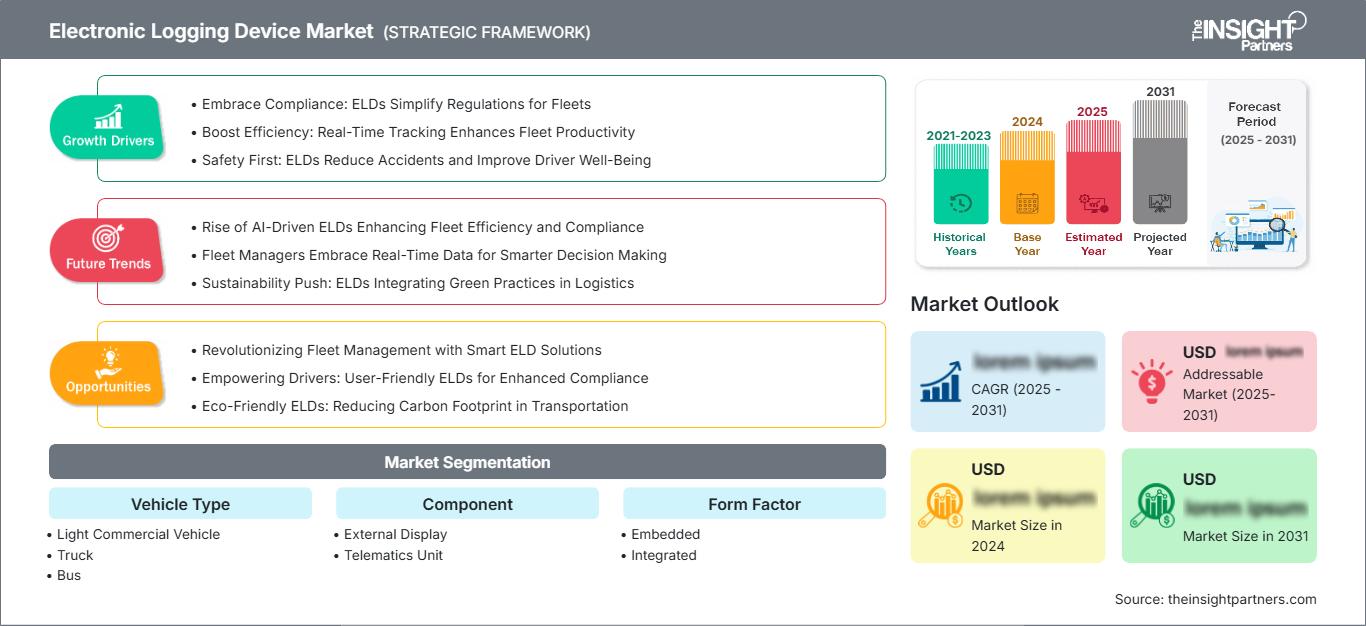
Electronic Logging Device Market: Strategic Insights
Regional Insights
North America Electronic Logging Device Market
North America accounts for around 38–42% of the Electronic Logging Device market share globally in 2025 and will be registering growth with CAGR of 3.2–3.8% during the period of 2026–2034. This market enjoys the advantage of well-established regulatory enforcement via FMCSA regulations, an established commercial freight infrastructure, and fleet operator awareness of the risks of non-compliance and benefits of using telematics technologies.
Factors supporting Electronic Logging Device Market growth include the need for ongoing regulatory changes, replacements of aging technology, and needs for integrating ELDs into the larger fleet management solutions ecosystem. Large fleets are becoming more interested in platforms that provide real-time collision alerts, fuel transaction alerts, and driver performance analytics in order to reduce insurance costs.
U.S. Electronic Logging Device Market
The United States accounts for approximately 85–90% of North American Electronic Logging Device share in 2025 and is growing at a CAGR range of 3.0–3.6% between 2026–2034. As the dominant market within the region, the US reflects mature adoption levels with continuous compliance-driven replacement demand and ongoing technology upgrades among commercial carriers of all sizes.
According to the Electronic Logging Device Market forecast, company presence includes all major ELD providers maintaining registered device lists with FMCSA, including Geotab Inc., Trimble Inc., Donlen, and Omnitracs, each competing through platform capabilities and customer support differentiation. Application trends indicate growing demand for embedded systems among large fleets, integrated solutions for owner-operators, and high-end service tiers featuring AI-driven safety analytics and predictive maintenance tools.
Europe Electronic Logging Device Market
Europe holds approximately 26–30% of global Electronic Logging Device share in 2025 and is projected to grow at a CAGR range of 3.4–4.0% between 2026–2034. The region benefits from EU Mobility Package regulations, cross-border freight monitoring requirements, and progressive adoption of smart tachograph technology across member states.
According to the Electronic Logging Device Market analysis, the United Kingdom supplies around 18–22% of European demand owing to the regulations post-Brexit and the well-established logistics infrastructure, which facilitates international cargo transport. The most significant market is Germany with the market share of 22–26%, which is related to the high number of commercial vehicle fleets and strict enforcement of regulations via the digital tachographs mandate.
In addition, France, Italy, and Spain account for 35-40% of the demand in Europe, where France dominates the market owing to logistics modernization, Italy is concentrated on the compliance of Mediterranean freight transportation, and Spain on the development of logistics infrastructure for international transport corridors to North Africa.
APAC Electronic Logging Device Market
Asia Pacific accounts for about 14-18% of Global Electronic Logging Device Market share in 2025 and experiences CAGR growth rate between 4.5% to 5.2% between 2026 to 2034, which makes it the fastest-growing region. China dominates with 35-40% of demand from APAC, while Japan, India, South Korea, and Australia come next due to their efforts toward transportation modernization.
Industrial factors are the rise of the e-commerce logistics sector, digitalization of the manufacturing supply chain, and an increase in intercity freight volumes needing improved monitoring of visibility and compliance on fleets of commercial vehicles across the region. The policy factors comprise new regulatory policies in India and Southeast Asia, investments in infrastructure for intelligent transportation systems, and government initiatives encouraging telematics adoption.
Middle East & Africa Electronic Logging Device Market
The Middle East and Africa constitutes an emerging market for ELDs, which is expected to see CAGR ranging between 5.5%–6.5% during 2026–2034. The adoption of such devices in Saudi Arabia can be attributed to Vision 2030 projects in its infrastructure and logistics corridor development linking up with GCC nations and East African countries.
The UAE stands out as the regional leader due to advanced freight transportation infrastructure and regulatory framework for cross-border commercial transport. South Africa is the most developed African country when it comes to the adoption of ELDs, thanks to mining, agricultural, and provincial freight logistics.
Segmentation Analysis
Vehicle Type
The Vehicle Type segment is projected to grow at a CAGR range of 3.5–4.1% between 2026–2034. This segmentation reflects distinct regulatory requirements, operational profiles, and adoption patterns across different commercial vehicle categories, with trucks dominating demand due to long-haul freight compliance mandates and extensive fleet deployments.
- Light Commercial Vehicle: Represents approximately 28–32% of vehicle type demand, driven by urban delivery fleets, service contractors, and regional distribution operations requiring compact, cost-effective ELD solutions with mobile app integration capabilities.
- Truck: Commands approximately 52–56% market share, reflecting dominant long-haul and medium-haul freight operations where mandatory hours-of-service compliance, fuel optimization, and driver safety monitoring deliver substantial operational value and regulatory risk mitigation.
- Bus: Accounts for approximately 14–18% of demand and is growing at a CAGR range of 4.2–4.8%, driven by public transportation agencies, intercity passenger carriers, and school district fleets seeking compliance automation and passenger safety enhancements through integrated telematics.
Component
The Component segment is projected to grow at a CAGR range of 3.3–3.9% between 2026–2034. This segmentation distinguishes between hardware elements that capture and transmit driving data and software services that process, analyze, and present compliance and operational insights to fleet managers and drivers.
- External Display: Represents approximately 35–40% of component demand, including in-cab screens showing real-time hours-of-service status, violation alerts, and driver performance metrics, with growing adoption of touchscreen interfaces and voice-activated controls.
- Telematics Unit: Commands approximately 60–65% market share, encompassing GPS receivers, cellular modems, and vehicle bus interfaces that capture location, engine data, and driver inputs, increasingly integrating AI accelerators for edge-based collision detection and predictive analytics.
Form Factor
The Form Factor segment is projected to grow at a CAGR range of 3.4–4.0% between 2026–2034. This segmentation reflects installation preferences, vehicle integration depth, and deployment flexibility requirements across different fleet operator profiles and commercial vehicle categories.
- Embedded: Represents approximately 45–50% of form factor demand, featuring factory-installed or professionally integrated systems offering superior reliability, seamless vehicle bus integration, and enhanced cybersecurity certifications preferred by large enterprise fleets.
- Integrated: Accounts for approximately 50–55% market share, including plug-and-play devices and mobile app-based solutions offering rapid deployment, lower upfront costs, and flexibility for owner-operators and small fleets seeking compliance without extensive vehicle modifications.
Services
The Services segment is projected to grow at a CAGR range of 4.0–4.6% between 2026–2034. This segmentation reflects varying levels of platform sophistication, analytics capabilities, and support services that fleet operators select based on operational complexity, compliance risk tolerance, and strategic objectives.
- Entry-Level Services: Represents approximately 30–35% of services demand, offering basic hours-of-service logging, violation alerts, and simple reporting suitable for small fleets prioritizing compliance automation over advanced analytics capabilities.
- Intermediate: Commands approximately 40–45% market share, providing GPS tracking, fuel monitoring, driver behavior scoring, and integration with third-party logistics platforms for regional carriers seeking operational visibility beyond basic compliance requirements.
- High-End Services: Accounts for approximately 20–25% of demand and is growing at a CAGR range of 5.0–5.8%, featuring AI-driven safety analytics, predictive maintenance, video telematics integration, and sustainability reporting tools for enterprise fleets pursuing comprehensive operational excellence.
Opportunity Snapshot
| Vehicle Type | Revenue Contribution | Trend Tag | Adoption Stage |
|---|---|---|---|
| Light Commercial Vehicle | Medium | Urban Logistics | Scaling |
| Truck | High | Long-Haul Compliance | Mature |
| Bus | Medium | Public Transit Modernization | Scaling |
Electronic Logging Device Market Growth Drivers and Impact Analysis
Regulatory Compliance Mandates
With FMCSA enforcement updates and implementation of the EU Mobility Package, mandatory installation of Electronic Logging Devices remains on the rise, with violations resulting in fines ranging from US$1,000 to US$11,000. The clear regulation concerning the list of certified devices, method for HOS calculation, and data storage requirements minimizes entry barriers into the market and generates replacement needs in the continuously changing standard and outdated devices become non-certified.
Insurance companies are beginning to provide premium savings from 5% to 15% for those fleets who utilize certified ELDs with evidence of increased fleet safety performance. In the developing regions of Asia Pacific and Latin America, similar measures are also being introduced, as seen by India's proposal of its commercial vehicle tracking policies and Brazil's enforcement of HOS rules.
Integrated Telematics Adoption
Fleet owners see ELD solutions as key elements of the larger ecosystem for managing their transportation businesses, which include GPS tracking, geofencing, routing optimization, and maintenance planning all in one dashboard. Such integration allows for making decisions related to asset management, driver scheduling, fuel buying, and maintenance planning based on actual data, providing tangible ROI via savings and better service reliability.
Modern systems offer such capabilities as video telematics, collision detection in real time, and AI-based driver coaching. The integration with enterprise resource planning systems, warehouses management systems, and customer tracking portals results in full supply chain visibility, which makes ELD providers strategic partners rather than simple hardware vendors in competitive bidding processes.
Fleet Electrification Trends
The move to electric and hybrid trucks is opening up a need for ELD platforms that can track not just compliance but battery health, charging efficiency, and energy use. Electric truck deployments by large commercial fleets and municipal fleets call for telematics systems that can collect data on electric powertrain performance through vehicle buses, and that include route planning features that factor in charging infrastructure and range.
ELD vendors are rolling out EV features such as charging session tracking, state-of-charge notifications, and regenerative braking insights that help fleet managers optimize fleet uptime and reduce the total cost of ownership. With commercial EV adoption rapidly expanding between now and 2030, ELD platforms that can operate efficiently in a fleet of both internal combustion and electric vehicles will gain outsized market share relative to their competitors.
Electronic Logging Device Market Future Trends
AI-Driven Safety Analytics
Machine learning algorithms analyzing ELD data streams will increasingly predict collision risks, identify unsafe driving patterns, and recommend targeted coaching interventions before incidents occur. Geotab Inc. and other leaders are already deploying tailgating risk scores, real-time collision detection, and automated video event tagging that transform raw telematics data into actionable safety insights, enabling proactive risk management rather than reactive compliance reporting.
Future platforms will integrate computer vision from dash cameras with vehicle dynamics data to create comprehensive driver behavior profiles, enabling personalized coaching programs that improve safety performance while reducing insurance premiums. Predictive maintenance capabilities will analyze engine diagnostics, braking patterns, and route conditions to forecast component failures, minimizing unplanned downtime and extending vehicle lifecycles across commercial fleets.
Autonomous Vehicle Integration
As semi-autonomous and autonomous commercial vehicles enter service, ELD platforms will evolve to monitor and log automated driving system engagement, handover events, and compliance with emerging regulatory frameworks governing autonomous operations. Trimble Inc. and other innovators are developing solutions that integrate with SAE Level 2–4 systems, capturing data on when human drivers remain responsible versus when automation manages vehicle control.
This evolution will require new data standards, cybersecurity protocols, and liability frameworks as ELDs become critical components of autonomous vehicle safety architectures. Regulatory bodies are expected to mandate continuous logging of autonomous system performance, creating opportunities for ELD providers to develop specialized solutions serving this emerging market segment alongside traditional human-driven commercial vehicle fleets.
Electronic Logging Device Market Opportunities
Emerging Market Expansion
Asia Pacific, Latin America, and Middle East Africa regions present substantial growth opportunities as governments implement commercial vehicle monitoring regulations and logistics operators modernize fleet management capabilities. India's proposed ELD mandate for commercial trucks, Brazil's hours-of-service enforcement initiatives, and GCC corridor development projects create multi-billion-dollar addressable markets for providers offering localized solutions, regional support infrastructure, and regulatory compliance expertise.
Market entry strategies should prioritize partnerships with local distributors, integration with regional logistics platforms, and device certification aligned with emerging regulatory frameworks. Early movers establishing brand recognition and customer relationships in these markets will benefit from switching costs and network effects as regulatory deadlines approach and fleet operators seek proven, compliant solutions rather than evaluating new vendors under time pressure.
Premium Service Tier Migration
Fleet operators increasingly recognize the strategic value of advanced analytics, video telematics, and predictive maintenance capabilities beyond basic compliance, creating opportunities for providers to migrate customers from entry-level to intermediate and high-end service tiers. Margins on software and services substantially exceed hardware revenues, making service tier expansion a critical profitability driver for ELD providers seeking sustainable competitive advantages.
The Electronic Logging Device Market trends indicate that value-added offerings including fuel optimization analytics, sustainability reporting, driver retention tools, and integration with third-party logistics platforms enable providers to differentiate on total value rather than device pricing alone. Successful migration strategies combine demonstrable ROI case studies, tiered pricing models that reward expanded adoption, and customer success programs ensuring clients realize maximum value from advanced platform capabilities.
Recent Developments
- February 2026: Geotab Inc. launched next-generation GO and GO Plus telematics devices at Connect 2026, featuring expanded global connectivity with satellite-ready tracking, integrated Wi-Fi hotspot for in-cab ELD connectivity, and enhanced AI-driven fleet intelligence capabilities for commercial transportation operators.
- May 2026: Geotab Inc. introduced a unified Driver Logs page in MyGeotab, consolidating driver availability, daily log details, and compliance status into a single dashboard, replacing the legacy Hours of Service Logs page for improved administrative efficiency across North American fleets.
- March 2025: Trimble Inc. completed the acquisition of its global transportation telematics units by Platform Science, consolidating in-cab systems under a single open platform to enhance integration capabilities and expand ELD service offerings for US fleet operators.
Frequently Asked Questions

- Comprehensive Market Sizing and Forecast Analysis
- Detailed Segmentation Analysis
- In-Depth Market Dynamics Assessment
- Regional and Country-Level Insights
- Competitive Landscape and Company Benchmarking
- Strategic Business Intelligence
Recent Reports
Testimonials

The Insight Partners' SCADA System Market report is comprehensive, with valuable insights on current trends and future forecasts. The team was highly professional, responsive, and supportive throughout. We are very satisfied and highly recommend their services.
RAN KEDEM Partner, Reali Technologies LTDs
I requested a report on a very specific software market and the team produced the report in a few days. The information was very relevant and well presented. I then requested some changes and additions to the report. The team was again very responsive and I got the final report in less than a week.
JEAN-HERVE JENN Chairman, Future Analytica
We worked with The Insight Partners for an important market study and forecast. They gave us clear insights into opportunities and risks, which helped shape our plans. Their research was easy to use and based on solid data. It helped us make smart, confident decisions. We highly recommend them.
PIYUSH NAGPAL Sr. Vice President, High Beam Global
The Insight Partners delivered insightful, well-structured market research with strong domain expertise. Their team was professional and responsive throughout. The user-friendly website made accessing industry reports seamless. We highly recommend them for reliable, high-quality research services
YUKIHIKO ADACHI CEO, Deep Blue, LLC.
This is the first time I have purchased a market report from The Insight Partners.While I was unsure at first, I visited their web site and felt more comfortable to take the risk and purchase a market report.I am completely satisfied with the quality of the report and customer service. I had several questions and comments with the initial report, but after a couple of dialogs over email with their analyst I believe I have a report that I can use as input to our strategic planning process.Thank you so much for taking the extra time and making this a positive experience.I will definitely recommend your service to others and you will be my first call when we need further market data.
JOHN SUZUKI President and Chief Executive Officer, Board Director, BK Technologies
I wish to appreciate your support and the professionalism you displayed in the course of attending to my request for information regarding to infectious disease IVD market in Nigeria. I appreciate your patience, your guidance, and the fact that you were willing to offer a discount, which eventually made it possible for us to close a deal. I look forward to engaging The Insight Partners in the future, all thanks to the impression you have created in me as a result of this first encounter.
DR CHIJIOKE ONYIA MANAGING DIRECTOR, PineCrest Healthcare Ltd.Reason to Buy
- Informed Decision-Making
- Understanding Market Dynamics
- Competitive Analysis
- Identifying Emerging Markets
- Customer Insights
- Market Forecasts
- Risk Mitigation
- Boosting Operational Efficiency
- Strategic Planning
- Investment Justification
- Tracking Industry Innovations
- Aligning with Regulatory Trends





 Get Free Sample for