
Flow Computer Market Growth, Share & Trends by 2034
Coverage: by Component (Hardware, Software, Services); Type (Wired, Wireless); End-user (Oil and Gas, Energy and Power Generation, Chemical, Food and Beverage, Others) , and Geography (North America, Europe, Asia Pacific, and South and Central America)
- Status : Data Released
- Report Code : TIPRE00008380
- Category : Electronics and Semiconductor
- No. of Pages : 150
- Available Report Formats :


- Last update date : September 10, 2026


2025 Market Size
US$ 838.28 Mn
Base year value
2034 Forecast
US$ 1,892.05 Mn
Projected by 2034
CAGR 2026-2034
9.47 %
Growth rate
Addressable Market
US$ 12,186.89 Mn
(2026-2034)
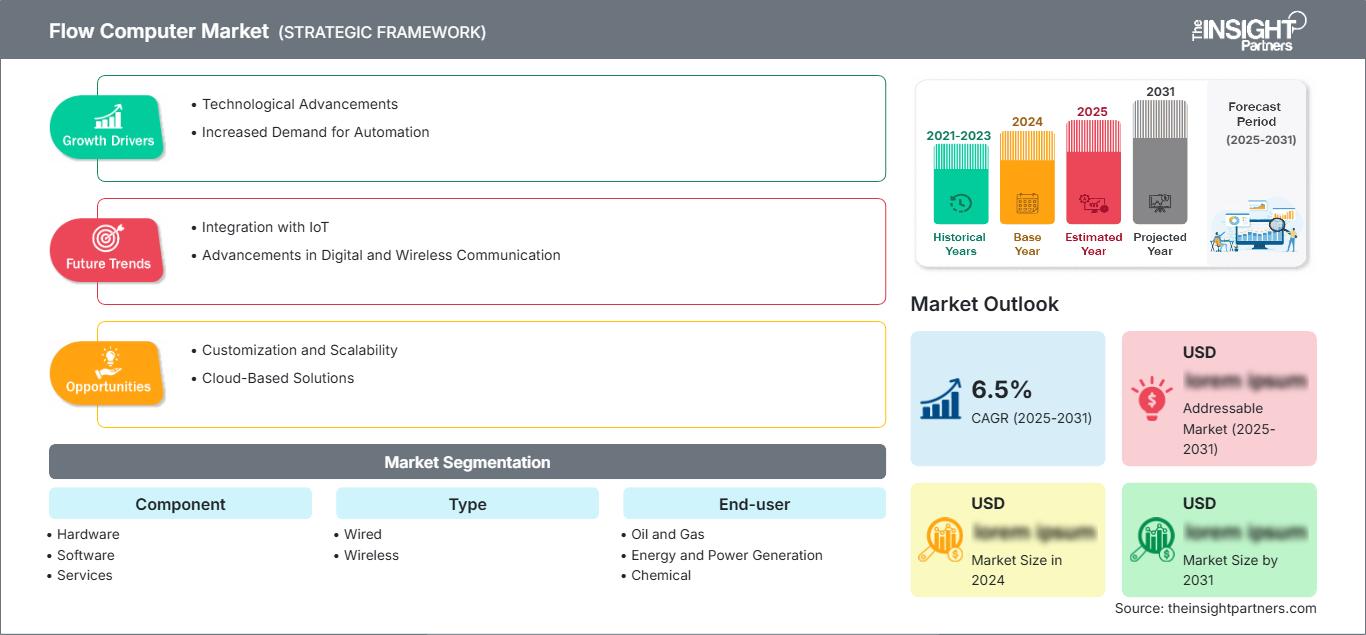
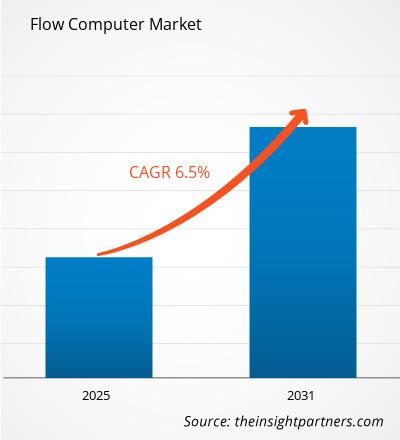
The Flow Computer Market is projected to expand from US$ 838.28 Million in 2025 to US$ 1,892.05 Million by 2034, registering a CAGR of 9.47% during 2026–2034. The market consists of hardware, software, and services in wired and wireless infrastructures where the oil and gas industry continues to be an important customer base along with power generation, chemical, and other process industries.
North America is estimated to continue playing an important role as the Flow Computer Market size will benefit from the modernization of hydrocarbon measuring infrastructure and digitalization of pipelines. The region's projected CAGR of 8.7% to 9.2% over the period 2026 to 2034 will be driven by replacement, measurement needs, cybersecurity initiatives, and instrument connectivity with SCADA systems.
Flow Computer Market Assessment and Insights
- North America: North America is projected to hold a 32–36% share in 2025 and grow at a CAGR of 8.7–9.2% between 2026–2034, supported by pipeline modernization, custody-transfer measurement, and digital oilfield investments.
- US: The US is estimated to represent 73–77% of North America's 2025 market, expanding at a CAGR of 8.8–9.3% during 2026–2034 as operators upgrade measurement and automation infrastructure.
- Europe: Europe is expected to account for a 25–29% share in 2025 and expand at a CAGR of 7.8–8.4%, led by Germany, the UK, France, Italy, and Norway through industrial automation and energy-efficiency investments.
- Asia Pacific: Asia Pacific is estimated at a 29–33% share in 2025, growing at a CAGR of 10.1–10.7% through 2034, with China, India, Japan, and South Korea benefiting from industrial expansion and infrastructure modernization.
- Largest Segment: Hardware is estimated to command a 67–71% market share in 2025, with a CAGR of 8.8–9.2% through 2034, reflecting installed-base replacement and measurement-system upgrades.
- High Growth Segment: Wireless flow computers represent a 31–35% market share in 2025 and are projected to grow at a CAGR of 10.5–11.0%, driven by remote monitoring requirements.
- Key companies analyzed in detail: ABB, Contrec Ltd, Dynamic Flow Computers, Emerson Electric Co., Kessler-Ellis Products Co. Inc., KROHNE, OMNI FLOW COMPUTERS, Inc., Schneider Electric, Thermo Fisher Scientific, Yokogawa Corporation of America.
Source: The Insight Partners' analysis based on proprietary research, government publications, company annual reports, investor presentations, industry databases, and expert interviews.
The Flow Computer Market has evolved from standalone computational units to systems where computation is coupled with measurements along with compensation, communication, diagnosis, and software programming. Modern day technology is increasingly focused on integrating measurements of pressure, temperature, density, and flow metering inputs while also facilitating SCADA and remote asset management capabilities. The production outlook is therefore increasingly focused on cybersecurity oriented software and field programming capabilities.
For the future, the market is likely to grow through developing industrial nations as companies focus on improving their measurement capabilities, increasing asset visibility, and reducing field maintenance needs. Investments in liquefied natural gas infrastructure, gas transportation, automation, and renewable energy balancing may expand applications. Focusing on accurate measurements, emission tracking, data integrity, and operational transparency could also foster investments in connected computer architectures, especially when older measuring instruments need replacement.
Flow Computer Market Report Scope
| Report Attribute | Details |
|---|---|
| Market size in 2025 | US$ 838.28 Million |
| Market Size by 2034 | US$ 1,892.05 Million |
| Global CAGR (2026 - 2034) | 9.47% |
| Historical Data | 2021-2024 |
| Forecast period | 2026-2034 |
Flow Computer Market Analysis
The demand for flow computers is largely driven by the need to transform flowmeter signals into compensated, auditable measurements amid varying operating conditions. This makes the growth of the Flow Computer Market largely tied with custody transfer needs, gas allocation, pipeline balancing, production optimization, and energy accounting. Flow computers operate in an environment where there are primary meters, pressure and temperature sensors, transmitters, communication channels, SCADA systems, and enterprise IT applications.
The supply side dynamics favors companies that can provide a combination of computation abilities, instrumentation integration capabilities, communication support, and lifecycle support services. The importance of hardware is still very high since there is a need for hardware to survive in harsh, remote, and varying temperatures. On the other hand, software is increasingly becoming very crucial in determining configuration flexibility and diagnostics capabilities.
Positioning within this market becomes increasingly differentiated due to the fact that companies utilize both measurement expertise and automation and industrial software. According to Flow Computer Market report, ABB and Emerson Electric Co. compete in terms of broad automation, while KROHNE and Yokogawa Corporation of America emphasize their measurement and instrumentation expertise. Schneider Electric incorporates software for SCADA and flow-measurement systems, while specialized suppliers include Contrec Ltd, Dynamic Flow Computers, Kessler-Ellis Products Co. Inc., and OMNI FLOW COMPUTERS, Inc.
Investment is focused increasingly on software configurability, remote diagnostics, security, and low-power field architectures, rather than on calculation functionality alone. Thermo Fisher Scientific relies on its analytical and process industry expertise, while measurement suppliers are able to build on their installed customer base. Therefore, differentiation is based on interoperability, certification, application engineering, and generation management of metering and control devices.
● REPORT CUSTOMIZATION
Tailor This Report To Align With Your Specific Business Requirements
This report can be customized to align precisely with your business objectives, scope, and target markets. Customization options include tailored segmentation, geography, competitive analysis, and strategic insights to support informed decision-making.
Customize This Report →WHAT YOU CAN ADJUST
- ● Segmentations
- ● Geography
- ● Competitive Analysis
- ● Language Preferences
Flow Computer Market: Strategic Insights
Regional Insights
North America Flow Computer Market
In 2025, North America will account for 32–36% Flow Computer Market share with a compound annual growth rate (CAGR) of 8.7–9.2% up to 2034. The region is characterized by oil and gas infrastructure, developed pipeline systems, custody transfer applications, and further investments in accurate measurements. US companies are the main customers, whereas Canada provides demand via upstream, midstream, and gas processing applications. The need for updating aging field equipment also generates recurrent demand.
The use of SCADA systems in a digital format, remote operation, and data security become crucial factors in regional deployment. Flow computers are capable of integrating pressure, temperature, and flow data, as well as performing allocation and reconciliation tasks. In addition, the region is characterized by a large installed base that needs cybersecurity updates rather than a full system change.
U.S. Flow Computer Market
North American market of the US includes 73-77% of total North American 2025 market and is expected to witness growth at CAGR 8.8-9.3% until 2034. High demand can be observed in the natural gas processing plants, pipelines, terminals, refineries, and production facilities, where accurate measurement is critical for commercial transactions and operations management. Emerson Electric Co., ABB, Schneider Electric, among others, have the required technology and services.
The development trend involves remote configuration, networking, diagnostics, and minimal field intervention. Flow computer functions together with RTUs and SCADA systems, so the operator is able to control his distributed facilities without regular trips on site. The midstream investments and need in accurate measurement records are positive factors for the US market. The adoption is most active in those regions, where measurement mistakes result in direct economic loss or reporting.
Europe Flow Computer Market
Europe will constitute a 25-29% share in 2025 and is expected to record a CAGR of 7.8-8.4%, with Germany as one of the dominant markets. The UK and Germany have a combination of mature industrial automation and energy infrastructures. France, Italy, and Spain have a contribution in terms of chemicals, utilities, manufacturing, and gas infrastructures.
The UK continues to play an important role in offshore energy and gas infrastructure, while Germany has a broad industrial measurement infrastructure. France will be able to satisfy demand via process industries and utilities, while Italy will benefit from manufacturing and gas infrastructures. Spain will make contributions from LNG, power, and industrial applications. The influence of Europe in adoption will be based on digitalization, cybersecurity, and energy transition projects.
APAC Flow Computer Market
APAC is forecasted to have a market share of 29-33% in 2025 and experience a CAGR of 10.1-10.7%. The major players include China, Japan, South Korea, India, and Australia. Process industry growth, LNG development, refineries, chemical plants, and power plants are driving the demand for these measurement devices across both greenfield and brownfield developments.
Implementation of industrial automation programs and increased infrastructural spending are enhancing the adoption of connected measurement systems. China and India offer significant prospects in terms of manufacturing and energy, while Japan and South Korea focus on efficiency. Australia plays a part via its natural resource and LNG assets. The push from government towards industrial digitalization and energy efficiency is another factor.
Middle East & Africa Flow Computer Market
The Middle East & Africa market will grow at a CAGR of 8.0–8.6% during the forecast period, driven by Saudi Arabia and backed by the UAE. Production, export, pipeline transportation, and refining and gas processing investments lead to the continuous need for precise measurement and allocation systems amid complex operating conditions.
South Africa contributes with its mining, energy and industrial processing industries, whereas the rest of MEA has growing opportunities in gas and infrastructure projects. Diversified energy sources and infrastructure construction increase demands for measurement applications other than conventional hydrocarbons. Flow computers can serve custody transfer, production accounting and remote monitoring purposes and therefore become useful not only in existing facilities but also in new projects.
Segmentation Analysis
Component
The component segment is projected to grow at a CAGR of 8.9–9.3% during 2026–2034. Hardware remains foundational because calculation, communications, and signal-processing functions require reliable field equipment. Software and services are gaining strategic importance as users seek configurable applications, remote support, lifecycle optimization, and integration with broader industrial automation environments.
- Hardware: Hardware maintains the dominant market position because flow computers must provide reliable computation, communications, and signal processing in demanding industrial environments. Replacement cycles and new installations sustain demand.
- Software: Software supports configuration, compensation algorithms, data management, diagnostics, and integration. Demand increasingly reflects the need to adapt measurement systems without replacing underlying field hardware.
- Services: Services encompass engineering, commissioning, calibration support, maintenance, and upgrades. Their importance rises where operators manage geographically distributed assets and require sustained measurement availability.
Type
The type segment is expected to register a CAGR of 9.8–10.3% from 2026–2034. Wired architectures remain widely deployed in established installations, while wireless configurations gain traction where cabling costs, remote locations, and asset accessibility make conventional connectivity less attractive.
- Wired: Wired systems remain important for fixed installations requiring deterministic communication, established control architectures, and robust continuous connectivity. Their installed base provides a substantial replacement and upgrade opportunity.
- Wireless: Wireless systems are gaining strategic relevance for remote assets, temporary installations, and locations where cabling is costly. Integration with industrial wireless networks can reduce installation complexity and improve monitoring flexibility.
End-user
The end-user segment is forecast to expand at a CAGR of 9.4–9.8% during 2026–2034. Oil and gas remains the largest application base because flow computation is central to custody transfer, allocation, production monitoring, and pipeline operations. Power, chemicals, and food processing broaden demand.
- Oil and Gas: Oil and gas represents the core demand environment, requiring accurate measurement across production, gathering, processing, transportation, storage, and custody-transfer operations.
- Energy and Power Generation: Power facilities use flow computation for fuel, steam, water, and energy accounting applications where accurate measurement supports efficiency and operational control.
- Chemical: Chemical plants require compensated measurement across fluids and process streams, making reliable computation important for batching, process control, and material balance activities.
- Food and Beverage: Hygienic processing applications use flow measurement for liquids, ingredients, cleaning systems, and utilities, with integration and traceability influencing equipment selection.
- Others: Other industrial applications include water, pharmaceuticals, mining, and manufacturing, where distributed monitoring and accurate process measurement create opportunities for adaptable flow-computing platforms.
Opportunity Snapshot
| End-user | Revenue Contribution | Trend Tag | Adoption Stage |
| Oil and Gas | High | Custody Transfer | Mature |
| Energy and Power Generation | Medium | Steam Accounting | Scaling |
| Chemical | Medium | Process Batching | Scaling |
| Food and Beverage | Low | Hygienic Metering | Scaling |
| Others | Low | Remote Monitoring | Emerging |
Flow Computer Market Growth Drivers and Impact Analysis
Expansion of Digital Measurement and Remote Operations
Industrial operators are moving measurement functions into connected architectures that support centralized supervision, automated data collection, and remote intervention. This transition increases the value of flow computers because they can perform local calculations while transmitting processed information to SCADA and enterprise systems. The operational impact is particularly significant for pipelines, well sites, terminals, and distributed utility assets where site visits are expensive. Remote configuration can shorten troubleshooting cycles, while local processing can preserve functionality during intermittent connectivity. Vendors that combine flow computation with communication protocols, diagnostics, and cybersecurity controls can capture larger portions of modernization budgets. The resulting purchasing pattern favors modular systems that integrate with installed meters and RTUs instead of requiring complete instrumentation replacement, supporting retrofit demand alongside greenfield projects.
Growing Requirement for Measurement Integrity and Data Accountability
Measurement uncertainty has direct commercial consequences wherever volumes determine settlement, allocation, inventory, or energy accounting. Operators therefore require consistent pressure and temperature compensation, reliable calculation routines, secure records, and traceable configuration. This requirement creates demand for computing platforms that can process multiple meter inputs and maintain consistent measurement logic across dispersed facilities. The commercial impact extends beyond equipment sales because calibration, configuration, software updates, and engineering support become recurring requirements. As energy companies improve reconciliation and reporting processes, measurement systems increasingly become part of broader operational-data strategies. Suppliers with established metrology expertise can therefore strengthen customer retention through lifecycle services. The trend also supports replacement of isolated legacy devices with platforms offering stronger diagnostics, communications, and centralized management capabilities.
Cybersecurity and Infrastructure Modernization Requirements
Industrial measurement systems are increasingly connected to plant networks, remote operations centers, and cloud-enabled applications, raising cybersecurity requirements for devices that previously operated with limited connectivity. Modernization programs consequently evaluate secure communications, access controls, software maintenance, and architecture compatibility alongside measurement accuracy. The impact is particularly relevant for long-lived energy infrastructure, where replacing every instrument is economically impractical. Flow computers that support staged upgrades can provide a bridge between legacy meters and modern control environments. Vendors can differentiate through secure configuration processes, authenticated communications, documented software maintenance, and compatibility with industrial cybersecurity frameworks. This creates opportunities for incremental investment, allowing operators to improve resilience without redesigning complete measurement stations. Cybersecurity therefore shifts purchasing criteria from standalone functionality toward lifecycle architecture and operational risk management.
Flow Computer Market Future Trends
Edge-Based Measurement Intelligence
Future platforms in the Flow Computer Market Trends are likely to move more analytical functionality toward the field, enabling flow computers to interpret measurement data before transmission to centralized systems. Edge-based architectures can support local anomaly detection, richer diagnostics, adaptive calculations, and faster response when network connectivity is constrained. Vendors may increasingly combine conventional flow computation with compact processing resources capable of running advanced algorithms without disrupting certified measurement functions. This evolution could improve maintenance planning by identifying abnormal pressure, temperature, or meter behavior earlier. It may also reduce unnecessary data transmission by prioritizing meaningful events rather than continuously forwarding raw measurements. As industrial networks become more distributed, edge intelligence should become an important differentiator for platforms designed to operate across remote pipelines, production facilities, terminals, and decentralized energy infrastructure.
Convergence of Flow Computation and Industrial Data Platforms
The next generation of architectures is expected to integrate flow computation more closely with industrial data platforms, asset-management applications, and enterprise analytics. Instead of treating calculated flow as an isolated measurement output, operators can use it alongside production, maintenance, inventory, and energy information. Standardized interfaces and interoperable protocols should make this convergence easier across mixed equipment environments. Suppliers may increasingly deliver application programming interfaces, secure data connectors, and configurable information models alongside traditional calculation functions. Such integration can support more consistent reporting across facilities and simplify corporate monitoring of geographically dispersed assets. Over time, purchasing decisions may therefore favor platforms capable of serving both metrology and operational-data requirements, while retaining deterministic calculation performance for regulated or commercially sensitive measurements.
Flow Computer Market Opportunities
Modernization of Legacy Measurement Stations
A substantial opportunity exists in upgrading legacy measurement stations without replacing every primary meter, transmitter, or control component. Operators can use modern flow computers to introduce improved communications, cybersecurity, diagnostics, and software capabilities while preserving proven field instrumentation. This approach can reduce project disruption and spread capital expenditure across multiple stages. Suppliers should prioritize migration tools, protocol converters, configuration utilities, and engineering services that simplify integration with existing installations. Vendors able to demonstrate compatibility across older meter technologies can address customers that face long asset lifecycles and limited availability of legacy components. The Flow Computer Market Forecast is particularly relevant across mature pipeline, refining, utility, and process-industry infrastructure, where modernization budgets increasingly favor measurable operational improvements and reduced maintenance burden over complete system replacement.
Expansion Across Emerging Industrial Economies
Emerging industrial economies provide an investment opportunity as new pipelines, gas-processing facilities, power plants, chemical complexes, and manufacturing sites increase demand for reliable measurement infrastructure. Suppliers can target these projects with scalable platforms that support multiple communication protocols and allow future software expansion. Local engineering partnerships can improve commissioning capacity and help vendors adapt products to regional standards and operating practices. India, Southeast Asia, China, and selected Middle Eastern markets are particularly relevant because industrial capacity expansion is occurring alongside broader digitalization programs. The opportunity extends beyond initial hardware deployment, since calibration, software configuration, maintenance, and lifecycle support can generate recurring revenue. Strategic positioning around interoperability and local service availability can therefore improve competitiveness where customers evaluate total lifecycle cost rather than equipment price alone.
Recent Developments
- February 2026: Exa Capital acquired Flow Software, a systems and data integration solutions provider serving businesses across Australia and New Zealand, expanding its enterprise software portfolio and regional presence.
- February 2025: Appfire acquired Flow from Pluralsight, adding a Software Engineering Intelligence (SEI) platform that provides data-driven insights into engineering performance and complements Appfire’s existing development and project-management tools.
Frequently Asked Questions

- Comprehensive Market Sizing and Forecast Analysis
- Detailed Segmentation Analysis
- In-Depth Market Dynamics Assessment
- Regional and Country-Level Insights
- Competitive Landscape and Company Benchmarking
- Strategic Business Intelligence
Recent Reports
Testimonials

The Insight Partners' SCADA System Market report is comprehensive, with valuable insights on current trends and future forecasts. The team was highly professional, responsive, and supportive throughout. We are very satisfied and highly recommend their services.
RAN KEDEM Partner, Reali Technologies LTDs
I requested a report on a very specific software market and the team produced the report in a few days. The information was very relevant and well presented. I then requested some changes and additions to the report. The team was again very responsive and I got the final report in less than a week.
JEAN-HERVE JENN Chairman, Future Analytica
We worked with The Insight Partners for an important market study and forecast. They gave us clear insights into opportunities and risks, which helped shape our plans. Their research was easy to use and based on solid data. It helped us make smart, confident decisions. We highly recommend them.
PIYUSH NAGPAL Sr. Vice President, High Beam Global
The Insight Partners delivered insightful, well-structured market research with strong domain expertise. Their team was professional and responsive throughout. The user-friendly website made accessing industry reports seamless. We highly recommend them for reliable, high-quality research services
YUKIHIKO ADACHI CEO, Deep Blue, LLC.
This is the first time I have purchased a market report from The Insight Partners.While I was unsure at first, I visited their web site and felt more comfortable to take the risk and purchase a market report.I am completely satisfied with the quality of the report and customer service. I had several questions and comments with the initial report, but after a couple of dialogs over email with their analyst I believe I have a report that I can use as input to our strategic planning process.Thank you so much for taking the extra time and making this a positive experience.I will definitely recommend your service to others and you will be my first call when we need further market data.
JOHN SUZUKI President and Chief Executive Officer, Board Director, BK Technologies
I wish to appreciate your support and the professionalism you displayed in the course of attending to my request for information regarding to infectious disease IVD market in Nigeria. I appreciate your patience, your guidance, and the fact that you were willing to offer a discount, which eventually made it possible for us to close a deal. I look forward to engaging The Insight Partners in the future, all thanks to the impression you have created in me as a result of this first encounter.
DR CHIJIOKE ONYIA MANAGING DIRECTOR, PineCrest Healthcare Ltd.Reason to Buy
- Informed Decision-Making
- Understanding Market Dynamics
- Competitive Analysis
- Identifying Emerging Markets
- Customer Insights
- Market Forecasts
- Risk Mitigation
- Boosting Operational Efficiency
- Strategic Planning
- Investment Justification
- Tracking Industry Innovations
- Aligning with Regulatory Trends





 Get Free Sample for