
GPS Tracking Device Market Trends, Demand & Growth by 2034
Coverage: By Type (Standalone Tracker, OBD Device, Advance Tracker); Deployment Type (Commercial Vehicle, Cargo and Container, Others); Industry (Transportation and Logistics, Metals and Mining, Construction, Government, Education, Others) , and Geography (North America, Europe, Asia Pacific, and South and Central America)
- Status : Data Released
- Report Code : TIPRE00007508
- Category : Electronics and Semiconductor
- No. of Pages : 150
- Available Report Formats :


- Last update date : August 17, 2026


2025 Market Size
US$ 3.2 Bn
Base year value
2034 Forecast
US$ 6.52 Bn
Projected by 2034
CAGR 2026-2034
9.28 %
Growth rate
Addressable Market
US$ 46.07 Bn
(2026-2034)
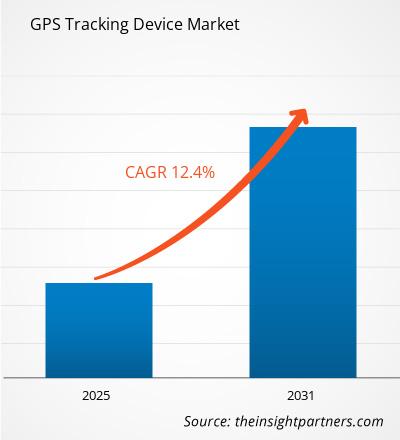
The GPS Tracking Device Market was valued at US$ 3.2 Billion in 2025 and is projected to reach US$ 6.52 Billion by 2034, registering a CAGR of 9.28% during 2026–2034. Growth reflects rising demand for real-time fleet visibility, cargo security, driver safety, route optimization, and asset utilization across transportation, logistics, construction, mining, government operations, and education-related mobility networks.
Across North America, the GPS Tracking Device Market size is supported by mature fleet telematics adoption, ELD compliance culture, high logistics density, and rising aftermarket tracker deployments. The region is expected to expand at a 7.6–8.4% CAGR during 2026–2034 as fleets link GPS hardware with predictive maintenance, driver safety analytics, insurance telematics, and vehicle electrification planning.
GPS Tracking Device Market Assessment and Insights
- North America held 32–36% share in 2025 and is expected to grow at a CAGR of 7.6–8.4% during 2026–2034, supported by ELD compliance, fleet renewal, and cold-chain visibility.
- US represented 78–82% of North America in 2025 and is projected to grow at a CAGR of 7.8–8.6% during 2026–2034, led by commercial fleets and asset tracking.
- Europe accounted for 24–28% share in 2025 and is forecast to grow at a CAGR of 8.1–8.9% during 2026–2034, with Germany, the UK, France, Italy, and Spain leading deployments.
- Asia Pacific captured 26–30% share in 2025 and is expected to grow at a CAGR of 10.2–11.4% during 2026–2034, driven by China, India, Japan, South Korea, and Australia.
- Largest Segment Commercial Vehicle held 48–52% market share in 2025 and is projected to grow at a CAGR of 8.8–9.6% during 2026–2034.
- High Growth Segment Cargo and Container held 24–28% market share in 2025 and is estimated to grow at a CAGR of 10.6–11.8% during 2026–2034.
- Key companies analyzed in detail: CalAmp Corp.; Laird Connectivity; Meitrack Group; ORBCOMM Inc.; Queclink Wireless Solutions Co., Ltd.; Shenzhen Concox Information Technology Co., Ltd.; Semtech Corporation; Teltonika Telematics; TomTom International BV; Trackimo LLC.
Source: The Insight Partners' analysis based on proprietary research, government publications, company annual reports, investor presentations, industry databases, and expert interviews.
Telemetry of a fleet is changing from passive pinging to telematics, including GNSS position tracking, mobile connection, battery monitoring, geofencing, and vehicle diagnostics. Production trends include miniaturization of components, over-the-air updating of software, multi-connection technology, and hardening. The GPS Tracking Device Market is influenced by the state of telecommunication modules market, cost-effectiveness of subscription-based software, and a need for cross-border and multi-modal operation of GPS-enabled devices.
Drivers for further development include the appearance of new logistics routes, delivery network of e-commerce, smart ports and transport chains controlled by regulatory requirements. Governments are interested in safety on roads, upgrade of customs services, and transparency of their own fleets. Enterprises need tracing of shipments and monitoring of drivers' performance. All of this is expected to positively impact the Market, which could see benefits from cheaper IoT modules, LTE-M/NB-IoT technology, and software for fleets.
GPS Tracking Device Market Report Scope
| Report Attribute | Details |
|---|---|
| Market size in 2025 | US$ 3.2 Billion |
| Market Size by 2034 | US$ 6.52 Billion |
| Global CAGR (2026 - 2034) | 9.28% |
| Historical Data | 2021-2024 |
| Forecast period | 2026-2034 |
GPS Tracking Device Market Analysis
GPS Tracking Device Market Growth relies on fleet operators requiring verifiable vehicle positioning, fuel consumption transparency, driver behavior monitoring, and theft prevention. The demand is centered around areas where high vehicle usage is critical for profitability such as trucking services, courier deliveries, public transport, construction vehicles, and field services. Hardware makers gain from the incorporation of GNSS antenna, cellular modules, accelerometer sensors, power supply, and tampering alerts into a single compact device.
Value chain efficiency is determined by the accessibility of chipsets, cellular certification, firmware robustness, mapping solutions, installation partners, and subscription-based analytics. The value chain consists of device manufacturers, telecom providers, fleet management systems providers, insurance firms, leasing companies, and system integration specialists. The supply chain trends are pointing towards multiple regions connectivity, eSIM capability, extended battery life, and robust housing due to international transportation of goods.
GPS Tracking Device Market Report suggests a highly competitive market where CalAmp Corp., ORBCOMM Inc., Queclink Wireless Solutions Co., Ltd., Shenzhen Concox Information Technology Co., Ltd., Teltonika Telematics, Meitrack Group, Laird Connectivity, Semtech Corporation, TomTom International BV, and Trackimo LLC distinguish themselves via reliability of hardware, software compatibility, connectivity, certification portfolio, battery design, and channel network coverage.
Current investments are focused on integration of telematics packages, artificial intelligence-based navigation, condition of the asset monitoring, and secure device management. The strategic position is becoming increasingly based on the ability to generate software income on a regular basis, low churn rates in relation to the fleet and the possibility to install devices at the factory stage and after-market stage.
● REPORT CUSTOMIZATION
Tailor This Report To Align With Your Specific Business Requirements
This report can be customized to align precisely with your business objectives, scope, and target markets. Customization options include tailored segmentation, geography, competitive analysis, and strategic insights to support informed decision-making.
Customize This Report →WHAT YOU CAN ADJUST
- ● Segmentations
- ● Geography
- ● Competitive Analysis
- ● Language Preferences
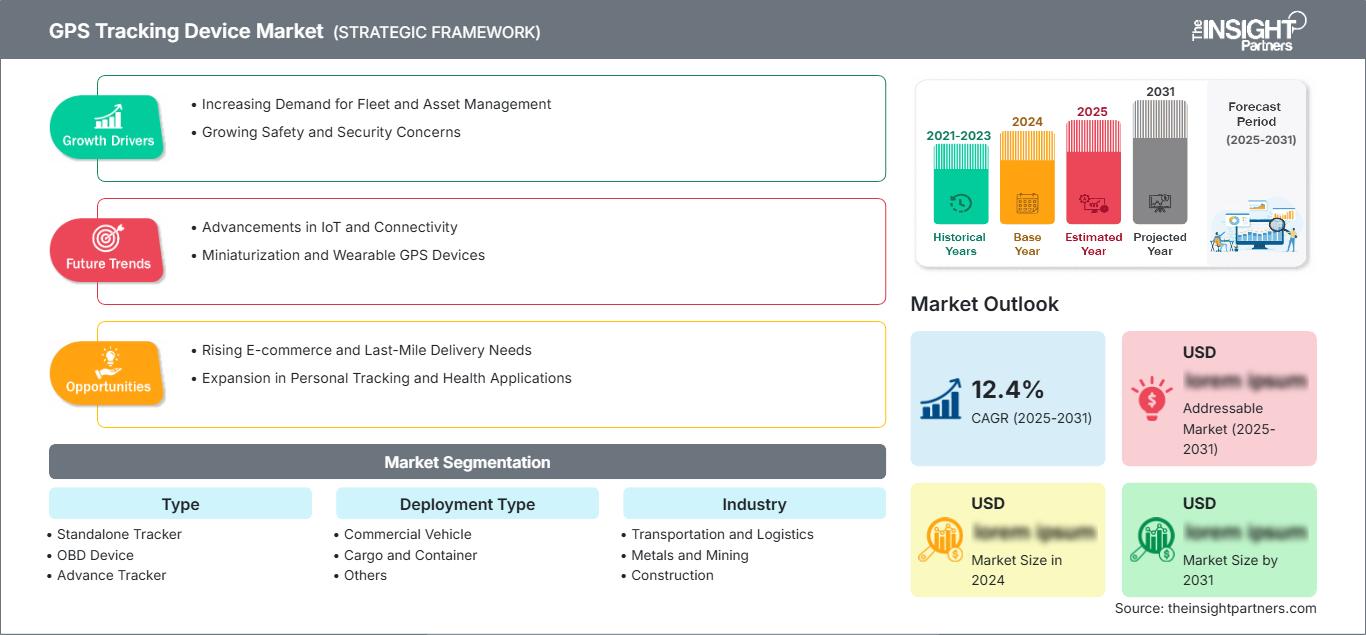
GPS Tracking Device Market: Strategic Insights
Regional Insights
North America GPS Tracking Device Market
North America was found to hold 34-38% of the Global GPS Tracking Device Market share in 2025 due to its advanced logistics ecosystem and high adoption rate of vehicle telematics solutions in the region. The regional market is forecast to register a CAGR of 8.5-10.5% in the period of 2026-2034. The high adoption rate of GPS devices from fleet operators and various regulatory requirements like the ELD Mandate in the US are fueling the replacement cycle and installation of more devices in the region. The availability of large technology providers along with 4G/5G network coverage are also assisting the connectivity and transmission capabilities of devices in the region.
U.S. GPS Tracking Device Market
North American Market is dominated by the United States market and is expected to contribute to 72%-76% of the total revenue of North America Market in 2025. The U.S. Market is predicted to witness growth of a CAGR of 8%-10% from 2026 to 2034. Some of the applications are commercial fleet tracking, asset tracking and personal safety device. Market leaders in the industry are CalAmp, Orbocomm, Sierra Wireless which have already established their footprints in the market by making use of its large distribution channel and technology collaborations. Increasing use of AI-enabled Telematics software and Insurance Telematics system provides new growth avenues for this industry.
Europe GPS Tracking Device Market
Europe accounted for 26-30% of the overall Market share in 2025, and the Europe market is expected to grow at a CAGR of 7.5-9.5% during 2026-2034. In the UK market, the high levels of activity in the logistics and e-commerce sector drive the adoption of GPS technology for the optimization of routes and monitoring of emissions in fleet operations. In Germany, which is the largest economy and also has one of the biggest automobile manufacturing industries, there is a strong demand for the GPS tracking system in the fleet of commercial vehicles and also in industrial equipment. In France and Italy, increasing adoption is seen in the transportation sector and the construction industry respectively, and in Spain, the tourism sector and the agricultural sector drive the growth.
APAC GPS Tracking Device Market
Asia-Pacific is projected to represent about 24–28% of the global market for GPS Tracking Devices by 2025 and will exhibit the fastest regional growth at a CAGR of 10-12% during the forecast period of 2026 to 2034. China is the leading market in this segment due to the presence of a large fleet of commercial vehicles in the country along with its robust manufacturing capabilities for GPS devices. Emerging markets in Asia-Pacific include India and some nations in Southeast Asia on account of the fast development in e-commerce operations, infrastructure, and government efforts towards the creation of smart cities and ITS in the region. Japan and South Korea are contributing to the market owing to their advanced technologies in automotive and industrial sectors.
Middle East & Africa GPS Tracking Device Market
The Middle East and Africa constitutes a smaller but gradually increasing part of the GPS Tracking Device market on the global front. The growth of this market in the region is expected at a rate of 7-9% CAGR during 2026-2034. Markets like Saudi Arabia and the UAE are dominant due to the requirement for large scale infrastructure development and tracking of assets in oil & gas, as well as government programs for fleet upgrading and enhanced security of citizens. South Africa's market for GPS tracking devices is driven by the mining industry as well as logistics due to use of GPS tracking for monitoring equipment and safety of labor in remote locations.
Segmentation Analysis
Type
The GPS Tracking Device Market is segmented by type into Standalone Tracker, OBD Device, and Advance Tracker. Standalone trackers dominate the market with an estimated 37–41% share in 2025, driven by their versatility across fleet management, personal safety, and asset monitoring applications. The segment is projected to grow at a CAGR of 8.5–10.5% from 2026 to 2034. OBD devices hold a significant share, supported by their plug-and-play installation and integration with vehicle diagnostics systems. Advanced trackers, equipped with IoT connectivity and AI-powered analytics, represent the fastest-growing category with a projected CAGR of 11–13%.
- Standalone Tracker – Standalone trackers are self-contained GPS devices with independent power sources and communication modules. They are widely deployed in fleet management, personal safety, and asset monitoring applications due to their ease of installation and operational flexibility across diverse environments.
- OBD Device – OBD (On-Board Diagnostics) devices plug directly into vehicle diagnostic ports, combining GPS tracking with vehicle health monitoring capabilities. Their plug-and-play design and integration with telematics platforms make them popular in fleet management and usage-based insurance applications.
- Advance Tracker – Advanced trackers incorporate IoT connectivity, AI-driven analytics, and multi-sensor capabilities for enhanced location intelligence. They support predictive maintenance, driver behavior analysis, and real-time asset condition monitoring, positioning them as high-growth solutions.
Deployment Type
The market is segmented by deployment type into Commercial Vehicle, Cargo and Container, and Others. Commercial vehicle tracking represents the largest deployment category, reflecting the extensive use of GPS devices in fleet management, logistics, and public transportation. Cargo and container tracking is gaining traction as supply chain visibility becomes a strategic priority for global trade operators.
- Commercial Vehicle – Commercial vehicle deployment encompasses tracking solutions for trucks, buses, delivery vans, and service vehicles. This segment benefits from regulatory mandates, fuel cost optimization needs, and growing adoption of telematics in fleet operations.
- Cargo and Container – Cargo and container tracking involves GPS devices attached to shipping containers, pallets, and high-value freight. The segment is driven by rising demand for real-time shipment visibility, theft prevention, and supply chain resilience.
Industry
The GPS Tracking Device Market serves multiple industry verticals including Transportation and Logistics, Metals and Mining, Construction, Government, Education, and Others. Transportation and logistics constitutes the largest end-user segment, driven by fleet optimization and last-mile delivery requirements. Construction and mining sectors are adopting rugged GPS devices for equipment tracking and workforce management, while government applications include public safety, law enforcement, and infrastructure monitoring.
- Transportation and Logistics – This vertical represents the primary market for GPS tracking devices, encompassing fleet management, route optimization, and real-time shipment tracking. Demand is driven by e-commerce growth, regulatory compliance, and operational efficiency goals.
- Metals and Mining – GPS tracking in metals and mining supports heavy equipment monitoring, asset utilization tracking, and workforce safety in remote operational sites. Ruggedized devices with extended battery life are preferred for harsh environmental conditions.
- Construction – Construction industry applications include equipment tracking, theft prevention, and workforce management on large-scale project sites. GPS devices help optimize equipment utilization and reduce operational downtime.
- Government – Government applications span public safety, law enforcement tracking, infrastructure monitoring, and emergency response coordination. GPS tracking supports asset management and operational transparency across government agencies.
- Education – Education sector applications include school bus tracking, student safety monitoring, and campus security. Growing parental concerns over student transportation safety are driving adoption in this segment.
Opportunity Snapshot
| Industry Vertical | Revenue Contribution | Trend Tag | Adoption Stage |
|---|---|---|---|
| Transportation and Logistics | High | Fleet Optimization | Mature |
| Metals and Mining | Medium | Asset Utilization | Scaling |
| Construction | Medium | Equipment Tracking | Scaling |
| Government | Medium | Public Safety | Mature |
| Education | Low | Student Safety | Emerging |
| Others | Low | Specialty Tracking | Scaling |
GPS Tracking Device Market Growth Drivers and Impact Analysis
Rising Demand for Fleet Management and Logistics Optimization
The exponential growth of e-commerce and on-demand delivery services has created unprecedented demand for real-time fleet visibility and route optimization. GPS tracking devices enable logistics operators to monitor vehicle locations, analyze driver behavior, and optimize delivery routes, directly reducing fuel consumption and operational costs. The global B2C e-commerce market is projected to exceed US$ 5.5 trillion by 2027, further amplifying the need for efficient last-mile delivery tracking solutions. Fleet operators are increasingly viewing GPS tracking not as an optional add-on but as a mission-critical tool for maintaining competitive advantage and meeting customer expectations for delivery transparency.
Regulatory Mandates for Vehicle Tracking and Safety Compliance
Governments across multiple regions have implemented regulations mandating electronic logging devices, vehicle tracking, and safety monitoring systems for commercial fleets. In the United States, the ELD mandate requires commercial drivers to use electronic logging devices to record hours of service, creating sustained demand for GPS-enabled tracking solutions. Similar regulatory frameworks in Europe, including the EU's Intelligent Transport Systems directive, are driving adoption across member states. These mandates not only create baseline demand but also encourage fleet operators to upgrade to advanced tracking systems with integrated compliance reporting capabilities.
Growing Emphasis on Asset Security and Theft Prevention
Rising incidents of cargo theft, equipment theft, and vehicle theft are driving investments in GPS tracking solutions across industries. High-value assets such as construction equipment, shipping containers, and commercial vehicles are increasingly equipped with GPS devices that provide real-time location alerts and geofencing capabilities. The healthcare sector is also adopting GPS tracking for medical equipment and pharmaceutical shipments to prevent theft and ensure supply chain integrity. Insurance companies are offering premium discounts for vehicles and assets equipped with GPS tracking, creating additional financial incentives for adoption across commercial and personal segments.
GPS Tracking Device Market Future Trends
Integration of AI and Predictive Analytics in Tracking Platforms
GPS Tracking Device Market trends are evolving from passive location-reporting tools into intelligent platforms that leverage artificial intelligence and machine learning for predictive insights. Advanced tracking systems now analyze driver behavior patterns, predict maintenance requirements, and optimize routes based on historical traffic data and real-time conditions. AI-powered analytics enable fleet managers to identify inefficiencies, reduce fuel consumption, and improve safety outcomes through proactive interventions. This trend is transforming GPS tracking from a cost center into a strategic asset that delivers measurable operational improvements and competitive differentiation.
Convergence of GPS Tracking with 5G and IoT Ecosystems
The deployment of 5G networks and expansion of IoT infrastructure are enabling next-generation GPS tracking capabilities with ultra-low latency, higher data throughput, and improved device density. Future GPS devices will leverage 5G connectivity for real-time video streaming from vehicles, enhanced indoor-outdoor positioning accuracy, and seamless integration with smart city infrastructure. The convergence of GPS tracking with IoT sensors is enabling multi-dimensional monitoring of asset conditions including temperature, humidity, vibration, and door status, expanding the value proposition beyond location tracking. This trend is expected to open new application areas in autonomous vehicle navigation, drone logistics, and connected mobility services.
GPS Tracking Device Market Opportunities
Expansion into Emerging Markets with Digital Infrastructure Investments
Emerging economies across Asia Pacific, Latin America, and Africa are investing heavily in digital infrastructure, including cellular network expansion, smart city projects, and transportation modernization programs. These investments create significant opportunities for GPS Tracking Device Market Forecast to establish footholds in rapidly growing markets. Countries such as India, Indonesia, and Brazil are witnessing rapid e-commerce growth and commercial vehicle fleet expansion, driving demand for affordable tracking solutions. Vendors that develop cost-optimized devices with localized connectivity options and simplified deployment models are well-positioned to capture market share in these high-growth regions.
Development of Specialized Tracking Solutions for Niche Applications
Beyond traditional fleet and asset tracking, there is growing demand for specialized GPS tracking solutions tailored to specific industry needs. Opportunities exist in areas such as pet tracking with advanced geofencing, elderly care monitoring with fall detection and SOS alerts, and agricultural equipment tracking for precision farming operations. The healthcare sector presents opportunities for tracking medical devices, pharmaceutical shipments, and emergency response vehicles. Vendors that develop vertically specialized solutions with industry-specific features, certifications, and compliance capabilities can differentiate themselves in an increasingly competitive market and capture higher-value segments.
Recent Developments
- July 2026: SpaceHawk GPS — launched a new real-time vehicle GPS tracker designed for consumer and fleet monitoring applications. The device provides live location updates, geofencing, speed alerts, and theft recovery features through a user-friendly mobile platform, enhancing vehicle security and tracking convenience.
- April 2026: Xovian Aerospace — unveiled an AI-powered radio frequency tracking tool capable of detecting ships and aircraft even when GPS systems are switched off. The solution leverages satellite and RF signal analysis to support maritime surveillance, defense, and industrial monitoring applications, with pilot projects already underway.
- January 2026: Catrak Technologies — launched Drivestream, a free GPS tracking app for fleet operators that uses existing mobile phones instead of dedicated GPS hardware. The platform offers real-time vehicle tracking, geofencing, trip history, workforce time tracking, and privacy controls, enabling small and medium-sized fleets to adopt telematics with no hardware or subscription costs.
Frequently Asked Questions

- Comprehensive Market Sizing and Forecast Analysis
- Detailed Segmentation Analysis
- In-Depth Market Dynamics Assessment
- Regional and Country-Level Insights
- Competitive Landscape and Company Benchmarking
- Strategic Business Intelligence
Recent Reports
Testimonials

The Insight Partners' SCADA System Market report is comprehensive, with valuable insights on current trends and future forecasts. The team was highly professional, responsive, and supportive throughout. We are very satisfied and highly recommend their services.
RAN KEDEM Partner, Reali Technologies LTDs
I requested a report on a very specific software market and the team produced the report in a few days. The information was very relevant and well presented. I then requested some changes and additions to the report. The team was again very responsive and I got the final report in less than a week.
JEAN-HERVE JENN Chairman, Future Analytica
We worked with The Insight Partners for an important market study and forecast. They gave us clear insights into opportunities and risks, which helped shape our plans. Their research was easy to use and based on solid data. It helped us make smart, confident decisions. We highly recommend them.
PIYUSH NAGPAL Sr. Vice President, High Beam Global
The Insight Partners delivered insightful, well-structured market research with strong domain expertise. Their team was professional and responsive throughout. The user-friendly website made accessing industry reports seamless. We highly recommend them for reliable, high-quality research services
YUKIHIKO ADACHI CEO, Deep Blue, LLC.
This is the first time I have purchased a market report from The Insight Partners.While I was unsure at first, I visited their web site and felt more comfortable to take the risk and purchase a market report.I am completely satisfied with the quality of the report and customer service. I had several questions and comments with the initial report, but after a couple of dialogs over email with their analyst I believe I have a report that I can use as input to our strategic planning process.Thank you so much for taking the extra time and making this a positive experience.I will definitely recommend your service to others and you will be my first call when we need further market data.
JOHN SUZUKI President and Chief Executive Officer, Board Director, BK Technologies
I wish to appreciate your support and the professionalism you displayed in the course of attending to my request for information regarding to infectious disease IVD market in Nigeria. I appreciate your patience, your guidance, and the fact that you were willing to offer a discount, which eventually made it possible for us to close a deal. I look forward to engaging The Insight Partners in the future, all thanks to the impression you have created in me as a result of this first encounter.
DR CHIJIOKE ONYIA MANAGING DIRECTOR, PineCrest Healthcare Ltd.Reason to Buy
- Informed Decision-Making
- Understanding Market Dynamics
- Competitive Analysis
- Identifying Emerging Markets
- Customer Insights
- Market Forecasts
- Risk Mitigation
- Boosting Operational Efficiency
- Strategic Planning
- Investment Justification
- Tracking Industry Innovations
- Aligning with Regulatory Trends





 Get Free Sample for