
Motor Control Centers Market Share, Demand & Growth by 2034
Coverage: by Type (Intelligent, Conventional); Voltage (Low, Medium); Industry Vertical (Metals and Mining, Cement and Manufacturing, Oil and Gas, Utilities, Others) , and Geography (North America, Europe, Asia Pacific, and South and Central America)
- Status : Data Released
- Report Code : TIPRE00007082
- Category : Electronics and Semiconductor
- No. of Pages : 150
- Available Report Formats :


- Last update date : September 30, 2026


2025 Market Size
US$ 6.47 Bn
Base year value
2034 Forecast
US$ 13.23 Bn
Projected by 2034
CAGR 2026-2034
8.27 %
Growth rate
Addressable Market
US$ 88.47 Bn
(2026-2034)
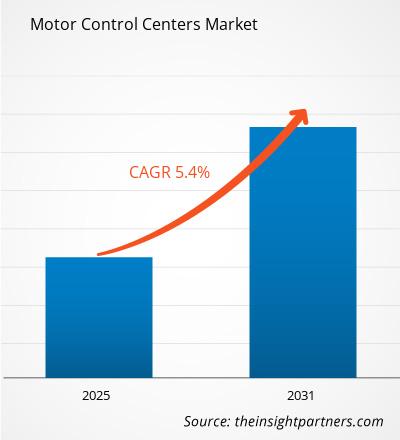
The motor control centers market size is projected to expand from US$ 6.47 Billion in 2025 to US$ 13.23 Billion by 2034, registering a CAGR of 8.27% during 2026–2034. The expansion reflects increasing deployment of centralized motor protection, switching, automation, and power distribution systems across industrial facilities. Intelligent architectures, connected devices, and modular equipment are progressively reshaping procurement priorities as operators seek greater equipment visibility and safer plant operations.s
North America is positioned for sustained expansion as industrial modernization, replacement of aging electrical infrastructure, and connected automation encourage adoption. The regional outlook indicates an estimated CAGR of 7.8–8.6% through 2034. Investments in manufacturing, utilities, water infrastructure, mining, and energy facilities are supporting demand for digitally enabled control equipment with remote diagnostics and improved operational continuity.
Motor Control Centers Market Assessment and Insights
- North America: North America is expected to represent a 31–35% motor control centers market share in 2025 and expand at a 7.8–8.6% CAGR between 2026–2034, supported by modernization programs, industrial automation, replacement demand, and stringent electrical safety requirements.
- US: The US is estimated to account for 78–82% of North America’s 2025 share and grow at a 7.9–8.7% CAGR between 2026–2034, led by manufacturing and infrastructure upgrades.
- Europe: Europe is estimated to hold a 27–30% share in 2025 and advance at a 7.1–7.9% CAGR between 2026–2034. Germany, the UK, France, Italy, and Spain remain important contributors because of industrial automation and energy-efficiency programs.
- Asia Pacific: Asia Pacific is estimated at a 28–31% share in 2025 and is projected to grow at an 8.8–9.6% CAGR between 2026–2034. China, Japan, India, and South Korea benefit from manufacturing expansion, infrastructure investment, and factory digitization.
- Largest Segment: Intelligent type is estimated to hold a 58–62% market share in 2025 and grow at a 9.2–9.8% CAGR during 2026–2034, reflecting connected monitoring and automation requirements.
- High Growth Segment: Medium voltage is estimated to account for a 18–22% market share in 2025 and grow at a 9.4–10.2% CAGR during 2026–2034, supported by heavy industrial applications.
- Key companies analyzed in detail: ABB Ltd., Eaton Corporation plc, Larsen & Toubro Limited, LS ELECTRIC Co., Ltd., Mitsubishi Electric Corporation, Rockwell Automation, Inc., Schneider Electric SE, Siemens AG, TES Group, Tesco Controls, Inc.
Source: The Insight Partners' analysis based on proprietary research, government publications, company annual reports, investor presentations, industry databases, and expert interviews.
The development of technology is shifting the systems from traditional assembly to intelligent electric systems that will be able to monitor motor condition, power consumption, protection status, and operational faults. Modular designs will also have an impact on manufacturing and installation, making it possible for producers to design modules based on their application needs. Digital communication, variable frequency drives, overload protection, and predictive maintenance will become increasingly common in industrial automation architectures, thereby increasing replacement demand.
Investments in the motor control centers market are forecast to expand over the review period into emerging manufacturing economies, data centers, utilities, mining sites, and infrastructure projects. Policies related to electrification and energy efficiency will prompt organizations to replace their legacy systems. In addition, suppliers will probably give more attention to interoperability architecture, cyber security, space-saving design, and upgrades based on service.
Motor Control Centers Market Report Scope
| Report Attribute | Details |
|---|---|
| Market size in 2025 | US$ 6.47 Billion |
| Market Size by 2034 | US$ 13.23 Billion |
| Global CAGR (2026 - 2034) | 8.27% |
| Historical Data | 2021-2024 |
| Forecast period | 2026-2034 |
Motor Control Centers Market Analysis
Motor control centers market growth comes from industrial automation as the main factor since motors are still basic elements of all pumps, compressors, conveyors, fans, crushers, and processing equipment. The demand goes through an industrial chain of electrical component producers, panel makers, automation providers, engineering companies, distributors, and finally industrial end-users. The higher needs of reliability push the customer toward assessing entire assemblies instead of separate motor starters and protective devices.
Increasing supply trends support flexible and modular platforms that decrease engineering efforts and facilitate installation. Manufacturers offer combinations of breakers, contactors, overload relays, variable frequency drives, programmable controllers, communication modules, and monitoring system in the standard architectures. Such approach allows for configuration and customization for specific application. Local manufacturing and regional support networks are critical as the timing of projects, electrical codes, enclosures, and maintenance practices vary greatly between industrial installations.
Positioning within the competitive landscape of the motor control centers market relies on the integration of electric equipment with automation and lifecycle services. ABB Ltd., Eaton Corporation plc, Schneider Electric SE, Siemens AG, and Rockwell Automation, Inc. feature extensive portfolios, which include intelligent as well as standard MCUs. The company strategy is based on connectivity, safety, diagnostic capabilities, energy management, and compatibility with existing automation environments.
Specialist and local vendors in the motor control centers market position themselves by focusing on customization, engineering, retrofitting, and application expertise. Larsen & Toubro Limited and LS ELECTRIC Co., Ltd. have high relevance to the industrial and infrastructure applications. Mitsubishi Electric Corporation, TES Group, and Tesco Controls, Inc. bring in the expertise of automation and control. Investment goes more into digital interface, remote diagnostics, cybersecurity, and modernization of existing units rather than replacement of equipment.
● REPORT CUSTOMIZATION
Tailor This Report To Align With Your Specific Business Requirements
This report can be customized to align precisely with your business objectives, scope, and target markets. Customization options include tailored segmentation, geography, competitive analysis, and strategic insights to support informed decision-making.
Customize This Report →WHAT YOU CAN ADJUST
- ● Segmentations
- ● Geography
- ● Competitive Analysis
- ● Language Preferences
Motor Control Centers Market: Strategic Insights

Regional Insights
North America motor control centers market
The motor control centers market forecast shows that North America is estimated to capture a 31–35% share in 2025 and expand at a 7.8–8.6% CAGR through 2034. The region benefits from replacement of aging electrical assemblies, manufacturing reshoring, utility modernization, and increased deployment of automated production equipment. Industrial users increasingly specify intelligent configurations to improve visibility across motors, feeders, and protective devices while reducing maintenance intervention.
The US forms the key regional player with the help of investments made into advanced manufacturing, water utility, energy plants and industrial processing. The demand from Canada comes from the areas of mining, metals, utilities and resource projects. The retrofitting process plays a key role in the sense that existing plants need to be modernized without much interruption to production processes.
U.S. motor control centers Market
The US is estimated to represent 78–82% of North America’s 2025 share and is expected to grow at a 7.9–8.7% CAGR through 2034. Manufacturing expansion, infrastructure renewal, and modernization of industrial electrical systems support demand. Applications span oil and gas, food processing, automotive, mining, water treatment, chemicals, and power generation.
Major manufacturers have a strong presence due to their local manufacturing facilities, engineering centers, distributors, and service centers. Smart systems are being chosen because of the benefits of constant monitoring and predictive maintenance, making an initial cost of purchase worthwhile. Rockwell Automation, Inc., Eaton Corporation plc, Schneider Electric SE, ABB Ltd., and Siemens AG offer connected low voltage systems. There is also a need for replacement equipment from retrofitting programs.
Europe motor control centers Market
The motor control centers market report shows that Europe is estimated to hold a 27–30% share in 2025 and expand at a 7.1–7.9% CAGR through 2034. Germany leads regional industrial demand, while the UK, France, Italy, and Spain contribute through manufacturing, utilities, infrastructure modernization, and energy-efficiency initiatives. Industrial digitization remains an important purchasing consideration.
The UK and Germany represent major adoption centers because automated production, process industries, and energy management require dependable motor control architectures. France and Italy add demand from manufacturing, water infrastructure, food processing, and machinery industries, while Spain benefits from industrial modernization and utility investment. European procurement increasingly emphasizes efficiency, safety, interoperability, and lifecycle performance alongside initial equipment cost.
APAC motor control centers Market
APAC is estimated to account for a 28–31% share in 2025 and grow at an 8.8–9.6% CAGR through 2034. China remains the leading contributor, followed by Japan, South Korea, India, and Australia. Industrial automation, manufacturing capacity additions, infrastructure projects, and electrification programs support demand across the region.
China benefits from large industrial installations, while Japan and South Korea emphasize highly automated production. India is supported by manufacturing, utilities, cement, metals, and infrastructure expansion. Australia provides opportunities through mining and resource processing. Regional policies encouraging energy efficiency and industrial modernization are strengthening adoption of intelligent control architectures.
Middle East & Africa motor control centers Market
Middle East and Africa is projected to grow at a 6.5–7.5% CAGR through 2034. Saudi Arabia and the UAE represent major regional contributors through industrial diversification, utilities, water infrastructure, and energy projects. South Africa adds demand from mining, metals, manufacturing, and electricity infrastructure.
Saudi Arabia leads regional opportunities, while the UAE emphasizes industrial facilities, utilities, and infrastructure development. South Africa remains important for mining and processing applications. Rest of MEA offers selective opportunities where new power, water, oil, gas, and industrial projects require centralized motor protection and distribution equipment.
Segmentation Analysis
Type
Type segmentation differentiates intelligent and conventional architectures according to connectivity, monitoring, automation integration, and lifecycle requirements. Intelligent configurations are gaining preference where operators require real-time equipment information, remote diagnostics, and predictive maintenance. The segment is expected to expand at a 7.9–9.8% CAGR across its configurations during 2026–2034, with digital functionality increasingly influencing specifications.
- Intelligent: Intelligent systems integrate communication-enabled protection, monitoring, and control devices, supporting centralized visibility and faster fault identification. Their strategic value increases in continuous-process facilities where downtime carries significant operational costs.
- Conventional: Conventional systems remain relevant where straightforward motor starting, protection, and distribution are priorities. They retain demand in cost-sensitive projects, established facilities, and applications with limited requirements for digital connectivity.
Voltage
Voltage segmentation covers low and medium voltage configurations serving different motor loads and industrial environments. Low voltage remains broadly deployed because of its suitability for general plant equipment, while medium voltage supports higher-power applications. Voltage-related demand is expected to expand at a 7.3–10.2% CAGR range through 2034 as industrial capacity requirements increase.
- Low: Low-voltage assemblies address extensive industrial applications, including pumps, fans, conveyors, compressors, and production machinery. Their modular architecture supports scalable plant layouts and comparatively straightforward integration with automation equipment.
- Medium: Medium-voltage systems serve high-power motors and demanding process environments. Their strategic importance is strongest in metals, mining, utilities, oil and gas, and large processing facilities requiring robust switching and protection.
Industry Vertical
Industry Vertical segmentation reflects differences in motor intensity, operating conditions, safety requirements, and investment cycles. Industrial processes with continuous operations typically place greater emphasis on reliability, monitoring, arc-flash protection, and lifecycle service. The overall segment is expected to maintain steady expansion as automation spreads across energy-intensive production environments.
- Metals and Mining: Crushing, conveying, grinding, pumping, and material handling operations create substantial requirements for dependable motor control. Retrofit programs provide additional opportunities where aging electrical infrastructure affects availability.
- Cement and Manufacturing: Cement plants and manufacturing facilities use extensive motor-driven equipment. Demand is influenced by automation, energy optimization, production expansion, and modernization of electrical control systems.
- Oil and Gas: Pumps, compressors, drilling equipment, and processing systems require robust motor control and protection. Hazardous environments and uptime requirements increase demand for specialized configurations and safety-oriented designs.
- Utilities: Water, wastewater, generation, and distribution facilities depend on motors for pumping and auxiliary processes. Intelligent monitoring can improve equipment visibility and support maintenance planning.
- Others: Other industrial applications include food processing, chemicals, transportation, and infrastructure. Requirements vary by process, but reliability, protection, modularity, and integration remain common procurement considerations.
Opportunity Snapshot
| Industry Vertical | Revenue Contribution | Trend Tag | Adoption Stage |
|---|---|---|---|
| Metals and Mining | High | Smart Mining | Scaling |
| Cement and Manufacturing | High | Factory Automation | Scaling |
| Oil and Gas | High | Remote Diagnostics | Mature |
| Utilities | Medium | Grid Modernization | Scaling |
| Others | Medium | Process Digitization | Emerging |
Motor Control Centers Market Growth Drivers and Impact Analysis
Industrial automation and connected production architectures
Automation investment is changing the role of electrical motor control from basic switching toward an information-rich layer within plant control systems. Connected overload relays, drives, controllers, and communication modules allow operators to identify abnormal operating conditions before failures become disruptive. This capability can improve maintenance scheduling and reduce dependence on manual inspection. For equipment suppliers, the shift increases the value of software compatibility, network integration, and application engineering. It also changes purchasing criteria because customers increasingly evaluate total operational performance rather than cabinet functionality alone. Plants with multiple motors can obtain greater value from centralized data visibility, particularly when production processes operate continuously and small interruptions can create material losses.
Replacement of aging industrial electrical infrastructure
A substantial opportunity arises from installed electrical systems reaching modernization or replacement stages. Legacy motor control centers can face limitations involving spare parts availability, obsolete protection technologies, inefficient wiring, and restricted communication capabilities. Replacing complete assemblies may be expensive or operationally disruptive, encouraging manufacturers to develop retrofit buckets, replacement sections, compatible components, and phased upgrade strategies. This creates recurring aftermarket revenue alongside new-project demand. Customers can modernize selected motor loads while preserving usable structures and minimizing production interruptions. Suppliers capable of supporting multiple generations of installed equipment can therefore build longer service relationships. The effect is especially relevant in mature industrial economies where plant modernization frequently competes with greenfield construction for capital expenditure.
Energy efficiency and operational safety requirements
Energy efficiency and worker protection are increasingly incorporated into electrical equipment specifications. Motors account for substantial industrial electricity consumption, making efficient speed control, optimized loading, and improved monitoring important operational considerations. Intelligent motor control architectures can integrate variable frequency drives, overload protection, energy monitoring, and safety features within coordinated systems. Arc-resistant designs and remote diagnostics can also reduce exposure during maintenance activities. These requirements encourage customers to consider equipment that combines electrical protection with operational intelligence. For manufacturers, the resulting demand favors higher-value systems capable of demonstrating measurable efficiency, reliability, and safety benefits. Industrial facilities seeking lower operating costs are therefore increasingly evaluating motor control equipment as part of broader energy-management and workplace-safety programs.
Motor Control Centers Market Future Trends
AI-assisted diagnostics and predictive asset intelligence
The motor control centers market trends indicate that AI-assisted diagnostics are expected to become more practical as motor control centers collect larger volumes of current, voltage, temperature, fault, and operating-status information. Future platforms may combine edge analytics with plant-level software to identify abnormal behavior and prioritize maintenance actions. Rather than simply displaying alarms, systems could rank equipment according to failure probability, operating criticality, and maintenance urgency. This capability may encourage suppliers to develop standardized data models and analytics packages that work across different electrical components. Integration with computerized maintenance management systems could further connect electrical events with work orders and spare-parts planning. The resulting architecture would position motor control equipment as an active source of operational intelligence rather than a passive electrical assembly.
Modular digital architectures for flexible industrial facilities
Future installations are likely to favor modular architectures that can accommodate changing production requirements without extensive redesign. Industrial facilities increasingly require flexible equipment layouts because production lines, process loads, and automation strategies can evolve over their operating lives. Modular sections, withdrawable units, standardized communication interfaces, and software-configurable devices can simplify expansion and reconfiguration. This approach also supports phased capital investment, allowing customers to add intelligence as operational priorities develop. Suppliers that design platforms around common hardware and scalable digital functions may reduce engineering complexity while supporting broader application coverage. The trend could accelerate in manufacturing environments where production flexibility and rapid commissioning are becoming strategic requirements.
Motor Control Centers Market Opportunities
Retrofit platforms for installed industrial equipment
Retrofit solutions represent an attractive investment opportunity because many operating facilities require modernization without complete replacement of electrical infrastructure. Suppliers can target installed bases with replacement buckets, intelligent starters, digital protection, communication modules, and monitoring packages designed for compatibility with existing cabinets. Such offerings can reduce project duration and limit production interruptions compared with full-system replacement. Service providers can strengthen this opportunity by combining condition assessment, engineering, installation, commissioning, and lifecycle support. Demand should be particularly relevant in mature manufacturing regions, mining facilities, utilities, and process industries where equipment has accumulated long operating histories. Companies with broad legacy compatibility and strong field-service networks may capture recurring revenue from phased modernization programs.
Integrated solutions for emerging industrial projects
New industrial projects across developing economies provide opportunities to supply complete motor control architectures rather than individual electrical components. Suppliers can combine MCC assemblies with automation controllers, drives, protection equipment, communication networks, and energy monitoring to address project requirements through a coordinated package. This approach can simplify engineering responsibility for EPC contractors and reduce integration risks during commissioning. The opportunity is particularly relevant to manufacturing expansion, cement facilities, mining projects, water infrastructure, and utility investments. Companies that establish local engineering partnerships and service capabilities can improve project responsiveness while adapting equipment to regional standards. Over time, integrated offerings may also create follow-on opportunities in maintenance, software upgrades, spare parts, and equipment modernization.
Frequently Asked Questions

- Comprehensive Market Sizing and Forecast Analysis
- Detailed Segmentation Analysis
- In-Depth Market Dynamics Assessment
- Regional and Country-Level Insights
- Competitive Landscape and Company Benchmarking
- Strategic Business Intelligence
Recent Reports
Testimonials

The Insight Partners provided valuable market intelligence that supported our global go-to-market strategy. Their team was professional, responsive, and attentive to our feedback, providing thoughtful analysis and helpful methodological clarifications throughout the project.
Junmo Kim Chief Financial Officer (CFO), Enertech Co., Ltd.
The Insight Partners' SCADA System Market report is comprehensive, with valuable insights on current trends and future forecasts. The team was highly professional, responsive, and supportive throughout. We are very satisfied and highly recommend their services.
RAN KEDEM Partner, Reali Technologies LTDs
I requested a report on a very specific software market and the team produced the report in a few days. The information was very relevant and well presented. I then requested some changes and additions to the report. The team was again very responsive and I got the final report in less than a week.
JEAN-HERVE JENN Chairman, Future Analytica
We worked with The Insight Partners for an important market study and forecast. They gave us clear insights into opportunities and risks, which helped shape our plans. Their research was easy to use and based on solid data. It helped us make smart, confident decisions. We highly recommend them.
PIYUSH NAGPAL Sr. Vice President, High Beam Global
The Insight Partners delivered insightful, well-structured market research with strong domain expertise. Their team was professional and responsive throughout. The user-friendly website made accessing industry reports seamless. We highly recommend them for reliable, high-quality research services
YUKIHIKO ADACHI CEO, Deep Blue, LLC.
This is the first time I have purchased a market report from The Insight Partners.While I was unsure at first, I visited their web site and felt more comfortable to take the risk and purchase a market report.I am completely satisfied with the quality of the report and customer service. I had several questions and comments with the initial report, but after a couple of dialogs over email with their analyst I believe I have a report that I can use as input to our strategic planning process.Thank you so much for taking the extra time and making this a positive experience.I will definitely recommend your service to others and you will be my first call when we need further market data.
JOHN SUZUKI President and Chief Executive Officer, Board Director, BK Technologies
I wish to appreciate your support and the professionalism you displayed in the course of attending to my request for information regarding to infectious disease IVD market in Nigeria. I appreciate your patience, your guidance, and the fact that you were willing to offer a discount, which eventually made it possible for us to close a deal. I look forward to engaging The Insight Partners in the future, all thanks to the impression you have created in me as a result of this first encounter.
DR CHIJIOKE ONYIA MANAGING DIRECTOR, PineCrest Healthcare Ltd.Reason to Buy
- Informed Decision-Making
- Understanding Market Dynamics
- Competitive Analysis
- Identifying Emerging Markets
- Customer Insights
- Market Forecasts
- Risk Mitigation
- Boosting Operational Efficiency
- Strategic Planning
- Investment Justification
- Tracking Industry Innovations
- Aligning with Regulatory Trends





 Get Free Sample for