
Perfume Ingredient Chemicals Market Share, Growth & Demand by 2034
Coverage: By Type (Aromatic Chemicals, Essential Oils); Application (Soaps and Detergents, Cosmetics and Toiletries, Fine Fragrances, Others) , and Geography (North America, Europe, Asia Pacific, and South and Central America)
- Status : Data Released
- Report Code : TIPRE00017984
- Category : Chemicals and Materials
- No. of Pages : 150
- Available Report Formats :


- Last update date : July 15, 2026


2025 Market Size
US$ 10.26 Bn
Base year value
2034 Forecast
US$ 16.73 Bn
Projected by 2034
CAGR 2026-2034
5.58 %
Growth rate
Addressable Market
US$ 122.34 Bn
(2026-2034)
The Perfume Ingredient Chemicals market represents a critical component of the global fragrance value chain, supplying aromatic molecules and natural extracts used across personal care, household, and luxury fragrance products. Valued at US$ 10.26 Billion in 2025, the market is projected to reach US$ 16.73 Billion by 2034, expanding at a CAGR of 5.58% during 2026–2034. Demand is being shaped by evolving consumer fragrance preferences, sustainability considerations, and increasing product differentiation across beauty and home care sectors.
North America remains one of the most influential regions in the Perfume Ingredient Chemicals market and is estimated to expand at a CAGR of approximately 5.1% through 2034. Growth is supported by strong consumption of premium beauty products, increasing adoption of fine fragrances, and continuous innovation in scent delivery technologies. The region also benefits from established fragrance manufacturers, advanced formulation capabilities, and rising consumer demand for naturally derived ingredients.
Perfume Ingredient Chemicals Market Assessment and Insights
- North America: North America accounted for 30–34% market share in 2025 and is projected to expand at a CAGR of 5.1%–5.6% during 2026–2034. Growth is driven by strong premium personal care demand and advanced fragrance formulation capabilities, which continue to accelerate ingredient consumption across the region.
- U.S.: The U.S. represented 80–84% of the North American market in 2025 and is anticipated to register a CAGR of 5.2%–5.7% during 2026–2034, supported by robust personal care consumption, high adoption of premium fragrance products, and strong innovation in specialty chemical formulations.
- Europe: Europe held 28–32% market share in 2025 and is expected to grow at a CAGR of 5.0%–5.5% during 2026–2034. France, Germany, and Italy remain key markets, driven by luxury fragrance manufacturing capabilities and strong expertise in specialty chemical development.
- Asia Pacific: Asia Pacific accounted for 27–31% market share in 2025 and is forecast to expand at a CAGR of 6.2%–6.7% during 2026–2034. China, India, and Japan are major contributors, supported by rising cosmetics production, growing disposable incomes, and increasing consumer spending on personal care products.
- Largest Segment – Aromatic Chemicals: Aromatic chemicals represented the largest market segment and are expected to grow at a CAGR of 5.4%–5.9% during 2026–2034, driven by their extensive use in fragrance formulations, stable supply chains, and cost-efficient production processes.
- High Growth Segment – Fine Fragrances: The fine fragrances segment is projected to register the fastest growth with a CAGR of 6.5%–7.0% during 2026–2034, supported by premiumization trends and rising consumer preference for luxury, personalized fragrance products.
- Key companies analyzed in detail: BASF SE; Chanel S.A.; Clarins Fragrance Group; dsm-firmenich AG; Givaudan SA; International Flavors & Fragrances Inc.; MANE; Natura & Co (Avon Products, Inc.); Shiseido Company, Limited; Zanos Ltd.
Source: The Insight Partners' analysis based on proprietary research, government publications, company annual reports, investor presentations, industry databases, and expert interviews.
The Perfume Ingredient Chemicals market has evolved from a supply-driven specialty chemicals sector into a highly innovative ecosystem serving global consumer brands. Ingredient manufacturers increasingly focus on performance, sustainability, traceability, and regulatory compliance while supporting fragrance houses with customized solutions for diverse applications.
In the coming years, it is anticipated that the market will see growth through the effects of premiumization, increased demand for personal care products in developing countries, and biotechnology advances in fragrances. Some firms driving growth in the industry include Avon Products, BASF SE, Chanel S.A., Firmenich SA, Givaudan, MANE, and International Flavors and Fragrances Inc.
Perfume Ingredient Chemicals Market Report Scope
| Report Attribute | Details |
|---|---|
| Market size in 2025 | US$ 10.26 Billion |
| Market Size by 2034 | US$ 16.73 Billion |
| Global CAGR (2026 - 2034) | 5.58% |
| Historical Data | 2021-2024 |
| Forecast period | 2026-2034 |
Perfume Ingredient Chemicals Market Analysis
Consumer demand for distinctive fragrance experiences continues to influence ingredient selection across personal care and household products. Rising disposable incomes, urbanization, and growing interest in premium grooming products are increasing the consumption of fragrance-containing formulations, supporting the perfume ingredient chemicals market share. At the same time, consumers are paying greater attention to ingredient sourcing, safety, and environmental impact, prompting manufacturers to develop more sustainable alternatives.
The value chain consists of suppliers of raw materials, producers of essential oils, producers of aromachemicals, producers of fragrances, producers of consumer goods, and the retail route. Innovation is taking place through cooperation between the producers of chemicals and fragrances for the creation of new smells, improved performances, and compliance with regulations.
Competition remains concentrated among established multinational fragrance and ingredient suppliers possessing extensive research capabilities, proprietary technologies, and global manufacturing networks. According to the perfume ingredient chemicals market report, major participants continue investing in advanced aroma chemistry, biotechnology platforms, and sustainable sourcing programs to strengthen their competitive positioning and secure long-term customer relationships.
Increasing investment is taking place in renewable feedstock, fermentation-derived fragrance compounds, and regional manufacturing expansions. Strategic acquisitions, collaborations, and capacity expansions are assisting companies in dealing with supply chain resilience considerations amid rising demand from cosmetics, toiletries, and fine fragrance producers globally.
● REPORT CUSTOMIZATION
Tailor This Report To Align With Your Specific Business Requirements
This report can be customized to align precisely with your business objectives, scope, and target markets. Customization options include tailored segmentation, geography, competitive analysis, and strategic insights to support informed decision-making.
Customize This Report →WHAT YOU CAN ADJUST
- ● Segmentations
- ● Geography
- ● Competitive Analysis
- ● Language Preferences
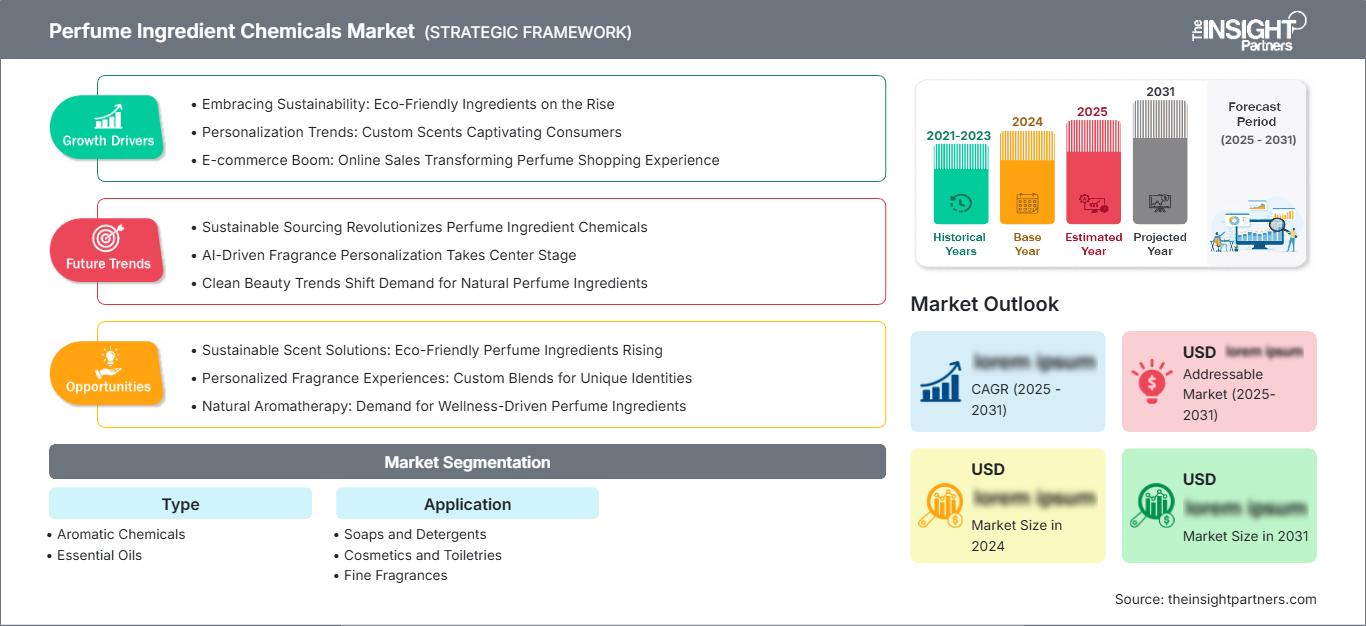
Perfume Ingredient Chemicals Market: Strategic Insights
Regional Insights
North America Perfume Ingredient Chemicals Market
North America accounts for a significant portion of global demand and is projected to register a CAGR of approximately 5.1% through 2034. Mature beauty and personal care industries, strong consumer spending on premium fragrances, and widespread adoption of scented household products support growth. Manufacturers increasingly prioritize sustainable ingredient sourcing and transparent labeling practices, contributing to the expansion of the perfume ingredient chemicals market size.
The area also has many advantages in terms of research facilities, as well as cooperation between the perfume producers and the consumer goods companies. There is also increased demand for perfumes that last long, natural essential oils, and aroma chemicals, creating business opportunities for the ingredients suppliers.
U.S. Perfume Ingredient Chemicals Market
The United States represents roughly 70–75% of the North American market and is anticipated to grow at a CAGR of around 5.2% during the forecast period. The country's strong position reflects its large personal care sector, high consumption of premium fragrances, and presence of major industry participants operating extensive formulation and innovation centers, as highlighted in the perfume ingredient chemicals market forecast.
The increasing demand for natural cosmetics and personalized perfumes is affecting ingredient sourcing approaches. High-quality fragrances, high-end personal care products, and high-end laundry care products have more and more aroma chemicals and natural ingredients used in their formulation. Companies such as International Flavors and Fragrances Inc., Givaudan, BASF SE, and Firmenich have large-scale facilities to cater to their domestic and foreign customers.
Europe Perfume Ingredient Chemicals Market
Europe remains the leading regional market, accounting for approximately 32–37% of global revenue. The region is forecast to expand at a CAGR of around 5.0% through 2034. Long-established fragrance traditions, advanced manufacturing capabilities, and strong regulatory frameworks continue to support demand for high-quality perfume ingredient chemicals.
The region's leadership is reinforced by the presence of globally recognized fragrance houses, luxury brands, and ingredient manufacturers. Sustainability initiatives, responsible sourcing programs, and investments in green chemistry are influencing product development strategies, reflecting key perfume ingredient chemicals market trends across the value chain. France remains the leading country due to its historical prominence in perfumery and fragrance innovation.
The market also benefits from high export volumes of fragrance ingredients and finished goods. Innovation in aroma ingredients produced through biotechnology and premium fragrances is expected to give Europe an edge in the global fragrance ingredient manufacturing industry.
The UK market is fueled by premium beauty demand, retail fragrance sales, and niche fragrances. Supplier companies are addressing the changing consumer demands with customized aroma and sustainable materials.
Germany serves as a major production and innovation hub for fragrance ingredients. Advanced chemical manufacturing capabilities, strong research investment, and growing demand for sustainable aroma compounds support the steady expansion of the perfume ingredient chemicals market.
France leads regional fragrance creation activities, while Italy and Spain contribute through cosmetics manufacturing and personal care production. Together, these countries reinforce Europe's leadership in fine fragrances and specialty aroma ingredient development.
APAC Perfume Ingredient Chemicals Market
Asia Pacific is projected to be the fastest-growing region, expanding at a CAGR of approximately 6.6% through 2034 while accounting for around 28–33% of global revenue. Rapid urbanization, rising incomes, and increasing adoption of personal grooming products are creating strong demand for fragrance ingredients across the region.
China remains the leading country due to its extensive manufacturing ecosystem, growing cosmetics sector, and expanding domestic fragrance consumption. Government support for specialty chemicals manufacturing and increasing investments in personal care production continue to strengthen market prospects.
Japan and South Korea contribute through innovation-driven beauty industries. At the same time, India represents a rapidly expanding opportunity supported by rising consumer awareness and premiumization trends within the perfume ingredient chemicals market. Australia adds demand through mature personal care and household product markets. Collectively, these factors support robust regional growth.
Middle East & Africa Perfume Ingredient Chemicals Market
The Middle East & Africa market is anticipated to register a CAGR of approximately 5.8% through 2034. Growing demand for premium fragrances, expanding beauty sectors, and increasing urban populations are supporting market development across major economies.
Saudi Arabia emerges as the dominant country, enjoying the advantage of cultural inclination towards fragrances as well as increased luxury product consumption. UAE functions as the regional trading center linking global vendors to regional buyers as well as fragrance producers.
Economic diversification policies and developments in infrastructural improvements have set the right conditions for the demand for fragrance ingredients. South Africa is a key market player in the African region, and growth in the MEA region is driven by growing investments in consumer goods manufacturing and distribution.
Segmentation Analysis
Type
- Aromatic Chemicals – Represent the largest segment owing to their versatility, consistency, scalability, and ability to create complex fragrance accords across fine fragrances, household products, cosmetics, and personal care formulations.
- Essential Oils – Demand is driven by consumer preference for natural ingredients, clean-label positioning, aromatherapy applications, and increasing use in premium beauty and wellness-oriented product formulations.
Application
- Soaps and Detergents – Fragrance ingredients enhance product appeal and differentiation while supporting long-lasting freshness requirements in household cleaning and fabric care applications.
- Cosmetics and Toiletries – Growing demand for skincare, haircare, deodorants, and personal hygiene products continues to increase consumption of sophisticated aroma ingredients and natural extracts.
- Fine Fragrances – Premium perfume creation relies heavily on high-value aromatic chemicals and essential oils that deliver unique scent profiles, longevity, and luxury positioning.
Opportunity Snapshot
| Application | Revenue Contribution | Trend Tag | Adoption Stage |
| Soaps and Detergents | High | Freshness Tech | Mature |
| Cosmetics and Toiletries | High | Clean Beauty | Scaling |
| Fine Fragrances | Medium | Premiumization | Mature |
Perfume Ingredient Chemicals Market Growth Drivers and Impact Analysis
Premium Beauty and Personal Care Consumption Expanding Fragrance Demand
The continued premiumization of beauty and personal care products is creating sustained demand for advanced perfume ingredient chemicals. Consumers increasingly seek differentiated sensory experiences, encouraging brands to invest in sophisticated fragrance systems that enhance product identity and user engagement. Premium shampoos, skincare products, deodorants, body washes, and cosmetic formulations frequently incorporate specialized aroma ingredients to create recognizable brand signatures.
This trend extends beyond luxury categories into mass-market products where fragrance plays a critical role in consumer purchasing decisions. Manufacturers are therefore increasing investments in ingredient innovation, fragrance customization, and long-lasting scent technologies. The resulting demand supports growth across aromatic chemicals and essential oils within the perfume ingredient chemicals market, while encouraging collaboration between fragrance houses and consumer goods manufacturers. As premium personal care adoption expands globally, ingredient suppliers gain opportunities to deliver higher-value formulations and specialized fragrance solutions.
Growing Preference for Natural and Sustainable Ingredients
Sustainability considerations are increasingly influencing purchasing decisions throughout the fragrance value chain. Consumers, regulators, and brand owners are placing greater emphasis on renewable sourcing, traceability, reduced environmental impact, and responsible production practices. This shift is increasing demand for essential oils, biotechnology-derived fragrance molecules, and sustainably produced aroma chemicals.
Manufacturers are investing in green chemistry, renewable feedstocks, and transparent sourcing programs to align with evolving market expectations. Sustainable fragrance ingredients enable consumer brands to strengthen environmental positioning while maintaining product performance. The movement toward responsible ingredient selection is also encouraging innovation in alternative production methods, including fermentation and bio-based synthesis. These developments are reshaping competitive dynamics and creating new avenues for differentiation across the Perfume Ingredient Chemicals market.
Expansion of Fine Fragrance and Niche Perfumery Markets
There is a rise in the popularity of luxury perfumes and niche perfumes, which increases the need for specific perfume ingredients. People are more interested in having unique scents, artisanal blends, and quality perfumes different from what is usually available in the market. This gives perfume producers a motive to employ various aromachemicals and unique essences.
Niche fragrance brands often emphasize creativity, exclusivity, and storytelling, creating opportunities for ingredient suppliers capable of delivering distinctive olfactory materials. At the same time, luxury fragrance brands continue introducing new collections targeting emerging consumer segments. The resulting increase in fragrance launches strengthens demand throughout the ingredient ecosystem and supports investment in advanced aroma chemistry, sustainable sourcing, and innovative scent technologies.
Perfume Ingredient Chemicals Market Future Trends
Biotechnology-Derived Aroma Molecules Gaining Commercial Momentum
Biotechnology is becoming an increasingly important production pathway for fragrance ingredients. Fermentation-based manufacturing techniques enable producers to create high-quality aroma molecules while reducing dependence on traditional raw material sources. These technologies offer advantages related to consistency, scalability, sustainability, and supply security.
Participants in the industry are increasing their investments in technologies that involve the use of biotechnology to manufacture fragrances that have less of an impact on the environment. With improvements in viability, biotechnology-based ingredients are predicted to be increasingly used in mass market and luxury fragrances. This could lead to major changes in sourcing and manufacturing practices within the fragrance industry.
Advanced Fragrance Delivery Systems Enhancing Product Performance
Innovation in fragrance delivery technologies is transforming how perfume ingredient chemicals are utilized across applications within the perfume ingredient chemicals market. Manufacturers are developing controlled-release systems, encapsulation technologies, and ingredient platforms that improve fragrance longevity and performance under diverse usage conditions.
These technologies are particularly valuable in laundry care, personal care, and fine fragrance products, where consumers increasingly expect longer-lasting scent experiences. Future development efforts are likely to focus on improving efficiency, sustainability, and customization capabilities. Companies capable of integrating advanced chemistry with fragrance creativity will be positioned to capture growing demand for high-performance scent solutions. Long-term adoption is expected to strengthen the value proposition of premium fragrance ingredients.
Perfume Ingredient Chemicals Market Opportunities
Emerging Market Beauty Consumption Creating Untapped Revenue Streams
Growth in the number of middle-class people in Asian, Middle Eastern, African, and some Latin American countries has created a lot of opportunities for perfume ingredients suppliers. The increase in disposable incomes and greater awareness about personal care products has contributed to higher usage of fragrances, cosmetics, and household products with scents.
The formation of local partnerships, manufacturing facilities in the region, and product offerings will be beneficial in penetrating the market more effectively. In addition, investments in distribution channels and application-specific ingredient development may help in enhancing the competitive position. As consumers develop a preference for superior products, there are a lot of opportunities available to suppliers of perfume ingredients.
Development of Sustainable Signature Ingredients for Premium Brands
Exclusive raw materials are being sought by premium perfumes and beauty companies, where the performance, sustainability, and brand-building attributes of the products are valued together. This will provide an opportunity to the manufacturers who have the capability of providing exclusive aroma compounds, sustainably sourced essential oils, and novel biochemical raw materials.
Incorporating R&D in the process could enable one to create unique products that could fetch higher prices and also help in building customer loyalty. Companies that succeed in integrating their sustainability aspects with unique aromas would be able to secure a competitive edge in luxury fragrances, high-end cosmetics, and specialty personal care industries.
Recent Developments
- April, 2026: BASF's Aroma Ingredients business unit announced the official launch of three newly built world-scale plants – menthol and linalool in Ludwigshafen, Germany, and citral in Zhanjiang, China. This announcement follows the inauguration ceremony of BASF's Zhanjiang Verbund site held on March 26, 2026. In Ludwigshafen, the investment is in the triple-digit million-euro range.
- February, 2026: Givaudan, the global leader in Fragrance and Beauty, announced the expansion of its fragrance precursor collection. A precursor diffuses fragrant molecules slowly when triggered by natural factors like oxygen or the humidity of air, extending scent notes over days. With the launch of Scentaurus PolyDoux, Givaudan is opening the Scentaurus palette to fruity gourmand notes and unlocking new creative possibilities for personal care applications like shampoos.
- July, 2025): IFF, a global leader in flavors, fragrances, and biosciences, launched ENVIROCAP, its newest sustainable scent delivery system designed for the future of fabric care. ENVIROCAP sets a new standard in innovation: it is fully ECHA-compliant, biodegradable, and vegan-suitable. At the heart of this technology is a proprietary biopolymer that delivers long-lasting fragrance while reducing environmental impact.
Frequently Asked Questions

- Comprehensive Market Sizing and Forecast Analysis
- Detailed Segmentation Analysis
- In-Depth Market Dynamics Assessment
- Regional and Country-Level Insights
- Competitive Landscape and Company Benchmarking
- Strategic Business Intelligence
Recent Reports
Testimonials

The Insight Partners' SCADA System Market report is comprehensive, with valuable insights on current trends and future forecasts. The team was highly professional, responsive, and supportive throughout. We are very satisfied and highly recommend their services.
RAN KEDEM Partner, Reali Technologies LTDs
I requested a report on a very specific software market and the team produced the report in a few days. The information was very relevant and well presented. I then requested some changes and additions to the report. The team was again very responsive and I got the final report in less than a week.
JEAN-HERVE JENN Chairman, Future Analytica
We worked with The Insight Partners for an important market study and forecast. They gave us clear insights into opportunities and risks, which helped shape our plans. Their research was easy to use and based on solid data. It helped us make smart, confident decisions. We highly recommend them.
PIYUSH NAGPAL Sr. Vice President, High Beam Global
The Insight Partners delivered insightful, well-structured market research with strong domain expertise. Their team was professional and responsive throughout. The user-friendly website made accessing industry reports seamless. We highly recommend them for reliable, high-quality research services
YUKIHIKO ADACHI CEO, Deep Blue, LLC.
This is the first time I have purchased a market report from The Insight Partners.While I was unsure at first, I visited their web site and felt more comfortable to take the risk and purchase a market report.I am completely satisfied with the quality of the report and customer service. I had several questions and comments with the initial report, but after a couple of dialogs over email with their analyst I believe I have a report that I can use as input to our strategic planning process.Thank you so much for taking the extra time and making this a positive experience.I will definitely recommend your service to others and you will be my first call when we need further market data.
JOHN SUZUKI President and Chief Executive Officer, Board Director, BK Technologies
I wish to appreciate your support and the professionalism you displayed in the course of attending to my request for information regarding to infectious disease IVD market in Nigeria. I appreciate your patience, your guidance, and the fact that you were willing to offer a discount, which eventually made it possible for us to close a deal. I look forward to engaging The Insight Partners in the future, all thanks to the impression you have created in me as a result of this first encounter.
DR CHIJIOKE ONYIA MANAGING DIRECTOR, PineCrest Healthcare Ltd.Reason to Buy
- Informed Decision-Making
- Understanding Market Dynamics
- Competitive Analysis
- Identifying Emerging Markets
- Customer Insights
- Market Forecasts
- Risk Mitigation
- Boosting Operational Efficiency
- Strategic Planning
- Investment Justification
- Tracking Industry Innovations
- Aligning with Regulatory Trends





 Get Free Sample for