
Water Softening Systems Market Demand, Trends & Forecast by 2034
Coverage: By Operation (Electric, Non-Electric); Design (Mono Cylinder, Twin Cylinder, Multi Cylinder); Application (Industrial, Commercial, Residential) , and Geography (North America, Europe, Asia Pacific, and South and Central America)
- Status : Data Released
- Report Code : TIPRE00003253
- Category : Electronics and Semiconductor
- No. of Pages : 150
- Available Report Formats :


- Last update date : September 28, 2026


2025 Market Size
US$ 3.82 Bn
Base year value
2034 Forecast
US$ 5.37 Bn
Projected by 2034
CAGR 2026-2034
3.87 %
Growth rate
Addressable Market
US$ 41.77 Bn
(2026-2034)
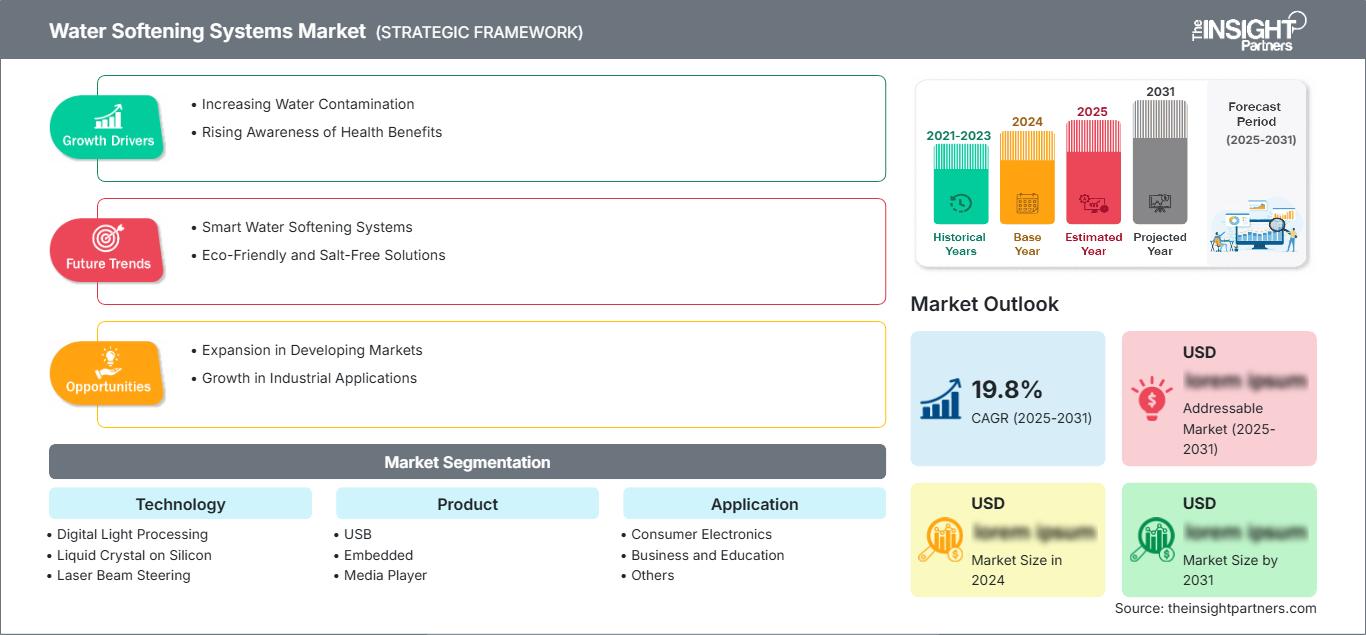
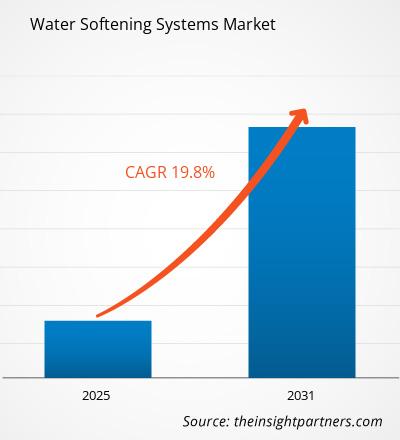
The Water softening systems market is valued at US$ 3.82 Billion in 2025 and is projected to reach US$ 5.37 Billion by 2034, registering a CAGR of 3.87% during 2026–2034. The market encompasses systems designed to reduce calcium and magnesium hardness across residential, commercial, and industrial water applications. Demand is increasingly influenced by equipment protection, water-use efficiency, installation economics, and the need for dependable treatment performance.
North America is expected to remain a structurally important market, supported by established residential treatment penetration, aging plumbing infrastructure, replacement demand, and awareness of scale-related maintenance costs. The water softening systems market size is also supported by commercial facilities seeking consistent water quality for boilers, laundry operations, food service, hospitality, and other water-intensive applications.
Water Softening Systems Market Assessment and Insights
- North America: North America is estimated to represent a 34–38% share in 2025 and is expected to grow at a 3.5–4.3% CAGR between 2026–2034, supported by replacement demand, hard-water prevalence, and mature dealer-service networks.
- US: The US accounts for approximately 74–78% of North America's 2025 value and is projected to grow at a 3.6–4.4% CAGR between 2026–2034, led by residential and light-commercial installations.
- Europe: Europe is estimated at a 27–31% share in 2025 and is expected to expand at a 3.3–4.1% CAGR between 2026–2034, with Germany, the UK, France, Italy, and Spain supporting demand through household renovation and water-efficiency priorities.
- Asia Pacific: Asia Pacific is estimated at a 21–25% share in 2025 and is forecast to grow at a 4.4–5.3% CAGR between 2026–2034, led by China, Japan, India, South Korea, and Australia as urbanization and industrial water management accelerate.
- Largest Segment: The Product segment is estimated to hold a 34–38% market share in 2025 and grow at a 4.0–4.7% CAGR between 2026–2034, reflecting demand for differentiated system configurations.
- High Growth Segment: The Application segment is estimated at a 24–28% market share in 2025 and is expected to register a 4.4–5.2% CAGR between 2026–2034, supported by broader commercial and institutional adoption.
- Key companies analyzed in detail: BWT AG; Culligan International Company; EcoWater Systems LLC.; Harvey Water Softeners Ltd.; HydroFLOW USA; Wychwood Water Systems; Kinetico Incorporated; Marlo Incorporated; Monarch Water Ltd.; Pelican Water Systems.
Source: The Insight Partners' analysis based on proprietary research, government publications, company annual reports, investor presentations, industry databases, and expert interviews.
The water softening systems market has evolved from mechanically controlled equipment toward more efficient, application-specific treatment platforms. Metered regeneration, dual-tank configurations, improved resin performance, compact assemblies, and connected monitoring increasingly differentiate products. Manufacturers are also balancing hardness-removal performance against salt and water consumption. This evolution is particularly relevant where utilities, households, and industrial operators are seeking lower operating costs without compromising treatment continuity.
Looking forward, the water softening systems market is likely to benefit from replacement cycles in developed economies and first-time adoption in urbanizing markets. Investment is shifting toward systems that combine treatment with monitoring, service alerts, and resource optimization. Regulatory attention to water conservation and discharge management may encourage more precise regeneration and alternative conditioning approaches, while professional installation networks remain important for complex commercial and industrial applications.
Water Softening Systems Market Report Scope
| Report Attribute | Details |
|---|---|
| Market size in 2025 | US$ 3.82 Billion |
| Market Size by 2034 | US$ 5.37 Billion |
| Global CAGR (2026 - 2034) | 3.87% |
| Historical Data | 2021-2024 |
| Forecast period | 2026-2034 |
Water Softening Systems Market Analysis
The water softening systems market growth is primarily connected with the economic consequences of hard water. Calcium and magnesium buildup in pipes, heat exchangers, plumbing fittings, and appliances may raise maintenance needs and decrease efficiency in operation. The ecosystem will thus involve resin and media suppliers, valve and controls suppliers, equipment assembler and installer, dealer, service provider, salt supplier, and monitor supplier. There is also revenue from regular maintenance and replacement of consumable supplies.
The supply landscape is increasingly being driven by modular equipment, which can be customized to fit household size, water hardness, flow, and installation restrictions. Competing on factors such as resin capacity, regeneration efficiency, cabinet construction, controls, and services, suppliers will find industrial customers valuing reliability and consistent water treatment quality and residential customers focusing on ease-of-use and total cost of ownership. This allows for the development of both premium systems and cost-effective equipment.
Competitive positioning in the water softening systems market remains fragmented, with established brands competing alongside regional specialists. Culligan International Company and EcoWater Systems LLC highlight extensive product lines and services ecosystems, whereas Kinetico Incorporated specializes in non-electric systems and dual tank systems. Specialist positioning in certain European markets is exhibited by BWT AG, Harvey Water Softeners Ltd., Wychwood Water Systems, and Monarch Water Ltd.
Investment in strategy increasingly focuses on efficiency, distribution networks, services and connectivity. Marlo Incorporated caters to industrial water treatment needs, whereas Pelican Water Systems focuses on residential water treatment needs. HydroFLOW USA offers another technology approach, and other aspects of competition include specialist installers and private labelers. Companies with strong dealer networks and reliable after-sales service can defend margins more effectively than suppliers competing solely on equipment price, according to the Water Softening Systems Market report.
● REPORT CUSTOMIZATION
Tailor This Report To Align With Your Specific Business Requirements
This report can be customized to align precisely with your business objectives, scope, and target markets. Customization options include tailored segmentation, geography, competitive analysis, and strategic insights to support informed decision-making.
Customize This Report →WHAT YOU CAN ADJUST
- ● Segmentations
- ● Geography
- ● Competitive Analysis
- ● Language Preferences
Water Softening Systems Market: Strategic Insights
Regional Insights
North America Water Softening Systems Market
North America is estimated to account for 34–38% of the 2025 Water Softening Systems Market and is projected to expand at a 3.5–4.3% CAGR through 2034. The region benefits from established household treatment awareness, widespread hard-water exposure, mature replacement cycles, and professional installation infrastructure. Residential systems remain important, while hospitality, healthcare, food service, and commercial buildings contribute recurring demand.
The US represents approximately 74–78% of North America's 2025 value, with Canada providing the remaining major contribution. Replacement of aging equipment, water-quality awareness, and appliance protection support purchases. Smart controls, salt-level notifications, metered regeneration, and service connectivity are gaining relevance because they reduce maintenance uncertainty. Commercial operators increasingly evaluate equipment through total cost of ownership rather than initial purchase price, supporting higher-efficiency systems.
U.S. Water Softening Systems Market
The US represents approximately 74–78% of North America's 2025 value and is forecast to grow at a 3.6–4.4% CAGR through 2034. Regional demand varies with groundwater hardness, housing characteristics, water utility conditions, and consumer familiarity with treatment equipment. Residential replacement remains a substantial demand pool.
Companies such as Culligan International Company, EcoWater Systems LLC., Kinetico Incorporated, and Pelican Water Systems hold noticeable market presence owing to their networks of dealers and direct sales. Applications now embrace whole-house water treatment, well water conditioning, and commercial applications. Connected solutions are becoming popular due to salt alert, water consumption tracking, remote diagnostics and maintenance notifications, whereas double-tank designs are attracting people who need a softened water supply at all times.
Europe Water Softening Systems Market
Europe is estimated to represent a 27–31% of the Water Softening Systems Market share in 2025 and is projected to grow at a 3.3–4.1% CAGR through 2034. Germany leads as a market, and the UK, France, Italy, and Spain participate through residential refurbishing, the hospitality sector, commercial water purification, and knowledge about appliance-level protection. Product efficiency and ease of installation continue to be critical criteria for buying.
In the UK, the household water treatment need arises from hard water in population centers. In Germany, residential as well as commercial uses, along with high engineering standards, prevail. In France and Italy, there are prospects in house modernization and the hospitality sector, while in Spain, water-efficiency considerations and diverse water qualities help the case. BWT AG, Harvey Water Softeners Ltd., Wychwood Water Systems, and Monarch Water Ltd. increase competition in the region, and service provision is a crucial factor.
APAC Water Softening Systems Market
APAC is estimated to hold a 21–25% share of the Water Softening Systems Market in 2025 and is expected to grow at a 4.4–5.3% CAGR through 2034. China remains a leading market, followed by Japan, India, South Korea, and Australia. Industrial water treatment, urban development, hospitality expansion, and household awareness provide multiple demand channels.
China and India offer substantial long-term potential through industrialization and urban housing growth, while Japan and South Korea favor technologically advanced and space-efficient equipment. Australia has established awareness of water management and household treatment. Policy attention to water efficiency, industrial discharge, and infrastructure modernization supports investment, while local distribution capability remains essential for market penetration.
Middle East & Africa Water Softening Systems Market
The Middle East and Africa Water Softening Systems Market is estimated to expand at a 3.8–4.7% CAGR through 2034, supported by infrastructure development, desalination-linked water treatment, hospitality investment, and industrial water requirements. Saudi Arabia and the UAE represent leading Gulf opportunities, while South Africa provides an important sub-Saharan demand center.
Saudi Arabia and the UAE are backed by extensive commercial, residential, and hospitality projects, whereby water treatment is an aid to equipment protection. South Africa has demand from residential and industrial consumers owing to varying water quality. The remaining MEA countries are more project-based, where purchasing decisions will be determined by infrastructure budgets, water shortages, energy aspects, and technical service availability.
Segmentation Analysis
Technology
Technology influences equipment architecture, installation requirements, treatment precision, and lifecycle economics. The segment is expected to grow at a 3.7–4.4% CAGR from 2026–2034 as manufacturers improve control systems and treatment efficiency. However, the supplied technology taxonomy spans digital projection technologies rather than conventional water-treatment mechanisms, so its use here is treated as the mandated segmentation framework rather than a technical definition of softening processes.
- Digital Light Processing: This category represents a technology classification within the supplied framework and can support compact, digitally controlled product architectures where manufacturers integrate electronic controls and monitoring functions.
- Liquid Crystal on Silicon: The category can be viewed as a specialized technology classification, with strategic relevance primarily where compact electronics, control interfaces, and digitally enabled equipment architectures overlap.
- Laser Beam Steering: This classification represents a specialized technology pathway and has limited direct relevance to conventional softening, but it remains retained to preserve the supplied segmentation structure.
- Holographic Laser Projection: This category represents an advanced technology classification in the supplied framework and is treated as a niche classification rather than a mainstream softening technology.
Product
Product is estimated to be the largest supplied segment, with a 4.0–4.7% CAGR from 2026–2034. Product configuration determines installation flexibility, connectivity, maintenance requirements, and customer economics. Demand is increasingly influenced by compact form factors, automated controls, serviceability, and integration with broader water-treatment equipment. The segment therefore, captures meaningful differentiation between entry-level systems and sophisticated treatment platforms.
- USB: USB-oriented configurations are relevant to digitally enabled equipment where service access, data transfer, diagnostics, or configuration can be incorporated into maintenance workflows.
- Embedded: Embedded configurations support integrated functionality and can enable more compact equipment architecture, automated control, sensor integration, and monitoring capabilities.
- Media Player: This classification represents a specialized product category in the supplied framework and has limited direct relevance to conventional water softening equipment.
- Stand-alone: Stand-alone configurations remain strategically important because they allow dedicated treatment installation, straightforward replacement, and compatibility with existing plumbing and filtration infrastructure.
Application
Application is expected to register a 4.4–5.2% CAGR from 2026–2034, making it the highest-growth main segment in the supplied framework. Application requirements influence product selection, installation scale, operating schedules, and service intensity. Commercial and institutional buyers typically prioritize reliability and lifecycle economics, whereas residential users emphasize convenience, space efficiency, maintenance simplicity, and protection of appliances and plumbing.
- Consumer Electronics: This category is retained from the supplied framework and represents a specialized application classification rather than a conventional primary end-use category for water softening systems.
- Business and Education: Institutional settings can require dependable water quality for kitchens, sanitation, laundry, laboratories, and facility operations, creating opportunities for appropriately sized treatment solutions.
- Others: This sub-segment is retained in the supplied taxonomy but is not described, in accordance with the specified reporting requirement.
Opportunity Snapshot
| Application | Revenue Contribution (High/Medium/Low) | Trend Tag (MAX 2 words) | Adoption Stage (Emerging/Scaling/Mature) |
| Consumer Electronics | Low | Smart Integration | Emerging |
| Business and Education | Medium | Institutional Treatment | Scaling |
| Others | Low | Niche Uses | Emerging |
Water Softening Systems Market Growth Drivers and Impact Analysis
Hard-water damage and appliance protection economics
The formation of hard water scale forms an economic motivation for water treatment since mineral buildup may have an effect on plumbing fixtures, heat transfer surfaces, water heaters, dishwashers, laundry machines, and other appliances. In the process of considering life cycle costs, the economic rationale moves away from just improving water flow to protecting the installed infrastructure. This is how the market for replacement systems can be fueled by the inefficiency of old systems and how commercial customers can be encouraged to compare their regeneration efficiency, resin capacities, and maintenance requirements. This is particularly true in areas with hard underground water supplies and high equipment utilization.
Demand for resource-efficient regeneration and operation
Water and salt intake have become increasingly significant factors in buying decisions. Traditional systems are capable of regeneration following preset timetables, while metering and demand-driven systems are able to regulate regenerations based on actual water usage. This opens up an avenue for differentiation via control algorithms, sensors, proportional regeneration, and resin management. Regulations and utilities concerned about water preservation can further encourage this trend, especially where there are discharge regulations and limitations affecting installations. Commercial success goes beyond the physical products as efficient usage leads to reduced consumables and service requirements. Manufacturers with lower resource consumption and dependable mineral removal capabilities will be better positioned among those who care about the environment.
Expansion of connected water-treatment service models
Connected systems have introduced a new service layer by integrating technology into mechanical equipment. Features such as Wi-Fi connectivity, salt level alerts, water usage tracking, remote diagnostics, and maintenance reminders provide a way for manufacturers and dealerships to stay connected after installation. This may help in reducing missed maintenance visits as well as provide chances for developing service contracts and managing consumables. Such a model becomes especially useful for dealers with larger installations since they will be able to prioritize their maintenance visits based on the actual condition of the system. Currently, Culligan provides connected softeners that include features such as maintenance reminders and water usage tracking using the Culligan Connect solution.
Water Softening Systems Market Future Trends
Intelligent regeneration becomes a standard design expectation
The water softening systems market trends are moving toward treatment equipment that continuously adapts operation to household or facility consumption. Smart regeneration could employ flow data, programmed hardness levels, sensor data, and use histories to identify occasions where treatment capacity needs to be replenished. Within the forecast period, this technology will probably transition from exclusive systems to other models owing to the affordability of electronics and consumer familiarity with smart appliances. In the future, companies will differentiate themselves based on their level of precision in managing resources as opposed to being connected. Customers who have environmental goals will prefer systems that provide a balance between continuous provision of soft water and salt and water savings.
Integrated treatment platforms replace isolated equipment
Another new direction is the combination of softening with other point-of-entry applications, such as filtration, mineralization, monitoring, and so on. BWT One Pipe Power Pearlwater shows this new approach in that it combines whole-house softening with drinking water mineralization from a single pipe concept. The combination of technologies will help to save on installation costs, optimize the use of space, and provide a more comprehensive service offering. Such an approach will be most popular in premium residential construction, hospitality, and commercial buildings where space optimization and installation costs are economically significant factors. In time, there will probably be more packages of systems, digital control systems, and service arrangements.
Water Softening Systems Market Opportunities
Premiumization through connected lifecycle services
The water softening systems market forecasts indicate an opportunity for suppliers to build recurring revenue around installed equipment rather than relying exclusively on replacement sales. Connected solutions will be able to enable automatic service reminders, consumables management, remote diagnostics, performance monitoring, and preventive maintenance. For dealers, such possibilities will allow them to classify clients depending on the state of the system and apply the appropriate measures in order to optimize the utilization of technicians. Manufacturers will also be able to offer customers some kind of subscription services for preventive maintenance or a program of bundled salt delivery, where possible, according to local regulations and preferences of customers. The best market for such an approach will be a region where there is already a well-developed network of installations and the equipment is quite valuable. In this case, customers will be more willing to pay for convenience.
Compact systems for urban and emerging-market housing
The demand for urban housing offers the chance for equipment that is compact but does not compromise on performance due to installation difficulties. Modern apartments, small-sized houses, hospitality industry buildings, and mixed-use buildings are increasingly looking for equipment that is space-saving and maintainable. This can be accomplished by manufacturers via modular cabinets, flexible plumbing connections, compact size, and integration of filtration systems. Other possibilities come from new markets since new buyers could have a preference for equipment that can perform many treatments as opposed to buying different types of equipment. Local distribution and training of installers will be very important because hard water levels and plumbing arrangements vary from one location to another.
Frequently Asked Questions

- Comprehensive Market Sizing and Forecast Analysis
- Detailed Segmentation Analysis
- In-Depth Market Dynamics Assessment
- Regional and Country-Level Insights
- Competitive Landscape and Company Benchmarking
- Strategic Business Intelligence
Recent Reports
Testimonials

The Insight Partners provided valuable market intelligence that supported our global go-to-market strategy. Their team was professional, responsive, and attentive to our feedback, providing thoughtful analysis and helpful methodological clarifications throughout the project.
Junmo Kim Chief Financial Officer (CFO), Enertech Co., Ltd.
The Insight Partners' SCADA System Market report is comprehensive, with valuable insights on current trends and future forecasts. The team was highly professional, responsive, and supportive throughout. We are very satisfied and highly recommend their services.
RAN KEDEM Partner, Reali Technologies LTDs
I requested a report on a very specific software market and the team produced the report in a few days. The information was very relevant and well presented. I then requested some changes and additions to the report. The team was again very responsive and I got the final report in less than a week.
JEAN-HERVE JENN Chairman, Future Analytica
We worked with The Insight Partners for an important market study and forecast. They gave us clear insights into opportunities and risks, which helped shape our plans. Their research was easy to use and based on solid data. It helped us make smart, confident decisions. We highly recommend them.
PIYUSH NAGPAL Sr. Vice President, High Beam Global
The Insight Partners delivered insightful, well-structured market research with strong domain expertise. Their team was professional and responsive throughout. The user-friendly website made accessing industry reports seamless. We highly recommend them for reliable, high-quality research services
YUKIHIKO ADACHI CEO, Deep Blue, LLC.
This is the first time I have purchased a market report from The Insight Partners.While I was unsure at first, I visited their web site and felt more comfortable to take the risk and purchase a market report.I am completely satisfied with the quality of the report and customer service. I had several questions and comments with the initial report, but after a couple of dialogs over email with their analyst I believe I have a report that I can use as input to our strategic planning process.Thank you so much for taking the extra time and making this a positive experience.I will definitely recommend your service to others and you will be my first call when we need further market data.
JOHN SUZUKI President and Chief Executive Officer, Board Director, BK Technologies
I wish to appreciate your support and the professionalism you displayed in the course of attending to my request for information regarding to infectious disease IVD market in Nigeria. I appreciate your patience, your guidance, and the fact that you were willing to offer a discount, which eventually made it possible for us to close a deal. I look forward to engaging The Insight Partners in the future, all thanks to the impression you have created in me as a result of this first encounter.
DR CHIJIOKE ONYIA MANAGING DIRECTOR, PineCrest Healthcare Ltd.Reason to Buy
- Informed Decision-Making
- Understanding Market Dynamics
- Competitive Analysis
- Identifying Emerging Markets
- Customer Insights
- Market Forecasts
- Risk Mitigation
- Boosting Operational Efficiency
- Strategic Planning
- Investment Justification
- Tracking Industry Innovations
- Aligning with Regulatory Trends





 Get Free Sample for