Ports are becoming increasingly intelligent, automated, connected, and sustainable as global trade and shipping activities continue to expand. Traditional port operations that relied heavily on manual processes and conventional machinery are gradually giving way to digitally connected systems powered by automation, artificial intelligence (AI), the Internet of Things (IoT), big data, and advanced control technologies. This transformation is creating new opportunities for manufacturers of cranes, automated guided vehicles (AGVs), terminal tractors, reach stackers, straddle carriers, and other port equipment.
According to The Insight Partners, the global Port Equipment Market was valued at US$ 15.93 billion in 2025 and is projected to reach US$ 22.24 billion by 2034, registering a CAGR of 3.78% during 2026–2034. The report also estimates a total addressable market of approximately US$ 173.39 billion during 2026–2034, highlighting the significant commercial potential created by port modernization and technology adoption.
Smart Ports Are Changing the Port Equipment Landscape
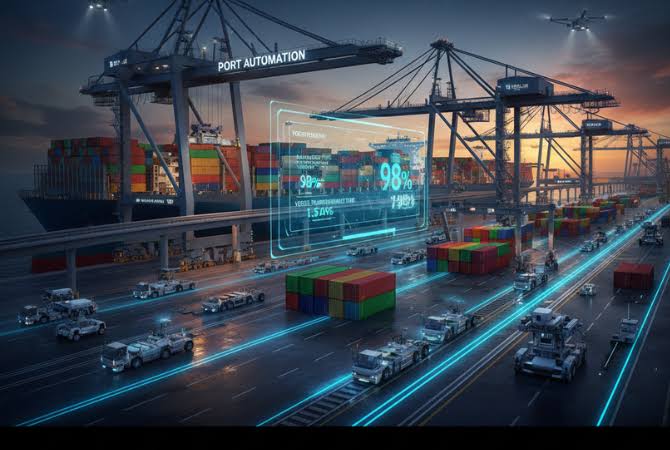
The emergence of smart ports is one of the most important trends influencing port equipment demand. A smart port integrates physical infrastructure with digital technologies to improve cargo movement, equipment utilization, safety, operational visibility, and decision-making.
IoT-enabled sensors can collect real-time information from cranes, vehicles, containers, loading systems, and other machinery. This information can then be analyzed using data platforms and AI-based systems to identify operational bottlenecks, optimize equipment utilization, and support predictive maintenance.
As ports move toward connected operations, equipment is no longer evaluated solely on lifting capacity, speed, or fuel consumption. Connectivity, automation capabilities, remote monitoring, data integration, and compatibility with digital terminal-management systems are becoming increasingly important purchasing considerations.
Automation Driving Demand for Advanced Equipment
Automation is playing a central role in the modernization of port infrastructure. Automated cranes, AGVs, automated container-handling systems, and remotely operated equipment can help ports streamline operations while improving productivity and safety.
The Insight Partners identifies the shift toward automation as a major future trend in the Port Equipment Market. Ports are increasingly adopting automated systems to streamline operations, reduce labor requirements, and improve safety. This trend is expected to support demand for automated cranes, container-handling equipment, and machinery designed to function within automated terminal environments.
AGVs are particularly relevant because they can transport containers between quay cranes, storage yards, and other terminal locations with limited human intervention. Similarly, automated terminal tractors and advanced straddle carriers can improve the movement of containers across large terminal facilities.
AI and Predictive Technologies Improve Equipment Utilization
Artificial intelligence and data analytics are introducing another layer of intelligence into port equipment. Instead of operating equipment according to fixed schedules, smart systems can analyze operational data and dynamically optimize equipment deployment.
For example, AI-enabled systems can evaluate container movement patterns, traffic conditions, equipment availability, and vessel schedules to determine the most efficient allocation of machinery. Predictive analytics can also identify abnormal equipment behavior before a major failure occurs.
This capability can reduce unplanned downtime and improve asset utilization. For equipment manufacturers, it creates opportunities to differentiate products through embedded sensors, software platforms, remote diagnostics, and predictive-maintenance capabilities.
Electrification and Hybrid Equipment Support Green Port Development
Smart-port development is closely connected with sustainability. Ports are under increasing pressure to improve operational efficiency while reducing emissions and energy consumption. As a result, electric and hybrid port equipment is becoming an increasingly important part of modernization strategies.
The Port Equipment Market is segmented by type into diesel, electric, and hybrid equipment. The availability of these technologies gives port operators multiple pathways for balancing productivity, operational requirements, and sustainability objectives.
Electric equipment can be particularly attractive for applications involving repetitive movements within controlled terminal environments. Electric terminal tractors, forklifts, cranes, and other material-handling equipment can potentially reduce local emissions and support cleaner port operations.
Hybrid systems can provide another transition pathway by combining conventional power systems with electric technologies. This can be valuable for ports that are seeking to improve environmental performance while operating under existing infrastructure constraints.
Container Handling Remains a Key Application
The growing complexity of global logistics is also influencing demand for port equipment used in container handling. The market is segmented by application into container handling, bulk handling, ship handling, and others.
Container terminals require coordinated movement between ships, quayside cranes, storage yards, and inland transportation networks. Smart technologies can help synchronize these activities and reduce idle time.
Automated cranes can support precise container positioning, while AGVs and automated terminal tractors can transport containers between different operating zones. Smart tracking technologies can further improve visibility by providing information about container locations and equipment status in real time.
As ports seek to handle larger cargo volumes efficiently, demand for connected and automated equipment is likely to increase.
Global Trade Growth Supports Equipment Demand
Technological transformation is not the only factor supporting the Port Equipment Market. Increasing global trade and expanding shipping activities are also major market drivers. As international trade volumes increase, ports need to expand capacity, modernize infrastructure, accommodate larger vessels, and improve cargo-handling efficiency.
The Insight Partners identifies growth in global trade and shipping activities as a significant driver of the market. Rising cargo volumes encourage port operators to invest in cranes, loaders, vehicles, and other equipment capable of supporting higher operational requirements.
This creates opportunities for both established ports upgrading existing assets and emerging markets developing new port infrastructure.
Regional Opportunities Through 2034
The global Port Equipment Market analysis covers North America, Europe, Asia-Pacific, South and Central America, and the Middle East and Africa. The report highlights opportunities associated with sustainability, emerging Asia-Pacific markets, and Europe's focus on eco-friendly equipment.
Asia-Pacific is particularly important because of its extensive port infrastructure, manufacturing ecosystem, and strong role in international trade. Meanwhile, North American and European ports are investing in modernization, automation, and sustainable equipment to improve operational efficiency and environmental performance.
The United States is also identified as a key market, supported by port automation, international trade growth, and demand for greener port equipment.
Challenges to Smart Port Adoption
Despite the long-term opportunities, smart-port transformation involves significant investment. The Insight Partners identifies high initial cost as a major restraint for the Port Equipment Market.
Automated cranes, electric vehicles, advanced control systems, IoT infrastructure, and digital platforms can require substantial upfront investment. Ports may also need to upgrade power infrastructure, communications networks, cybersecurity systems, and workforce capabilities.
Therefore, successful smart-port development requires a long-term investment strategy that considers not only equipment acquisition but also infrastructure integration, software, maintenance, training, and interoperability.
Outlook for the Port Equipment Market Through 2034
Smart-port technologies are fundamentally changing how ports purchase, operate, and maintain equipment. The transition from standalone machinery to connected, automated, and intelligent equipment is expected to create opportunities across cranes, AGVs, terminal tractors, forklifts, reach stackers, straddle carriers, tug boats, shiploaders, and other equipment categories.
The future of port equipment will increasingly be defined by the convergence of automation, AI, IoT, big data, electrification, and real-time connectivity. Port operators that successfully integrate these technologies can improve productivity, safety, asset utilization, and sustainability. At the same time, equipment manufacturers that develop intelligent, connected, and energy-efficient solutions will be well positioned to capture opportunities created by the global transition toward smart ports.
As ports evolve into digitally connected logistics hubs, smart technologies will not simply enhance existing equipment; they will increasingly determine what the next generation of port equipment looks like.