
Cardiac Catheter Sensors Market Size, Share & Trends by 2034
Coverage: By Type ( Pressure Sensors, Biosensors, Temperature Sensors, ECG Sensors, Image Sensors, Others ); Application ( Diagnostic, Surgical, Monitoring, Imaging ); End User ( Hospitals and Diagnostic Centers, Ambulatory Services Centers, Others ) , and Geography (North America, Europe, Asia Pacific, and South and Central America)
- Status : Data Released
- Report Code : TIPRE00018604
- Category : Life Sciences
- No. of Pages : 150
- Available Report Formats :


- Last update date : August 24, 2026


2025 Market Size
US$ 8.82 Bn
Base year value
2034 Forecast
US$ 15.76 Bn
Projected by 2034
CAGR 2026-2034
6.67 %
Growth rate
Addressable Market
US$ 111.16 Bn
(2026-2034)
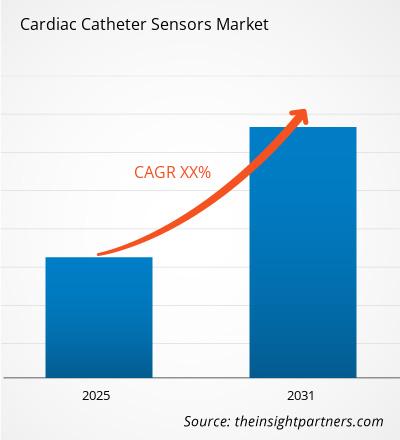
The Cardiac Catheter Sensors Market is valued at US$ 8.02 Billion in 2025 and is projected to reach US$ 15.76 Billion by 2034, registering a CAGR of 6.67% during 2026–2034. The market reflects rising use of catheter-integrated sensing in diagnostic, surgical, monitoring, and imaging workflows, supported by demand for precise intravascular measurements and digitally linked cardiovascular intervention systems.
North America remains the central revenue base, with the Cardiac Catheter Sensors Market size supported by advanced catheterization laboratories, high electrophysiology procedure volumes, and early adoption of sensor-enabled imaging catheters. The region is estimated to expand at a CAGR range of 6.1–6.7% during 2026–2034, driven by hospital investment in minimally invasive cardiology and reimbursement alignment for interventional diagnostics.
Cardiac Catheter Sensors Market Assessment and Insights
- North America is estimated to account for 38–42% share in 2025 and grow at a CAGR range of 6.1–6.7% during 2026–2034, supported by mature catheterization infrastructure and strong electrophysiology adoption.
- US represents 78–82% of North America in 2025 and is expected to grow at a CAGR range of 6.0–6.6% during 2026–2034, led by advanced hospital networks.
- Europe holds 26–30% share in 2025 and is projected to grow at a CAGR range of 5.8–6.4% during 2026–2034, with Germany, France, and the UK leading adoption.
- Asia Pacific captures 20–24% share in 2025 and is forecast to grow at a CAGR range of 7.2–7.9% during 2026–2034, led by China, Japan, India, and South Korea.
- Largest Segment: Pressure Sensors account for 34–38% market share in 2025 and grow at a CAGR range of 6.2–6.8% during 2026–2034 due to hemodynamic accuracy.
- High Growth Segment: Image Sensors hold 18–22% market share in 2025 and grow at a CAGR range of 7.6–8.4% during 2026–2034 as intravascular visualization expands.
- Key companies analyzed in detail: Abbott Laboratories, Medtronic plc, GE HealthCare Technologies Inc., Analog Devices, Inc., B. Braun SE, Johnson & Johnson, TE Connectivity plc, Honeywell International Inc., ICU Medical, Inc., Merck & Co., Inc.
Source: The Insight Partners' analysis based on proprietary research, government publications, company annual reports, investor presentations, industry databases, and expert interviews.
Sensor-enabled catheters have moved from basic measurement tools to integrated decision-support devices that combine pressure, imaging, temperature, biosignal, and electrophysiology data. Production dynamics are shifting toward miniaturized MEMS, biocompatible coatings, high-density signal transmission, and single-use designs. The Cardiac Catheter Sensors Market has therefore become closely linked to semiconductor packaging, sterilization capacity, software-enabled visualization, and hospital procurement models that prioritize procedural accuracy.
Over the forecast period, emerging cath lab expansion in Asia Pacific, growing private cardiac care investments, and regulatory pathways for minimally invasive devices will support broader adoption. Manufacturers are expected to focus on sensor fusion, catheter compatibility, and quality systems that meet FDA and EU MDR expectations. The Cardiac Catheter Sensors Market is also likely to benefit from cardiovascular care decentralization, especially where ambulatory services centers handle selected diagnostic and monitoring procedures.
Cardiac Catheter Sensors Market Report Scope
| Report Attribute | Details |
|---|---|
| Market size in 2025 | US$ 8.82 Billion |
| Market Size by 2034 | US$ 15.76 Billion |
| Global CAGR (2026 - 2034) | 6.67% |
| Historical Data | 2021-2024 |
| Forecast period | 2026-2034 |
Cardiac Catheter Sensors Market Analysis
Demand is supported by rising cardiovascular disease management needs, as the WHO continues to identify cardiovascular diseases as the leading global cause of mortality. Hospitals are using catheter sensors to reduce diagnostic uncertainty during coronary, structural heart, electrophysiology, and hemodynamic procedures. Cardiac Catheter Sensors Market growth is also linked to minimally invasive care pathways that shorten procedure time and improve real-time clinical interpretation.
Components within the value chain consist of sensor component suppliers, catheters original equipment manufacturers (OEMs), contract manufacturers, sterilization providers, software vendors, distributors, and clinical end-users. The supply dynamics hinge on the precision assembly, polymer extrusion, chip bonding, calibration, and packaging processes. Organizations that own catheter and signal processing technology have an edge since clinicians have become used to data interoperability from monitoring, imaging, and electrophysiology systems.
Competition will heat up owing to Abbott Laboratories and Medtronic plc venturing into sensor-based electrophysiology and ablation platforms, while GE HealthCare Technologies Inc. backs imaging and monitoring platforms. Analog Devices, Inc., TE Connectivity plc, and Honeywell International Inc. add components, sensing and connectivity solutions. This Cardiac Catheter Sensors Market analysis shows that strategic positioning depends on clinical evidence, integration readiness, and supply reliability.
Investment patterns have shifted focus towards digital cath labs, AI-enabled imaging, and multiparameter sensing technologies. Johnson & Johnson, B. Braun SE, ICU Medical, Inc., and Merck & Co., Inc. have a bearing on their respective neighboring procedure environments, which affect the purchasing decision process. Suppliers with an established record of regulatory compliance, manufacturing flexibility, and specialized sensor technology will be more successful.
● REPORT CUSTOMIZATION
Tailor This Report To Align With Your Specific Business Requirements
This report can be customized to align precisely with your business objectives, scope, and target markets. Customization options include tailored segmentation, geography, competitive analysis, and strategic insights to support informed decision-making.
Customize This Report →WHAT YOU CAN ADJUST
- ● Segmentations
- ● Geography
- ● Competitive Analysis
- ● Language Preferences
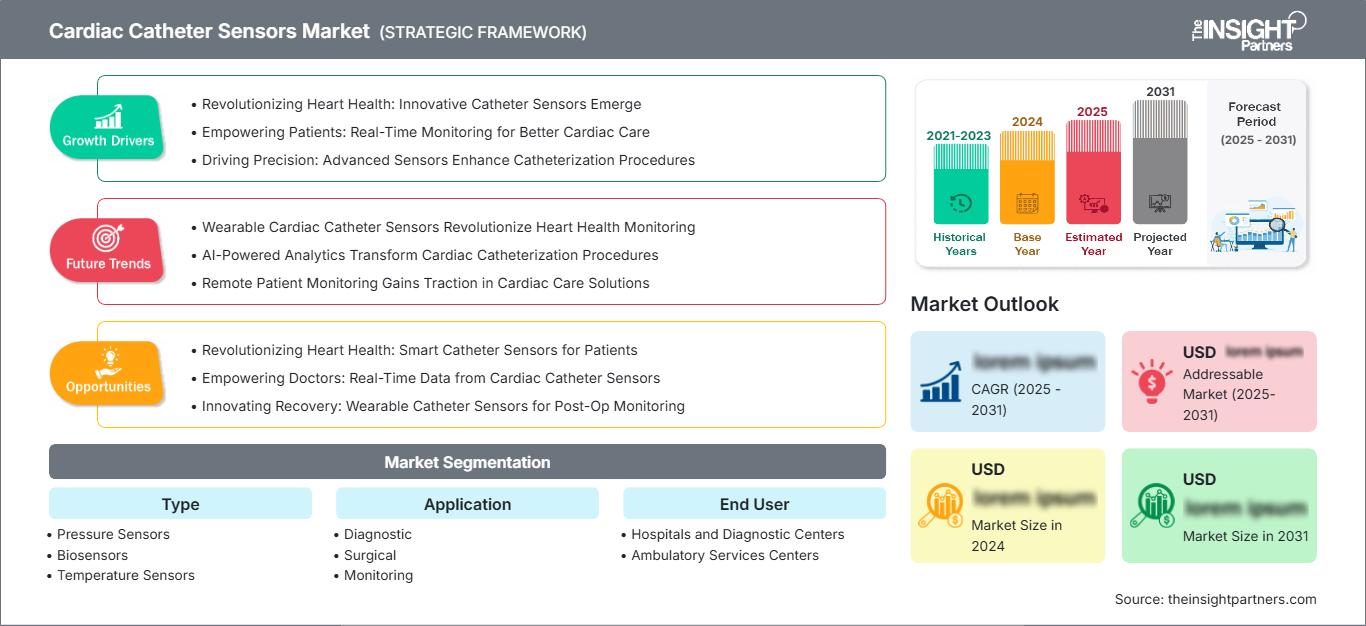
Cardiac Catheter Sensors Market: Strategic Insights
Regional Insights
North America Cardiac Catheter Sensors Market
North America is estimated to hold 38–42% share in 2025 and grow at a CAGR range of 6.1–6.7% during 2026–2034. The Cardiac Catheter Sensors Market share is anchored by high cath lab density, strong electrophysiology utilization, and rapid adoption of sensor-enabled ablation systems. FDA pathways for breakthrough and 510(k) devices continue to support innovation while requiring strong clinical evidence.
Hospital systems in the region increasingly standardize on platforms that connect mapping, pressure measurement, imaging, and monitoring. This supports premium sensor uptake where precision affects procedural confidence. Procurement remains evidence-led, with total cost of care, throughput, infection control, and system interoperability shaping purchasing decisions across academic hospitals and large integrated delivery networks.
U.S. Cardiac Catheter Sensors Market
The U.S. accounts for 78–82% of North America in 2025 and is projected to grow at a CAGR range of 6.0–6.6% during 2026–2034. Adoption is limited to tertiary hospitals, electrophysiology facilities, and interventional cardiology departments that perform high volumes. The data from the American Heart Association continues to highlight the burden associated with cardiovascular diseases and supports investments in advanced diagnostics.
The companies that operate within this market include Abbott Laboratories, Medtronic plc, GE HealthCare Technologies Inc., ICU Medical, Inc., TE Connectivity plc, and Honeywell International Inc. The highest adoption rate is noted in applications like surgical navigation, intracardiac mapping, pressure measurement, and imaging-guided interventions for coronary and arrhythmia diseases.
Europe Cardiac Catheter Sensors Market
Europe represents 26–30% share in 2025 and is expected to grow at a CAGR range of 5.8–6.4% during 2026–2034. Germany is the market leader, enabled by state-of-the-art cardiology infrastructure, robust device evaluation techniques, and consistent adoption of invasive diagnosis.
The UK is developing catheter-based diagnostic capability via NHS modernization and private sector cardiology developments. Market dynamics are driven by the need for better patient throughput, enhanced imaging accuracy, and sensor performance in coronary and electrophysiological procedures.
Germany is aided by the availability of specialized physician networks, cardiovascular centers, and early adoption of advanced interventional technologies. France, Italy, and Spain are growing steadily through procedure standardization, hospital modernization in regions, and increased use of minimally invasive treatments in structural heart and coronary cases.
APAC Cardiac Catheter Sensors Market
APAC holds 20–24% share in 2025 and is forecast to expand at a CAGR range of 7.2–7.9% during 2026–2034. China is the leading country, supported by cardiovascular hospital expansion, domestic device manufacturing, and strong public-private investment in specialist care.
Japan and South Korea drive premium adoption through high-quality hospital systems and advanced imaging usage. India and Australia add growth through cath lab expansion, private hospital chains, and increasing screening-linked referrals. Policy emphasis on local manufacturing and healthcare access supports wider adoption of sensor-based catheter technologies.
Middle East & Africa Cardiac Catheter Sensors Market
The Middle East & Africa is projected to grow at a CAGR range of 6.4–7.0% during 2026–2034. Saudi Arabia is the leading country, supported by tertiary hospital investment, specialist cardiovascular programs, and health infrastructure modernization. The UAE follows with high-acuity private and public facilities.
South Africa leads in sub-Saharan adoption through established specialist hospitals, while the Rest of MEA remains procurement-sensitive. Energy-linked fiscal capacity in Gulf markets supports high-end equipment purchasing, whereas infrastructure gaps in parts of Africa limit near-term utilization despite rising cardiovascular care needs.
Segmentation Analysis
Type
Type is expected to grow at a CAGR range of 6.4–7.0% during 2026–2034. The Cardiac Catheter Sensors Market scope across types is shaped by the clinical need for accurate intravascular pressure, biological response, temperature, ECG, and imaging data. Demand is strongest where sensors improve real-time decision-making, procedural safety, and compatibility with integrated cath lab platforms.
- Pressure Sensors remain the largest category because hemodynamic data support coronary, structural heart, and critical care decisions, where measurement precision directly influences intervention planning.
- Biosensors are gaining strategic relevance as catheter platforms evolve toward biochemical and physiological signal detection, especially for advanced monitoring and disease-specific diagnostics.
- Temperature Sensors support ablation and critical monitoring workflows by helping clinicians manage thermal exposure, device performance, and patient safety during catheter-based procedures.
- ECG Sensors are important in electrophysiology because they capture intracardiac signals needed for mapping, rhythm assessment, ablation targeting, and procedural verification.
- Image Sensors are expanding rapidly as intravascular visualization, catheter navigation, and guided intervention requirements increase across complex coronary and structural heart procedures.
Application
The application is estimated to grow at a CAGR range of 6.5–7.1% during 2026–2034. Adoption is led by diagnostic and surgical use cases, while monitoring and imaging continue to expand as hospitals seek multi-parameter guidance. The shift toward minimally invasive procedures creates demand for sensors that reduce uncertainty inside vessels and cardiac chambers.
- Diagnostic applications lead usage due to demand for accurate pressure, ECG, and imaging information that supports disease confirmation, lesion assessment, and treatment planning.
- Surgical applications are growing as catheter-based interventions require reliable sensing for ablation, valve procedures, vascular access, and real-time procedural guidance.
- Monitoring applications support continuous or procedure-linked tracking of physiological parameters, helping clinicians improve safety during complex cardiac and critical care workflows.
- Imaging applications are strategically important because visualization improves navigation, lesion interpretation, and device placement during high-risk cardiovascular interventions.
End User
End User is forecast to grow at a CAGR range of 6.3–6.9% during 2026–2034. Hospitals and diagnostic centers remain dominant because they operate high-acuity Cath Labs and electrophysiology suites. Ambulatory services centers are gaining relevance for selected procedures as payers and providers seek lower-cost care settings with adequate monitoring capability.
- Hospitals and Diagnostic Centers account for the primary adoption base because they manage complex cardiovascular cases, maintain advanced imaging systems, and require broad sensor-enabled catheter inventories.
- Ambulatory Services Centers are scaling in selected diagnostic and monitoring workflows where shorter procedures, standardized protocols, and reimbursement pressure support migration from inpatient environments.
Opportunity Snapshot
| Segment Name | Revenue Contribution | Trend Tag | Adoption Stage |
| Diagnostic | High | Precision Mapping | Mature |
| Surgical | High | Guided Ablation | Scaling |
| Monitoring | Medium | Remote Signals | Scaling |
| Imaging | Medium | Intravascular View | Emerging |
Cardiac Catheter Sensors Market Growth Drivers and Impact Analysis
Rising burden of cardiovascular intervention volumes
The direction for cardiovascular management has been towards early detection, minimally invasive treatment, and repetitive follow-up, resulting in a continual need for catheter-based sensing technology. Cardiovascular disease is stated to be the number one killer according to the WHO, thus compelling healthcare providers to enhance their abilities in terms of quicker evaluations and treatment capabilities. The use of sensor catheters allows doctors to acquire information regarding pressure, rhythm, temperature, and image all within one session, thereby decreasing the reliance on multiple tests. The effect on the market is highest among tertiary healthcare institutions handling coronary, arrhythmia, and structural heart diseases.
Integration of sensing, imaging, and electrophysiology platforms
More hospitals are gravitating towards the use of connected catheter platforms that incorporate mapping, ablation, imaging, and monitoring functions into an integrated clinical workflow. This trend provides an argument for higher value procurement since individual components are now giving way to systems that provide information about both the anatomy and physiology in a synchronized fashion. The FDA’s various programs remain committed to the provision of rapid access to devices that tackle significant conditions, while still retaining high levels of safety and effectiveness requirements. Integration becomes a barrier to entry for manufacturers as their products must be reliable in terms of hardware, software, sterilization, and connectivity.
Expansion of Cath Labs in emerging healthcare systems
There is an ongoing trend of investment in specialty centers, hybrid ORs, and diagnostic facilities among developing markets in order to cope with increasing cases of cardiovascular diseases. This helps create a larger base of adopters for catheter sensors from the already existing North America and Europe-based catheter facilities. The growth is particularly important for China, India, Gulf countries, and other leading Southeast Asian countries, where providers of both the public and private sectors are creating more capabilities in terms of intervention. The buyer dynamic includes considerations of performance alongside accessibility, training, and cost of devices.
Cardiac Catheter Sensors Market Future Trends
Multi-parameter catheter sensing becomes standard
Cardiac Catheter Sensors Market trends point toward catheters that combine more than one sensing function in a single device. Systems of the future are expected to incorporate feedback from pressure, electrophysiological activity, thermal data, and imaging in order to cut down on the number of times devices have to be exchanged and increase procedural continuity. This development will impact product development because companies will have to find the right compromise between miniaturization, signal performance, flexibility, and sterilization resistance. The hospitals will consider such systems based on their clinical benefits rather than individual features.
Digital Cath Labs adopt AI-assisted interpretation
Cath labs of the future will rely on AI-driven solutions to analyze data from sensor readings, imaging frames, and electrophysiology signals. The move is not meant to supersede the decision-making capabilities of the doctor, but rather to help detect patterns and abnormalities in measurements as well as facilitate procedure planning. Companies that integrate catheter sensors with advanced analytics algorithms may have an easier time distinguishing themselves. Regulation will still be crucial, however, because the algorithms used clinically need to prove their accuracy in varying scenarios and on different patients.
Cardiac Catheter Sensors Market Opportunities
Sensor-enabled platforms for ambulatory cardiac procedures
Ambulatory services centers create an actionable opportunity for manufacturers that can deliver reliable, easy-to-use catheter sensors for standardized diagnostic and monitoring workflows. As selected procedures move outside traditional hospitals, buyers will seek compact systems, simplified interfaces, and predictable consumable costs. Cardiac Catheter Sensors Market Forecasts indicate that vendors can capture incremental demand by designing products suited for lower-acuity settings without compromising measurement integrity. Training, remote support, and bundled service models will be important. Companies that help ambulatory centers maintain safety, documentation, and procedural efficiency can expand beyond conventional hospital-led adoption channels.
Localized manufacturing and regional partnerships
Regional manufacturing and partnership strategies offer a practical route to growth in the Asia Pacific and the Middle East. Local assembly, regulatory support, and distributor partnerships can reduce procurement barriers while improving service responsiveness. This opportunity is especially relevant where governments encourage medical technology localization and hospitals require dependable supply continuity. Manufacturers can also tailor product portfolios to different affordability tiers, from premium imaging-enabled catheters to essential pressure and ECG sensor devices. Companies that align with local clinical training programs and public procurement expectations may build durable market access advantages.
Recent Developments
- August 2026: Medtronic plc announced an expanded CE Mark indication for the Affera Mapping and Ablation System and Sphere-9 Catheter for ventricular arrhythmias, strengthening its dual-energy mapping and ablation offering for complex electrophysiology procedures. The expansion supports broader clinical use of sensor-enabled catheter platforms in European cardiac centers and reinforces Medtronic’s strategic focus on advanced ablation workflows.
- April 2026: Abbott Laboratories received FDA clearance and CE Mark for its next-generation Ultreon 3.0 AI-powered coronary imaging platform, extending its intravascular imaging capabilities for coronary assessment. The platform supports decision-making in percutaneous coronary intervention and aligns with broader demand for image-guided catheter technologies that combine visualization, analytics, and procedural workflow support.
- September 2025: ICU Medical, Inc. announced new FDA 510(k) cleared labeling claims for the Clave portfolio of needlefree IV connectors, supported by infection-control evidence. While focused on infusion access, the development reinforces hospital demand for safer vascular access technologies and complements broader critical care infrastructure where catheter-related device performance, connectivity, and infection reduction remain purchasing priorities.
Frequently Asked Questions

- Comprehensive Market Sizing and Forecast Analysis
- Detailed Segmentation Analysis
- In-Depth Market Dynamics Assessment
- Regional and Country-Level Insights
- Competitive Landscape and Company Benchmarking
- Strategic Business Intelligence
Recent Reports
Testimonials

The Insight Partners provided valuable market intelligence that supported our global go-to-market strategy. Their team was professional, responsive, and attentive to our feedback, providing thoughtful analysis and helpful methodological clarifications throughout the project.
Junmo Kim Chief Financial Officer (CFO), Enertech Co., Ltd.
The Insight Partners' SCADA System Market report is comprehensive, with valuable insights on current trends and future forecasts. The team was highly professional, responsive, and supportive throughout. We are very satisfied and highly recommend their services.
RAN KEDEM Partner, Reali Technologies LTDs
I requested a report on a very specific software market and the team produced the report in a few days. The information was very relevant and well presented. I then requested some changes and additions to the report. The team was again very responsive and I got the final report in less than a week.
JEAN-HERVE JENN Chairman, Future Analytica
We worked with The Insight Partners for an important market study and forecast. They gave us clear insights into opportunities and risks, which helped shape our plans. Their research was easy to use and based on solid data. It helped us make smart, confident decisions. We highly recommend them.
PIYUSH NAGPAL Sr. Vice President, High Beam Global
The Insight Partners delivered insightful, well-structured market research with strong domain expertise. Their team was professional and responsive throughout. The user-friendly website made accessing industry reports seamless. We highly recommend them for reliable, high-quality research services
YUKIHIKO ADACHI CEO, Deep Blue, LLC.
This is the first time I have purchased a market report from The Insight Partners.While I was unsure at first, I visited their web site and felt more comfortable to take the risk and purchase a market report.I am completely satisfied with the quality of the report and customer service. I had several questions and comments with the initial report, but after a couple of dialogs over email with their analyst I believe I have a report that I can use as input to our strategic planning process.Thank you so much for taking the extra time and making this a positive experience.I will definitely recommend your service to others and you will be my first call when we need further market data.
JOHN SUZUKI President and Chief Executive Officer, Board Director, BK Technologies
I wish to appreciate your support and the professionalism you displayed in the course of attending to my request for information regarding to infectious disease IVD market in Nigeria. I appreciate your patience, your guidance, and the fact that you were willing to offer a discount, which eventually made it possible for us to close a deal. I look forward to engaging The Insight Partners in the future, all thanks to the impression you have created in me as a result of this first encounter.
DR CHIJIOKE ONYIA MANAGING DIRECTOR, PineCrest Healthcare Ltd.Reason to Buy
- Informed Decision-Making
- Understanding Market Dynamics
- Competitive Analysis
- Identifying Emerging Markets
- Customer Insights
- Market Forecasts
- Risk Mitigation
- Boosting Operational Efficiency
- Strategic Planning
- Investment Justification
- Tracking Industry Innovations
- Aligning with Regulatory Trends





 Get Free Sample for