
Energy Efficient Motor Market Growth, Trends & Demand by 2034
Coverage: by Efficiency Level (IE4, IE3, IE2, IE1); Type (AC Motors, DC Motors); Application (HVAC, Fans, Pumps, Compressors, Refrigeration, Material Handling, Material Processing); End-Use (Industrial, Commercial Building, Residential, Automotive, Aerospace and Defense, Others) , and Geography (North America, Europe, Asia Pacific, and South and Central America)
- Status : Data Released
- Report Code : TIPRE00012721
- Category : Electronics and Semiconductor
- No. of Pages : 150
- Available Report Formats :


- Last update date : August 07, 2026


2025 Market Size
US$ 47.94 Bn
Base year value
2034 Forecast
US$ 88.98 Bn
Projected by 2034
CAGR 2026-2034
7.11 %
Growth rate
Addressable Market
US$ 617.87 Bn
(2026-2034)
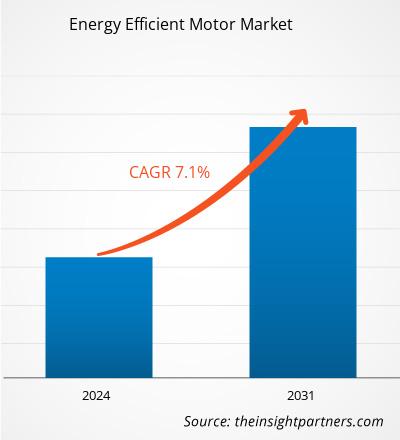
The Energy Efficient Motor Market size was estimated at US$ 47.94 Billion in 2025 and is forecasted to be US$ 88.98 Billion by 2034, growing at a CAGR of 7.11% between 2026 and 2034. This market is driven by reduced electricity intensity, lifetime cost reduction, industrial de-carbonization, and regulations for motors used in HVACs, pumps, fans, compressors, refrigeration, material handling, material processing, transport, buildings, and energy-intensive manufacturing.
The North America Energy Efficient Motor Market is anticipated to grow at a CAGR of 6.6–7.4% during 2026-2034, led by replacement of old industrial motors, increased efficiency procurement regulations, and building electrification trends. The region profits from NEMA Premium motor standard compliance, onshoring of manufacturing capability, and increased usage of variable speed drives in HVAC and process systems.
Energy Efficient Motor Market Assessment and Insights
- North America accounted for 26–29% share in 2025 and is growing at a CAGR of 6.6–7.4% during 2026–2034, led by replacement demand, NEMA Premium motors, HVAC retrofits, and industrial energy audits.
- US represented 78–82% of North American revenue in 2025 and is growing at a CAGR of 6.8–7.6% during 2026–2034, supported by manufacturing, data centers, and utilities.
- Europe held 22–25% share in 2025 and is growing at a CAGR of 6.2–7.0% during 2026–2034, with Germany, France, Italy, Spain, and the UK leading regulated industrial replacement.
- Asia Pacific accounted for 38–42% share in 2025 and is growing at a CAGR of 7.8–8.6% during 2026–2034, led by China, Japan, India, South Korea, and Australia.
- Largest Segment AC Motors held 68–72% market share in 2025 and is growing at a CAGR of 6.9–7.7% during 2026–2034 because industrial loads rely heavily on induction and synchronous platforms.
- High Growth Segment IE4 represented 24–28% market share in 2025 and is growing at a CAGR of 8.4–9.2% during 2026–2034, supported by mandatory premium-efficiency thresholds and lifecycle savings.
- Key companies analyzed in detail: ABB Ltd.; Bosch Rexroth AG; Brook Crompton Holdings Ltd.; DEEP CORPORATION; Havells India Ltd.; Honeywell International Inc.; Regal Rexnord Corporation; Rockwell Automation, Inc.; Siemens AG; WEG S.A.
Source: The Insight Partners' analysis based on proprietary research, government publications, company annual reports, investor presentations, industry databases, and expert interviews.
The choice of motors has moved away from purchase-cost-based buying to lifecycle economics, since the running cost for the electricity consumed is now a bigger part of owning costs than ever for motors that work continuously. IE3 and IE4 motors have higher efficiency due to improved laminations, better windings, smaller air gaps, and improved cooling. The Energy Efficient Motor Market is an example of this change as factories, utilities, commercial buildings, and transport services switch their standard motors to high-efficiency ones fitted with drives and monitoring and predictive maintenance capabilities.
Future demand will be reinforced as new manufacturing clusters adhere to minimum energy performance standards and international corporations insist on efficient manufacturing processes among their suppliers. Investment is flowing towards IE4-ready motor ranges, high-efficiency motors not using rare earths, digitized motor control, and drive-integrated solutions. Tailwinds will come from IEC efficiency classes, EU ecodesign regulations, MEPS policies, and company decarbonization goals.
Energy Efficient Motor Market Report Scope
| Report Attribute | Details |
|---|---|
| Market size in 2025 | US$ 47.94 Billion |
| Market Size by 2034 | US$ 88.98 Billion |
| Global CAGR (2026 - 2034) | 7.11% |
| Historical Data | 2021-2024 |
| Forecast period | 2026-2034 |
Energy Efficient Motor Market Analysis
The Energy Efficient Motor Market is propelled by the increase in the cost of electricity, industrial electrification, and the requirement for reducing the losses in motor-operated devices, which comprise over 50% of the total energy consumed in current research and policy. Since pumps, fans, compressors, conveyor belts, chillers, and processes operate over an extensive period, there are quantifiable benefits from increased efficiency and reduced paybacks.
It comprises the supply chain of steel producers and copper producers, motor makers, drives companies, control companies, distributors, EPC contractors, OEMs, maintenance service providers, and industrial consumers. The supply dynamics depend on the quality of electrical steel, cost of copper, testing capabilities, standards compliance, and channel availability since customers require replacement motors with matching specifications of frame size, torque demand, enclosures, and application.
The Energy Efficient Motor Market Analysis reveals the competition among firms depending on technology portfolio, regional manufacture, service provision, and certification. Some companies which compete based on these parameters include ABB Ltd., Siemens AG, WEG S.A., Regal Rexnord Corporation, Brook Crompton Holdings Ltd., Havells India Ltd., Bosch Rexroth AG, Rockwell Automation, Inc., Honeywell International Inc., and DEEP CORPORATION.
Investment opportunities exist in the following technologies; IE4 motor platforms, variable speed drives, connectivity for condition monitoring, and local assembly in proximity to large industrial clusters. Strategic position of companies in this market will depend on certification, service to Original Equipment Manufacturers (OEMs) and retrofits, and harsh environments support. The companies which supply both motors, drives, controls, and audits of energy will reap more profits than those supplying individual products.
● REPORT CUSTOMIZATION
Tailor This Report To Align With Your Specific Business Requirements
This report can be customized to align precisely with your business objectives, scope, and target markets. Customization options include tailored segmentation, geography, competitive analysis, and strategic insights to support informed decision-making.
Customize This Report →WHAT YOU CAN ADJUST
- ● Segmentations
- ● Geography
- ● Competitive Analysis
- ● Language Preferences
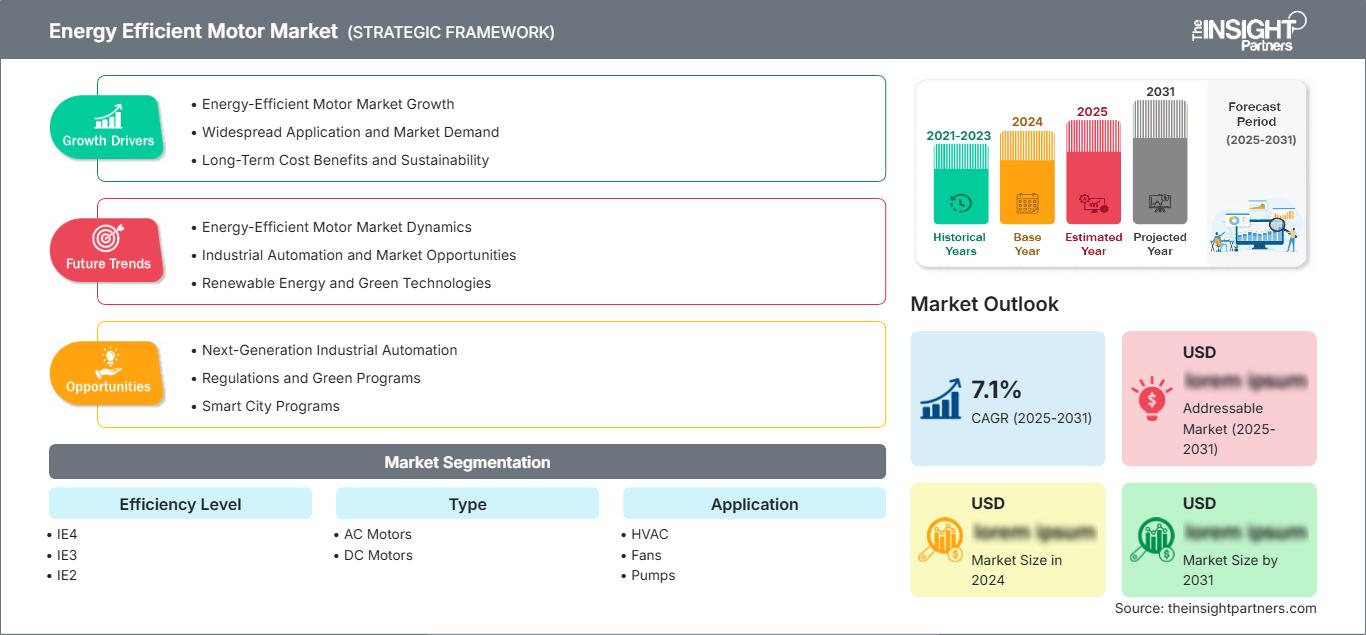
Energy Efficient Motor Market: Strategic Insights
Regional Insights
North America Energy Efficient Motor Market
North America held 26–29% of Energy Efficient Motor Market share in 2025 and is projected to grow at a CAGR of 6.6–7.4% during 2026–2034. Demand is supported by manufacturing modernization, HVAC replacement, water infrastructure upgrades, and energy audits that identify inefficient motor systems. The Energy Efficient Motor Market share is reinforced by NEMA Premium specifications and utility efficiency programs.
Industrial operators are pairing premium motors with variable speed drives to reduce throttling losses in pumps and fans. Data centers, food processing, chemicals, and municipal utilities are important buyers because continuous operation amplifies electricity savings. The region is mature, but replacement of legacy motors keeps demand resilient as procurement teams weigh energy savings, uptime, and carbon reporting requirements.
U.S. Energy Efficient Motor Market Market
In 2025, the U.S. held a share of 78%-82% of North America's revenue, and will exhibit a CAGR of 6.8%-7.6% during the period of 2026-2034. This market adoption is prevalent in sectors such as HVAC systems, pumps, compressors, refrigeration systems, and material handling due to factors like downtime, energy cost, and maintenance in deciding the replacement.
Market players include companies such as ABB Ltd., Regal Rexnord Corporation, Rockwell Automation, Inc., Honeywell International Inc., Siemens AG, and WEG S.A. Trends in application include variable speed drive compatible AC motors in buildings, severe duty motors in oil and gas, hygienic motors in food processing, and replacement of old units by efficient motors in municipal water plants with reduced operational cost.
Europe Energy Efficient Motor Market Market
Europe has a 22-25% share in 2025 and is expected to expand at a CAGR of 6.2-7.0% in 2026-2034. Europe is driven by Germany on the basis of machinery, automotive production facilities, chemicals, and industrial automation. The UK is driven by commercial building retrofit and water utilities, and France is driven by food processing, HVAC, and infrastructure renovation.
Italy and Spain are supported by pumps, refrigeration systems, machine tools, and building services. The EU Ecodesign Directive mandates IE3 or IE4 efficiency ratings for designated motor types, which drives replacement due to compliance requirements. Siemens AG, ABB Ltd., WEG S.A., Brook Crompton Holdings Ltd., and Regal Rexnord Corporation cater to regional demand through certified products, distributors, and services.
APAC Energy Efficient Motor Market Market
APAC had a market share of 38-42% in 2025 and will be registering a CAGR of 7.8%-8.6% between 2026 and 2034. The demand in this region is dominated by China in terms of volume owing to industrial production, HVAC, water purification, and manufacturing equipment. Japan and South Korea cater to high specification motors, whereas India and Australia provide demand in terms of replacements.
National MEPS, electricity cost optimization, and decarbonization policies are the driving factors. ABB Ltd., Siemens AG, WEG S.A., Havells India Ltd., and Brook Crompton Holdings Ltd. will gain through manufacturing growth and retrofits. Growth is driven by factories, which have an export focus, requiring to meet the needs of the customers with regard to energy efficiency.
Middle East & Africa Energy Efficient Motor Market Market
In the Middle East & Africa region, CAGR growth is expected to be around 5.8-6.6% from 2026 to 2034. Saudi Arabia will continue to contribute through the petrochemical, water desalination, and infrastructural projects, while the United Arab Emirates will continue to contribute through district cooling and commercial constructions. South Africa, and Rest of MEA will contribute through mining, utilities, and replacement demands.
Energy and infrastructural consumers prefer reliable motors which minimize loss but do not compromise on the reliability of the equipment under severe conditions. Pumps, compressors, refrigeration, and material handling equipment are the key demanders of the motors. Local distributors are crucial since the consumers will require proper sizing, installation, spare availability, and drive compatibility.
Segmentation Analysis
Efficiency Level
Efficiency Level is projected to grow at a CAGR of 7.2–8.0% during 2026–2034. The Energy Efficient Motor Market scope spans standard replacement, premium-efficiency upgrades, and super-premium designs aligned with IEC classes. Buyers compare IE levels using duty cycle, electricity tariff, operating hours, load profile, maintenance needs, and payback expectations.
- IE4 is strategically important for energy-intensive facilities seeking maximum loss reduction, stronger compliance readiness, and lower lifecycle cost in continuously operating pumps, fans, compressors, and process equipment.
- IE3 remains the mainstream premium-efficiency option because many regulations recognize it as a minimum threshold, making it central to replacement, OEM integration, and retrofit procurement.
- IE2 serves cost-sensitive applications and markets transitioning toward stricter standards, but its role is narrowing as policies and corporate efficiency targets favor higher classes.
- IE1 is increasingly limited to legacy installed bases, lower-duty applications, or markets without strict enforcement, creating replacement potential as efficiency audits identify avoidable energy losses.
Type
Type is forecast to grow at a CAGR of 6.9–7.7% during 2026–2034. AC motors dominate installed industrial and commercial systems, while DC motors retain relevance in selected variable-speed, battery-linked, and precision-control environments. Selection depends on load characteristics, control architecture, maintenance profile, power supply, and integration with drives.
- AC Motors lead demand because induction and synchronous machines are widely used in HVAC, pumps, fans, compressors, conveyors, refrigeration, and industrial processing with established service ecosystems.
- DC Motors support specialized applications requiring speed control, compact torque delivery, or battery compatibility, particularly in mobility, automation, and equipment designs where control response matters.
Application
Application is expected to grow at a CAGR of 7.0–7.8% during 2026–2034. Demand is strongest where motors operate for long hours or drive variable loads. Pumps, fans, HVAC, compressors, refrigeration, material handling, and material processing create savings when high-efficiency motors are correctly sized and paired with controls.
- HVAC demand is driven by commercial buildings, data centers, hospitals, and residential systems where efficient motors reduce fan, blower, and chiller operating costs.
- Fans remain a high-volume application because industrial ventilation, cooling towers, cleanrooms, and air-handling systems benefit from efficient motors and variable speed operation.
- Pumps provide major savings potential in water, wastewater, chemicals, oil and gas, and building services because continuous flow systems often run below optimal efficiency.
- Compressors require reliable motors in manufacturing, refrigeration, and process industries where compressed air losses make efficiency audits and correct sizing strategically important.
- Refrigeration adoption is supported by cold chains, food retail, warehouses, and industrial cooling where motor efficiency directly affects electricity cost and equipment heat load.
- Material Handling uses efficient motors in conveyors, cranes, elevators, packaging lines, and warehouses where uptime, torque reliability, and energy savings shape procurement decisions.
- Material Processing relies on efficient motors in mixers, mills, crushers, extruders, and machine tools where duty cycles are heavy and operating cost is material.
End-Use
End-Use is projected to grow at a CAGR of 7.1–7.9% during 2026–2034. Industrial facilities dominate because they operate large motor fleets across process, utility, and production systems. Commercial buildings and residential equipment add scale, while automotive and aerospace demand focuses on high reliability, compact design, and energy performance.
- Industrial users prioritize efficiency in pumps, compressors, conveyors, fans, and process machinery because operating hours are high and electricity savings affect plant-level competitiveness.
- Commercial Building demand comes from HVAC, elevators, refrigeration, and water systems where building owners pursue lower utility bills and sustainability reporting.
- Residential adoption is linked to efficient appliances, heat pumps, ventilation, and water systems as energy labeling and electricity costs influence purchasing.
- Automotive applications use efficient motors in manufacturing equipment, auxiliary systems, and electrified platforms where compactness, reliability, and thermal management are important.
- Aerospace and Defense applications require high-reliability motor solutions for controlled environments, actuation, cooling, and support systems where performance assurance outweighs purchase cost.
Opportunity Snapshot
| Application | Revenue Contribution | Trend Tag | Adoption Stage |
| HVAC | High | Building Retrofits | Scaling |
| Fans | Medium | Airflow Control | Mature |
| Pumps | High | Water Efficiency | Scaling |
| Compressors | High | Air Savings | Scaling |
| Refrigeration | Medium | Cold Chain | Scaling |
| Material Handling | Medium | Warehouse Automation | Scaling |
| Material Processing | Medium | Process Uptime | Mature |
Energy Efficient Motor Market Growth Drivers and Impact Analysis
Efficiency Regulations Accelerate Premium Motor Replacement
The minimum energy performance standards (MEPS) make it mandatory for buyers to consider efficiency as an obligation rather than as an optional aspect. European Union regulations demand the inclusion of IE3 and IE4 ratings for specific categories of motors, whereas many countries adopt MEPS standards consistent with IEC and NEMA standards. The impact of MEPS can be seen in the process of replacement due to the difficulty in specifying the motors that do not meet MEPS criteria. The industrial users are also provided with a case study in terms of reduced energy bills and minimized heat loss.
Industrial Electricity Costs Increase Lifecycle Payback Focus
Motor-driven systems can run thousands of hours annually, making electricity expense the largest ownership component for many facilities. When tariffs rise or production runs extend, even small efficiency gains create meaningful savings across pump, fan, compressor, and conveyor fleets. The market impact is stronger demand for motors sold with efficiency calculations, drive recommendations, and maintenance data. Procurement teams increasingly evaluate total cost of ownership, not initial price. This favors suppliers that can document payback, provide application engineering, and support retrofit projects without disrupting production schedules.
Automation and Electrification Expand Efficient Motor Loads
Factories, logistics centers, commercial buildings, and infrastructure assets are adding more powered motion through automation, electrified heating, cooling, and water management. Each additional motorized load increases the importance of efficiency at the design stage. The market impact is wider use of IE3 and IE4 motors in OEM equipment, automated warehouses, HVAC systems, and process lines. Buyers also pair motors with sensors and drives to optimize load matching. This expands revenue opportunities for vendors that integrate motors, controls, software, and service support.
Energy Efficient Motor Market Future Trends
IE4 Designs Move from Premium Option to Standard Specification
Energy Efficient Motor Market trends point toward IE4 designs becoming normal specifications in large industrial, HVAC, and infrastructure projects. As regulations tighten and procurement teams quantify carbon and electricity savings, buyers will increasingly view super-premium motors as risk-reduction assets. Rare-earth-free induction designs, improved magnetic materials, and better cooling will help suppliers reduce cost barriers. The trend will also expand demand for compatible variable speed drives, because high-efficiency motors deliver the strongest savings when matched to actual load profiles rather than operated at fixed speed under throttled conditions.
Digital Motor Management Becomes a Retrofit Differentiator
Future retrofit programs will combine efficient motors with connected monitoring that tracks load, temperature, vibration, operating hours, and efficiency drift. This will change the purchasing model from one-time replacement to performance-managed operation. Facilities will use data to prioritize which motors to replace first, prevent downtime, and verify savings for sustainability reporting. Suppliers offering motors, drives, sensors, analytics, and service contracts will gain advantage because customers want proof that capital spending delivers lower electricity use and improved availability across mission-critical applications.
Energy Efficient Motor Market Opportunities
Installed-Base Audits for Industrial Replacement Programs
Energy Efficient Motor Market Forecasts support investment in audit-led retrofit services that identify inefficient, oversized, or frequently rewound motors in industrial plants. Many facilities operate mixed motor fleets with incomplete performance records, creating a need for assessment, payback modeling, and phased replacement planning. Vendors can package IE3 or IE4 motors with drives, installation support, and energy verification. The opportunity is strongest in pumps, fans, compressors, and material handling where operating hours are high and energy savings can finance upgrades without requiring full plant redesign.
High-Efficiency Motor Packages for Building Electrification
Commercial buildings are electrifying heating, cooling, ventilation, water movement, and refrigeration systems, creating demand for efficient motor packages that reduce peak load and operating cost. Suppliers can target contractors, facility managers, and energy service companies with pre-engineered combinations of motors, drives, controls, and monitoring. The opportunity extends beyond new construction because older buildings often contain oversized fans, pumps, and compressors. Retrofit-ready solutions that minimize installation time and document savings will be attractive for owners pursuing energy performance standards and carbon disclosure goals.
Recent Developments
- May 2026: ABB is the world’s first manufacturer to offer an IE6 Hyper‑Efficiency motor certified to ATEX and IECEx requirements for use in hazardous areas. The new IE6 Increased safety motor, based on ABB’s magnet- and rare earth- free synchronous reluctance (SynRM) technology, offers up to 60 percent lower energy losses than the IE3 induction motors commonly used in Zones 1 and 2. This enables operators to realize a major boost in energy efficiency and avoided carbon emissions in industries where gas, vapor or dust might be present, such as chemicals, marine, oil & gas, pharmaceuticals and food & beverage.
- February 2026: ABB is accelerating industrial energy efficiency with its expanded range of IE6 Hyper‑Efficiency synchronous reluctance (SynRM) motors. This magnet‑free technology—now available from 110 to 450 kW in frame sizes 280 and 315, and speeds up to 3600 rpm—brings next-level efficiency and sustainability to even more industrial applications. This move builds on the 2024 milestone when ABB was the world’s first manufacturer to launch a magnet‑free IE6 SynRM motor for specialist applications. ABB has now made this breakthrough its mainstream option, moving ahead of the anticipated IE6 Hyper‑Efficiency standard.
- December 2024: WEG announces the launch of the W80 AXgen, an axial flux motor that allows Original Equipment Manufacturer (OEM) partners to innovate and create cutting-edge solutions. The new motor was initially launched in the North American and European markets, with an official launch in Brazil planned for the first half of 2025. With an innovative design, this solution is crafted to optimize space usage and significantly reduce logistics costs by enabling the creation of compact, lightweight, and efficient machines and equipment. A bold motor, it drives OEM partners to achieve their sustainability goals by developing products with a lower environmental impact, aligning with global efforts for more eco-friendly solutions.
Frequently Asked Questions

- Comprehensive Market Sizing and Forecast Analysis
- Detailed Segmentation Analysis
- In-Depth Market Dynamics Assessment
- Regional and Country-Level Insights
- Competitive Landscape and Company Benchmarking
- Strategic Business Intelligence
Recent Reports
Testimonials

The Insight Partners provided valuable market intelligence that supported our global go-to-market strategy. Their team was professional, responsive, and attentive to our feedback, providing thoughtful analysis and helpful methodological clarifications throughout the project.
Junmo Kim Chief Financial Officer (CFO), Enertech Co., Ltd.
The Insight Partners' SCADA System Market report is comprehensive, with valuable insights on current trends and future forecasts. The team was highly professional, responsive, and supportive throughout. We are very satisfied and highly recommend their services.
RAN KEDEM Partner, Reali Technologies LTDs
I requested a report on a very specific software market and the team produced the report in a few days. The information was very relevant and well presented. I then requested some changes and additions to the report. The team was again very responsive and I got the final report in less than a week.
JEAN-HERVE JENN Chairman, Future Analytica
We worked with The Insight Partners for an important market study and forecast. They gave us clear insights into opportunities and risks, which helped shape our plans. Their research was easy to use and based on solid data. It helped us make smart, confident decisions. We highly recommend them.
PIYUSH NAGPAL Sr. Vice President, High Beam Global
The Insight Partners delivered insightful, well-structured market research with strong domain expertise. Their team was professional and responsive throughout. The user-friendly website made accessing industry reports seamless. We highly recommend them for reliable, high-quality research services
YUKIHIKO ADACHI CEO, Deep Blue, LLC.
This is the first time I have purchased a market report from The Insight Partners.While I was unsure at first, I visited their web site and felt more comfortable to take the risk and purchase a market report.I am completely satisfied with the quality of the report and customer service. I had several questions and comments with the initial report, but after a couple of dialogs over email with their analyst I believe I have a report that I can use as input to our strategic planning process.Thank you so much for taking the extra time and making this a positive experience.I will definitely recommend your service to others and you will be my first call when we need further market data.
JOHN SUZUKI President and Chief Executive Officer, Board Director, BK Technologies
I wish to appreciate your support and the professionalism you displayed in the course of attending to my request for information regarding to infectious disease IVD market in Nigeria. I appreciate your patience, your guidance, and the fact that you were willing to offer a discount, which eventually made it possible for us to close a deal. I look forward to engaging The Insight Partners in the future, all thanks to the impression you have created in me as a result of this first encounter.
DR CHIJIOKE ONYIA MANAGING DIRECTOR, PineCrest Healthcare Ltd.Reason to Buy
- Informed Decision-Making
- Understanding Market Dynamics
- Competitive Analysis
- Identifying Emerging Markets
- Customer Insights
- Market Forecasts
- Risk Mitigation
- Boosting Operational Efficiency
- Strategic Planning
- Investment Justification
- Tracking Industry Innovations
- Aligning with Regulatory Trends





 Get Free Sample for