
Artificial Intelligence In Genomics Market Share, Demand & Growth by 2034
Coverage: By Offering (Software, Services); Technology (Machine Learning, Computer Vision, Other Technologies); Functionality (Genome Sequencing, Gene Editing, Clinical Workflows, Predictive Genetic Testing and Preventive Medicine.); Application (Diagnostics, Drug Discovery and Development, Precision Medicine, Agriculture and animal Research, Other Applications); End-User (Pharmaceutical and Biotech Companies, Healthcare Providers, Research Centers, Academic Institutes and Government Organizations, Other) , and Geography (North America, Europe, Asia Pacific, and South and Central America)
- Status : Data Released
- Report Code : TIPRE00022442
- Category : Technology, Media and Telecommunications
- No. of Pages : 150
- Available Report Formats :


- Last update date : September 01, 2026


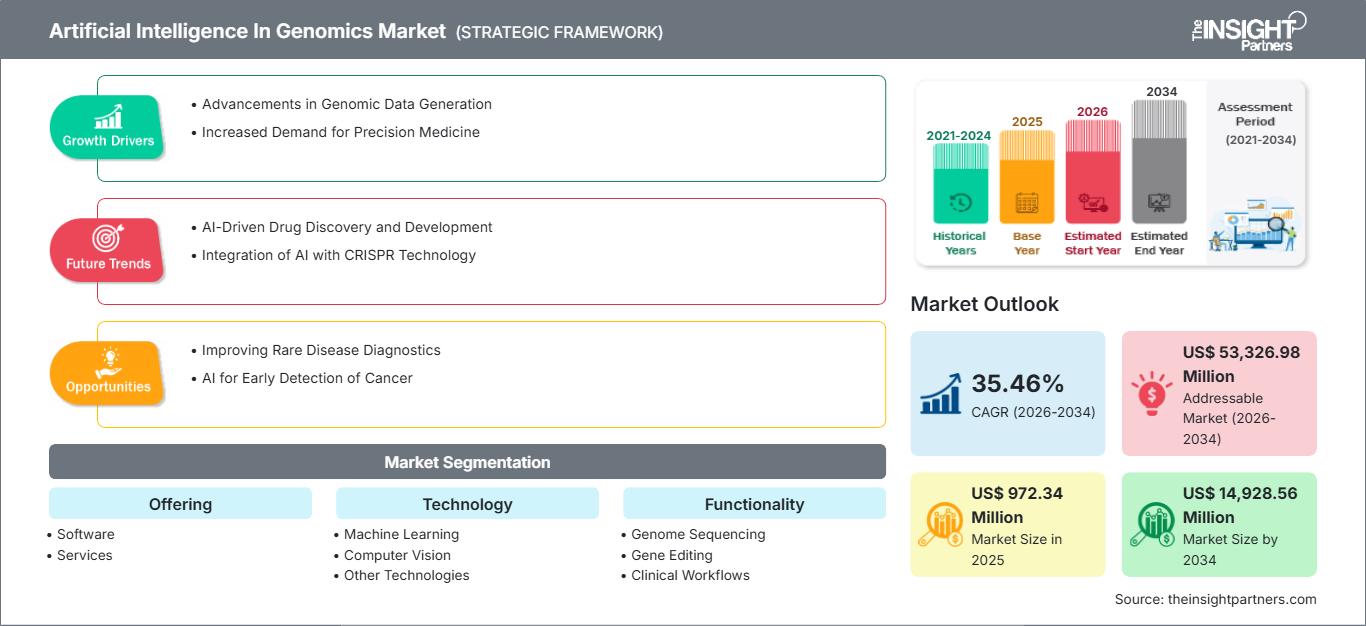
2025 Market Size
US$ 972.34 Mn
Base year value
2034 Forecast
US$ 14,928.56 Mn
Projected by 2034
CAGR 2026-2034
35.46 %
Growth rate
Addressable Market
US$ 53,326.98 Mn
(2026-2034)
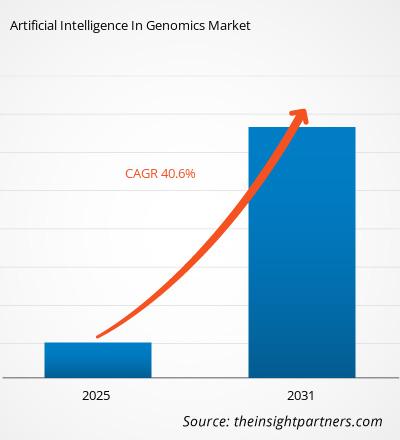
The Artificial intelligence in genomics market was valued at US$ 972.34 Million in 2025 and is projected to reach US$ 14928.56 Million by 2034, registering a CAGR of 35.46% during 2026–2034. The market is expanding as artificial intelligence technologies become increasingly integrated into genomic data analysis, disease prediction, biomarker discovery, and precision medicine. Growing computational capabilities and wider adoption of next-generation sequencing continue to accelerate the use of AI across genomic research and clinical applications.
North America remains the largest regional market owing to its advanced genomics research infrastructure, extensive investment in precision medicine, and strong adoption of cloud-based bioinformatics platforms. The artificial intelligence in genomics market size across the region continues to benefit from collaborations between biotechnology companies, healthcare providers, and technology developers. Regional demand is projected to expand at a CAGR range of 33–37% during 2026–2034, supported by increasing genomic sequencing projects and AI-enabled clinical research initiatives.
Artificial Intelligence In Genomics Market Assessment and Insights
- North America: Accounted for 41–44% share in 2025 and is projected to expand at a CAGR of 33–37% during 2026–2034. Strong genomics infrastructure, increasing precision medicine initiatives, and high investments in AI-powered bioinformatics continue supporting regional leadership.
- US: Represented 81–84% of the North American market in 2025 and is expected to register a CAGR of 33–37% during 2026–2034, supported by expanding genomic sequencing programs and increasing adoption of AI-enabled clinical research platforms.
- Europe: Held 24–27% share in 2025 and is anticipated to grow at a CAGR of 32–36% during 2026–2034. Germany, the United Kingdom, and France remain the leading contributors through government-funded genomics initiatives and precision healthcare investments.
- Asia Pacific: Captured 21–24% share in 2025 and is forecast to record the fastest regional expansion at a CAGR of 37–41% during 2026–2034. China, Japan, South Korea, and India continue strengthening genomic research capabilities through public and private investments.
- Largest Segment: Software accounted for 60–64% market share in 2025 and is projected to grow at a CAGR of 35–39% during 2026–2034, driven by increasing demand for AI-powered genomic analytics, data interpretation, and bioinformatics platforms.
- High Growth Segment: Predictive Genetic Testing and Preventive Medicine represented 11–14% market share in 2025 and is expected to expand at a CAGR of 39–43% during 2026–2034, supported by growing adoption of personalized medicine and predictive healthcare strategies.
- Key companies analyzed in detail: NVIDIA Corporation, Deep Genomics Inc., DNAnexus, Inc., Empiric Logic, Engine Biosciences Pte. Ltd., Fabric Genomics, Inc., Microsoft Corporation, Diploid NV, MolecularMatch, Inc., Cambridge Cancer Genomics Limited.
Source: The Insight Partners' analysis based on proprietary research, government publications, company annual reports, investor presentations, industry databases, and expert interviews.
With developments in artificial intelligence, cloud computing, and high-throughput genomic sequencing, genomic research has shifted from data production to data intelligence. Hospitals, biotech companies, and research institutes are relying on AI platforms for finding genetic markers of diseases, sequencing process optimization, biomarker discovery, and precision medicine development in various fields of healthcare.
The market growth in the future will be fueled by national genomics projects, increased acceptance of AI-based clinical decision support systems, and investments into precision healthcare. Developing countries are developing their genomic capacity with governmental funding and collaborations. Advances in multimodal AI will boost genomic data analysis, drug discovery, and preventive medicine applications.
Artificial Intelligence In Genomics Market Report Scope
| Report Attribute | Details |
|---|---|
| Market size in 2025 | US$ 972.34 Million |
| Market Size by 2034 | US$ 14,928.56 Million |
| Global CAGR (2026 - 2034) | 35.46% |
| Historical Data | 2021-2024 |
| Forecast period | 2026-2034 |
Artificial Intelligence In Genomics Market Analysis
The artificial intelligence in genomics market growth is primarily driven by increasing genomic sequencing volumes, expanding precision medicine initiatives, and the growing need to interpret highly complex genomic datasets efficiently. AI helps researchers in identifying disease-causing genetic mutations, predicting biological interactions, biomarker identification, and enhancing diagnosis accuracy at the same time with reduction in computation time significantly. More investments in cloud infrastructure and computing are leading to greater adoption of AI in research labs, pharmaceutical companies, and clinical genomics enterprises.
Sequencing technology vendors, cloud infrastructure vendors, artificial intelligence vendors, healthcare organizations, pharmaceutical companies, biotech companies, and academic research organizations are some of the stakeholders that have started integrating themselves into the genomics value chain. With help of an AI-enabled genomics platform, researchers can speed up the sequencing data process as well as collaborate more efficiently in multi-disciplinary research environments.
Competitive intensity continues increasing as established technology companies and specialized genomics software developers expand their capabilities through acquisitions, research collaborations, and platform innovation. The artificial intelligence in genomics market analysis demonstrates that competitive differentiation increasingly depends on scalable bioinformatics platforms, explainable AI, genomic database integration, regulatory compliance, and clinical validation rather than computational performance alone.
Leading companies, including NVIDIA Corporation, Microsoft Corporation, Deep Genomics Inc., DNAnexus, Inc., Fabric Genomics, Inc., Engine Biosciences Pte. Ltd., Diploid NV, MolecularMatch, Inc., Cambridge Cancer Genomics Limited, and Empiric Logic continue investing in AI-enabled genomic analytics, cloud-native sequencing platforms, and predictive healthcare applications. These strategic investments are expected to accelerate commercialization while improving genomic research productivity and supporting the broader adoption of precision medicine worldwide.
● REPORT CUSTOMIZATION
Tailor This Report To Align With Your Specific Business Requirements
This report can be customized to align precisely with your business objectives, scope, and target markets. Customization options include tailored segmentation, geography, competitive analysis, and strategic insights to support informed decision-making.
Customize This Report →WHAT YOU CAN ADJUST
- ● Segmentations
- ● Geography
- ● Competitive Analysis
- ● Language Preferences
Artificial Intelligence In Genomics Market: Strategic Insights
Regional Insights
North America Artificial Intelligence in Genomics Market
North America accounted for 41–44% of the global market in 2025 and is projected to expand at a CAGR of 33–37% during 2026–2034. The artificial intelligence in genomics market share remains the highest globally due to strong investments in genomic sequencing infrastructure, precision medicine initiatives, and advanced computational biology platforms. Genomic programs that receive funding from governments, the increased use of cloud bioinformatics, and partnerships between biotech firms and universities are constantly enhancing regional competitiveness and facilitating the clinical implementation of AI-based genomic analysis.
In the US and Canada, healthcare organizations, pharmaceutical firms, and research institutions increasingly use artificial intelligence for better genome analysis, variant discovery, and biomarker identification. The constant development of high-performance computing, next-generation sequencing, and genomics data management is making the analysis of complex data sets more effective.
U.S. Artificial Intelligence in Genomics Market
The United States represented 81–84% of the North American Artificial Intelligence in Genomics Market in 2025 and is expected to register a CAGR of 33–37% during 2026–2034. There are many benefits of world-class genomics research institutes, state-of-the-art sequencing technologies, and heavy investments in precision medicine by the country. The ongoing development of large-scale genomic projects in the country, growing pharmaceutical research activities, and fast uptake of AI-driven bioinformatics technologies are continuously helping the country to enhance its global position in genomics innovations.
Some of the leading companies operating in the field are Microsoft Corporation, NVIDIA Corporation, Deep Genomics Inc., DNAnexus, Inc., Fabric Genomics, Inc., Engine Biosciences Pte. Ltd., MolecularMatch, Inc., and Diploid NV. There is also a continuous increase in the use of AI technologies in clinical genomics, oncology research, the diagnosis of rare diseases, and drug target identification.
Europe Artificial Intelligence in Genomics Market
Europe accounted for 24–27% of the global Artificial Intelligence in Genomics Market in 2025 and is forecast to expand at a CAGR of 32–36% during 2026–2034. Regional growth is supported by increasing investments in genomic medicine, cross-border research collaborations, and favorable regulatory frameworks for healthcare innovation. Germany remains the leading national market due to strong biotechnology capabilities and advanced genomic research infrastructure.
The United Kingdom keeps on consolidating its position by way of genome sequencing programs, precision medicine programs, and collaborations among health organizations, universities, and biotech companies. The utilization of artificial intelligence to aid in genomic interpretation helps improve clinical decision support and translational research.
The leading power in Continental Europe in terms of genomics, molecular diagnostics, and bioinformatics powered by artificial intelligence is Germany. This has been achieved by collaboration among pharmaceutical companies, research institutions, and health organizations.
France, Italy, and Spain continue to increase the utilization of artificial intelligence through initiatives in genomics by the government, digitalization of healthcare systems, and participation in genomic research internationally. Investments in precision healthcare and genomics sequencing will continue to support their growth in the region.
APAC Artificial Intelligence in Genomics Market
Asia Pacific represented 21–24% of the global Artificial Intelligence in Genomics Market in 2025 and is expected to record the fastest regional expansion at a CAGR of 37–41% during 2026–2034. China continues to lead regional investments in genomics research, while Japan and South Korea strengthen AI-driven precision medicine and molecular diagnostics capabilities.
India and Australia are expanding genomic sequencing programs through government initiatives, biotechnology investments, and collaborations between research institutions and healthcare organizations. Increasing healthcare digitization and expanding computational biology capabilities are expected to accelerate regional adoption of AI-enabled genomics solutions.
Middle East & Africa Artificial Intelligence in Genomics Market
The Middle East & Africa Artificial Intelligence in Genomics Market is projected to register a CAGR of 30–34% during 2026–2034. Saudi Arabia and the United Arab Emirates continue investing in national genomics programs, precision medicine initiatives, and healthcare digital transformation strategies to strengthen genomic research capabilities.
South Africa and the Rest of MEA continue improving genomic infrastructure through academic partnerships, biotechnology investments, and healthcare modernization programs. Increasing awareness of genetic disorders and expanding molecular diagnostics capacity are expected to support the gradual adoption of artificial intelligence in genomics across the region.
Segmentation Analysis
Offering
The Offering segment is expected to expand at a CAGR of 35–39% during 2026–2034. The artificial intelligence in genomics market scope continues broadening as organizations increasingly invest in scalable genomic software platforms and specialized analytical services capable of processing large genomic datasets, accelerating biomarker discovery, and improving clinical interpretation across precision medicine applications.
- Software – Represents the dominant sub-segment owing to increasing deployment of AI-powered genomic interpretation platforms, sequencing analytics software, cloud bioinformatics environments, and clinical decision support solutions that improve genomic research efficiency.
- Services – Consulting, implementation, data analysis, platform integration, genomic interpretation, and managed bioinformatics services continue expanding as organizations seek specialized expertise for large-scale genomics initiatives.
Technology
The Technology segment is projected to register a CAGR of 36–40% during 2026–2034. Continuous advances in artificial intelligence algorithms, computational biology, and cloud infrastructure are enabling more accurate genomic interpretation while improving predictive analytics and biological discovery.
- Machine Learning – Machine learning algorithms dominate genomic analysis through variant identification, disease prediction, biomarker discovery, and optimization of genomic sequencing workflows across research and clinical environments.
- Computer Vision – Computer vision technologies increasingly support genomic imaging analysis, pathology interpretation, and visualization of complex biological datasets to improve research productivity and clinical insights.
- Other Technologies – Natural language processing, deep learning, graph analytics, and knowledge-based artificial intelligence continue strengthening genomic interpretation, literature mining, and precision medicine research capabilities.
Functionality
The Functionality segment is anticipated to grow at a CAGR of 37–41% during 2026–2034. Artificial intelligence continues improving genomic interpretation by automating complex analytical processes, accelerating biological discoveries, and supporting personalized healthcare through advanced computational methods.
- Genome Sequencing – AI optimizes sequencing workflows by improving data quality assessment, variant detection, and interpretation of large-scale genomic datasets across research and clinical laboratories.
- Gene Editing – Intelligent algorithms assist researchers in identifying target genes, optimizing editing strategies, and evaluating potential off-target effects for advanced genomic engineering applications.
- Clinical Workflows – AI streamlines genomic reporting, integrates patient genetic information into healthcare systems, and supports clinician decision-making through automated genomic interpretation.
- Predictive Genetic Testing and Preventive Medicine – Predictive analytics enable earlier identification of inherited disease risks, supporting personalized prevention strategies and targeted healthcare interventions.
Application
The Application segment is projected to expand at a CAGR of 36–40% during 2026–2034 as artificial intelligence continues transforming biomedical research, precision medicine, and genomic diagnostics.
- Diagnostics – AI enhances genomic diagnostics through rapid identification of disease-associated variants, improving diagnostic accuracy and supporting earlier clinical intervention.
- Drug Discovery and Development – Genomic analytics accelerate target identification, biomarker discovery, and therapeutic development while reducing research timelines.
- Precision Medicine – Artificial intelligence integrates genomic information with clinical datasets to enable individualized treatment planning and improved patient outcomes.
- Agriculture and Animal Research – AI supports genomic selection, disease resistance research, breeding optimization, and agricultural biotechnology innovation.
- Other Applications – Expanding genomic applications include population health research, academic genomics, forensic science, and environmental genomics initiatives.
Opportunity Snapshot
| Application | Revenue Contribution | Trend Tag | Adoption Stage |
|---|---|---|---|
| Diagnostics | High | Variant Analysis | Mature |
| Drug Discovery and Development | High | Target Discovery | Scaling |
| Precision Medicine | High | Personalized Care | Scaling |
| Agriculture and Animal Research | Medium | Genomic Breeding | Emerging |
| Other Applications | Low | Population Genomics | Emerging |
Artificial Intelligence In Genomics Market Growth Drivers and Impact Analysis
Expansion of Precision Medicine and Genomic Sequencing Programs
The increased use of precision medicine has caused a tremendous increase in the demand for artificial intelligence in genomics and clinical diagnostics. Various genome sequencing efforts, biobank projects, and the application of personalized medicine have created a great deal of genomic data that needs to be analyzed through sophisticated computing methods. AI technology has made it possible for scientists to detect genetic variants linked to diseases, prioritize clinically important mutations, and analyze sequencing data within very little time. There is an increasing trend where hospitals incorporate genomics in their clinical procedures for oncology, rare diseases, and inherited diseases.
Growing Pharmaceutical Investment in AI-Driven Drug Discovery
The growth of investment in artificial intelligence applications is continuing in biopharmaceutical companies for target and biomarker identification and genome interpretation during drug discovery. The AI-based genomics helps decrease research complexity through the identification of genetic links associated with the advancement of the disease and reaction to treatments. Genomic sequencing combined with machine learning helps pharmaceutical companies select the best candidates and minimize the risks of clinical development. Collaboration among biotech companies, cloud computing providers, and academia leads to increased innovations and efficiency in translational research. Increased development costs lead to the adoption of smart genomic platforms that can shorten research times, enhance accuracy of predictions, and increase overall productivity.
Increasing Cloud Bioinformatics and High-Performance Computing Adoption
Cloud-based bioinformatics infrastructure and high-performance computing are revolutionizing how genomic data is managed and analyzed. Advances in sequencing have resulted in petabyte amounts of genomic data that necessitate scalable computing systems for storage, analysis, and collaboration. The application of artificial intelligence in cloud computing allows scientists to analyze genomic data effectively while facilitating collaboration in research between geographically diverse institutions. Data sharing architectures, interoperable standards, and computing capabilities are progressively increasing the availability of data for health institutions and research labs. With more investments in cloud-based computing from technology firms, AI-enabled genomics will be increasingly adopted across the enterprise.
Artificial Intelligence In Genomics Market Future Trends
Generative Artificial Intelligence Advancing Genomic Interpretation
Generative artificial intelligence is expected to reshape genomic analysis by improving automated interpretation of sequencing results, scientific literature synthesis, and clinical reporting. The artificial intelligence in genomics market trends indicate growing adoption of foundation models capable of integrating genomic, transcriptomic, proteomic, and clinical datasets into unified analytical environments. These technologies are anticipated to enhance variant prioritization, improve clinical decision support, and reduce manual interpretation efforts. Continuous advances in explainable artificial intelligence and multimodal learning are expected to strengthen clinician confidence while supporting broader commercialization across healthcare, pharmaceutical research, and academic genomics throughout the forecast period.
Integration of Multi-Omics Platforms with Artificial Intelligence
Healthcare organizations and biotechnology companies are increasingly integrating genomics with proteomics, metabolomics, transcriptomics, and epigenomics to improve biological understanding and therapeutic development. Artificial intelligence enables simultaneous analysis of diverse biological datasets, generating comprehensive insights into disease mechanisms and treatment responses. Future investments are expected to prioritize interoperable multi-omics platforms capable of supporting predictive healthcare, precision oncology, and personalized therapeutics. Continuous improvements in computational biology, federated learning, and secure genomic data exchange will accelerate adoption while strengthening collaborative biomedical research across international healthcare ecosystems.
Artificial Intelligence In Genomics Market Opportunities
Expansion Across Emerging Precision Healthcare Ecosystems
Emerging healthcare markets continue investing in genomic sequencing infrastructure, national precision medicine strategies, and biotechnology innovation, creating significant long-term opportunities for artificial intelligence deployment. The artificial intelligence in genomics market Forecasts indicate substantial potential across Asia Pacific, the Middle East, and selected Latin American countries, where genomic research capacity is expanding rapidly. Technology providers capable of delivering scalable, cloud-enabled, and cost-effective genomic analytics platforms are expected to establish strong regional positions. Strategic partnerships with governments, academic institutions, and healthcare providers will accelerate commercialization while improving accessibility to advanced genomic technologies.
Commercialization of AI-Based Preventive Genomic Healthcare
Artificial intelligence creates substantial opportunities for preventive healthcare by enabling earlier identification of inherited disease risks through predictive genomic analysis. Healthcare providers increasingly seek integrated genomic platforms capable of supporting population screening, individualized prevention strategies, and long-term disease management. Expanding consumer interest in genetic testing and preventive medicine is encouraging investment in AI-powered clinical genomics platforms that combine secure data management with advanced analytical capabilities. Organizations developing clinically validated, interoperable, and regulatory-compliant genomic intelligence solutions are expected to benefit from increasing adoption of predictive healthcare across both developed and emerging healthcare systems.
Frequently Asked Questions

- Comprehensive Market Sizing and Forecast Analysis
- Detailed Segmentation Analysis
- In-Depth Market Dynamics Assessment
- Regional and Country-Level Insights
- Competitive Landscape and Company Benchmarking
- Strategic Business Intelligence
Recent Reports
Testimonials

The Insight Partners' SCADA System Market report is comprehensive, with valuable insights on current trends and future forecasts. The team was highly professional, responsive, and supportive throughout. We are very satisfied and highly recommend their services.
RAN KEDEM Partner, Reali Technologies LTDs
I requested a report on a very specific software market and the team produced the report in a few days. The information was very relevant and well presented. I then requested some changes and additions to the report. The team was again very responsive and I got the final report in less than a week.
JEAN-HERVE JENN Chairman, Future Analytica
We worked with The Insight Partners for an important market study and forecast. They gave us clear insights into opportunities and risks, which helped shape our plans. Their research was easy to use and based on solid data. It helped us make smart, confident decisions. We highly recommend them.
PIYUSH NAGPAL Sr. Vice President, High Beam Global
The Insight Partners delivered insightful, well-structured market research with strong domain expertise. Their team was professional and responsive throughout. The user-friendly website made accessing industry reports seamless. We highly recommend them for reliable, high-quality research services
YUKIHIKO ADACHI CEO, Deep Blue, LLC.
This is the first time I have purchased a market report from The Insight Partners.While I was unsure at first, I visited their web site and felt more comfortable to take the risk and purchase a market report.I am completely satisfied with the quality of the report and customer service. I had several questions and comments with the initial report, but after a couple of dialogs over email with their analyst I believe I have a report that I can use as input to our strategic planning process.Thank you so much for taking the extra time and making this a positive experience.I will definitely recommend your service to others and you will be my first call when we need further market data.
JOHN SUZUKI President and Chief Executive Officer, Board Director, BK Technologies
I wish to appreciate your support and the professionalism you displayed in the course of attending to my request for information regarding to infectious disease IVD market in Nigeria. I appreciate your patience, your guidance, and the fact that you were willing to offer a discount, which eventually made it possible for us to close a deal. I look forward to engaging The Insight Partners in the future, all thanks to the impression you have created in me as a result of this first encounter.
DR CHIJIOKE ONYIA MANAGING DIRECTOR, PineCrest Healthcare Ltd.Reason to Buy
- Informed Decision-Making
- Understanding Market Dynamics
- Competitive Analysis
- Identifying Emerging Markets
- Customer Insights
- Market Forecasts
- Risk Mitigation
- Boosting Operational Efficiency
- Strategic Planning
- Investment Justification
- Tracking Industry Innovations
- Aligning with Regulatory Trends





 Get Free Sample for