
Diabetes Drug Therapy Market Growth, Trends & Demand by 2034
Coverage: By Product Type (Glucagon-like peptide-1 (GLP-1) agonist, Dipeptidyl-peptidase-4 (DPP-4) inhibitors, Sodium glucose co-transporter 2 (SGLT2) inhibitors, Insulin, Others); Application (Type 1 Diabetes, Type 2 Diabetes, Gestational Diabetes, Impaired Glucose Tolerance, Impaired Fasting Glycaemia), and Geography (North America, Europe, Asia Pacific, and South and Central America)
- Status : Data Released
- Report Code : TIPRE00019617
- Category : Life Sciences
- No. of Pages : 150
- Available Report Formats :


- Last update date : July 06, 2026


2025 Market Size
US$ 93.25 Bn
Base year value
2034 Forecast
US$ 122.71 Bn
Projected by 2034
CAGR 2026-2034
3.1 %
Growth rate
Addressable Market
US$ 980.69 Bn
(2026-2034)
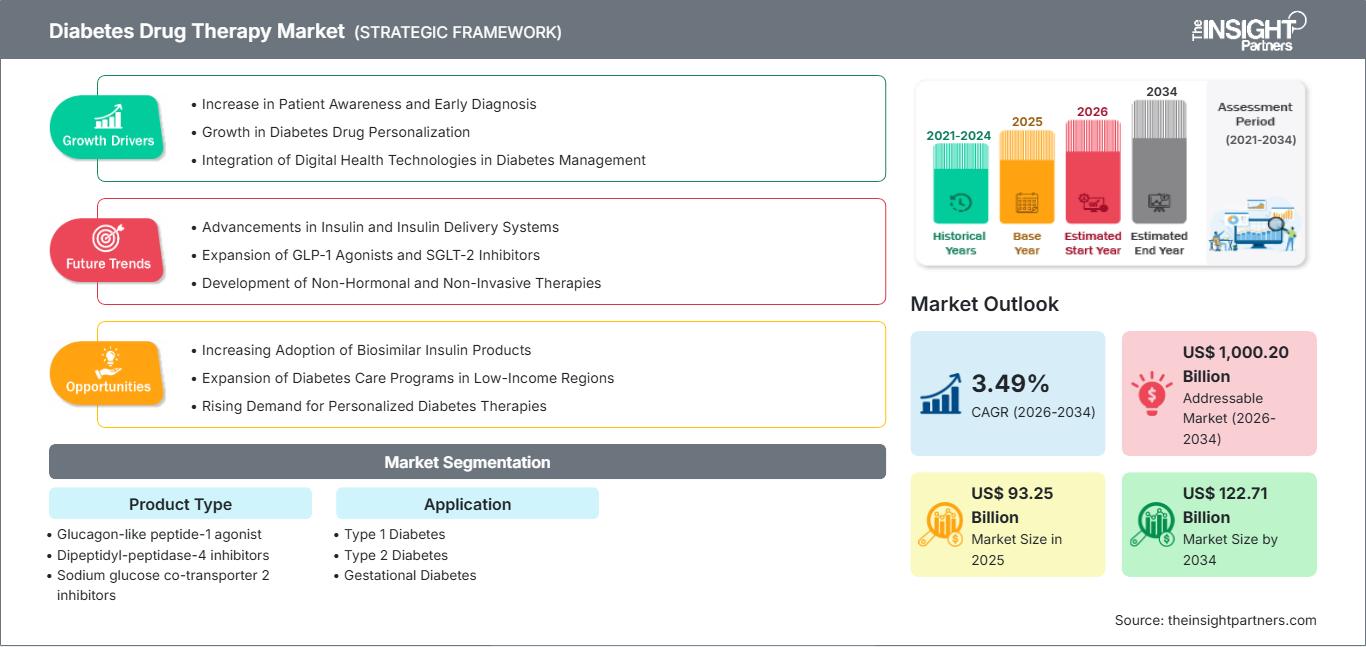
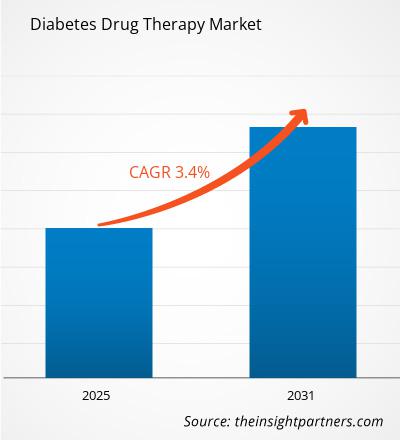
The global Diabetes Drug Therapy market was valued at US$ 93.25 billion in 2025 and is expected to reach US$ 122.71 billion by 2034; it is estimated to record a CAGR of 3.1% during 2026-2034.
Diabetes Drug Therapy Market Assessment and Insights
- North America: Holds 38–41% share in 2025, growing at a CAGR of 3.3–3.8% during 2026–2034, driven by strong reimbursement support, expanding GLP-1 therapy adoption, and advanced diabetes management infrastructure.
- US: Accounts for 82–86% of the North American diabetes drug therapy market size in 2025, expanding at a CAGR of 3.4–3.9% due to growing adoption of innovative diabetes therapies, strong treatment accessibility, and a well-established healthcare infrastructure.
- Europe: Represents 26–29% share in 2025, growing at a 3.0–3.6% CAGR, led by Germany, the UK, France, Italy, and Spain through rising diabetes prevalence, improving access to innovative therapies, and strong healthcare infrastructure.
- Asia Pacific: Holds 24–27% share in 2025, expanding at a 4.2–4.8% CAGR, led by China, India, Japan, and South Korea with large diabetic populations, healthcare modernization, and expanding access to advanced diabetes treatments.
- Largest Segment: Type 2 Diabetes holds the largest diabetes drug therapy market share in 2025, growing at a 3.5–4.0% CAGR due to its large patient population, lifelong treatment requirements, and increasing obesity and aging demographics.
- High Growth Segment: Glucagon-like Peptide-1 (GLP-1) Agonists are expected to record the fastest growth at a CAGR of 7.0–8.0% during 2026–2034, supporting the diabetes drug therapy market forecast, driven by rising preference for therapies that provide effective glycemic control, cardiometabolic benefits, and weight management.
- Key companies analyzed in detail: Abbott Laboratories; MannKind Corporation; Bristol-Myers Squibb Company; Medtronic plc; AstraZeneca PLC; Eli Lilly and Company; GSK plc; Sanofi S.A.; Novo Nordisk A/S; Novartis AG.
Source: The Insight Partners' analysis based on proprietary research, government publications, company annual reports, investor presentations, industry databases, and expert interviews.
The diabetes drug therapy market report has evolved from a predominantly insulin-centered treatment landscape into a diversified ecosystem encompassing multiple therapeutic classes. Pharmaceutical innovation has broadened treatment options, enabling healthcare providers to tailor interventions according to disease severity, comorbidities, and patient adherence requirements. Improved diagnosis rates and increasing emphasis on preventive care have also expanded the addressable patient population.
Looking ahead, treatment strategies are expected to become increasingly integrated with digital health monitoring, personalized medicine, and combination therapies. Competitive activity is likely to focus on improving efficacy, reducing dosing frequency, and enhancing patient convenience. Emerging economies are expected to contribute substantially to future demand as healthcare access improves and governments prioritize diabetes management programs.
Diabetes Drug Therapy Market Report Scope
| Report Attribute | Details |
|---|---|
| Market size in 2025 | US$ 93.25 Billion |
| Market Size by 2034 | US$ 122.71 Billion |
| Global CAGR (2026 - 2034) | 3.1% |
| Historical Data | 2021-2024 |
| Forecast period | 2026-2034 |
Diabetes Drug Therapy Market Analysis
The Diabetes Drug Therapy Market is driven by the growing global burden of metabolic disorders and increasing healthcare expenditure directed toward chronic disease management. Urbanization, sedentary lifestyles, and dietary transitions continue to contribute to rising diabetes incidence across both developed and developing economies. Early diagnosis initiatives and expanded screening programs are bringing more patients into treatment pathways.
The market ecosystem involves pharmaceutical manufacturers, healthcare providers, payers, distributors, and digital health technology providers. Therapeutic innovation remains a central value driver, with companies focusing on improving glycemic control while addressing associated cardiovascular and renal risks. The integration of patient support services further strengthens treatment adherence and outcomes.
Competition is characterized by strong participation from established pharmaceutical companies, including Abbott Laboratories, MannKind Corporation, Bristol Myers Squibb, Medtronic, AstraZeneca, Eli Lilly and Company, GlaxoSmithKline, Sanofi, Novo Nordisk, and Novartis International AG. Product differentiation increasingly depends on clinical efficacy, convenience, safety profiles, and real-world outcomes.
Investment activity is concentrated around novel GLP-1 receptor agonists, oral diabetes medications, combination therapies, and next-generation insulin products. Strategic collaborations, licensing agreements, and clinical development programs continue to shape competitive positioning. Companies are also expanding manufacturing capabilities to address the rising demand for advanced diabetes therapies worldwide.
● REPORT CUSTOMIZATION
Tailor This Report To Align With Your Specific Business Requirements
This report can be customized to align precisely with your business objectives, scope, and target markets. Customization options include tailored segmentation, geography, competitive analysis, and strategic insights to support informed decision-making.
Customize This Report →WHAT YOU CAN ADJUST
- ● Segmentations
- ● Geography
- ● Competitive Analysis
- ● Language Preferences
Diabetes Drug Therapy Market: Strategic Insights
Regional Insights
North America Diabetes Drug Therapy Market
North America accounts for the largest share of the Diabetes Drug Therapy Market and is expected to grow at approximately 3.2% CAGR through 2034. The region benefits from established healthcare infrastructure, widespread insurance coverage, and rapid adoption of innovative treatment modalities. High obesity prevalence and increasing diagnosis rates continue to sustain demand for both established and emerging therapies.
Strong clinical research activity and favorable reimbursement environments encourage the adoption of premium diabetes medications. The presence of leading pharmaceutical manufacturers and ongoing investment in endocrinology research further reinforces regional market leadership. Digital diabetes management solutions are increasingly complementing pharmacological interventions.
U.S. Diabetes Drug Therapy Market
The U.S. represents the dominant national market, accounting for approximately 75–80% of North American revenue while advancing at a CAGR of around 3.1%. The country exhibits high utilization of GLP-1 receptor agonists, SGLT2 inhibitors, and advanced insulin therapies. Rising healthcare spending and expanding focus on cardiovascular risk reduction among diabetic patients continue to influence prescribing patterns.
The leading players in this market have large-scale business and research activities in the U.S. The application segment for type 2 diabetes continues to dominate the overall market, driven by the growing use of combination therapies and personalized medicines. The use of remote monitoring systems is another key factor in disease management.
Europe Diabetes Drug Therapy Market
Europe accounts for a considerable share of the Global Diabetes Drug Therapy Market, earning about 25–30% of global revenue and growing at a CAGR of 3.0%. The provision of universal healthcare coverage, the development of effective awareness campaigns, and the increasing use of novel drugs drive market growth.
The UK continues to move ahead in controlling diabetes through preventive healthcare programs and new drugs. Growing attention to reducing complications drives demand for drugs that provide both glycemic and cardiovascular benefits.
Germany continues to be the top European nation because of its large patient population, well-established healthcare infrastructure, and robust reimbursement system. The adoption of new classes of medicines and high physician awareness among physicians continue to drive market growth.
France, Italy, and Spain form a significant growth center. Innovations in diabetes treatments have been encouraged by government initiatives aimed at chronic illnesses, the growing elderly population, and healthcare spending in Southern Europe.
APAC Diabetes Drug Therapy Market
Asia-Pacific is projected to be the fastest-growing regional market, expanding at approximately 4.8% CAGR through 2034 while accounting for roughly 22–27% of global revenue. Rapid urbanization, lifestyle changes, and increasing prevalence of metabolic disorders are driving substantial demand for diabetes therapies across the region.
China is leading in the regional market because of the prevalence of diabetes, healthcare development programs, and the availability of innovative drugs. Policy changes aimed at improving chronic disease management continue to boost penetration rates.
In Japan, there is a high demand for advanced treatment techniques due to the nation's highly developed healthcare sector. In the meantime, South Korea, India, and Australia have seen increased adoption of novel diabetes drugs owing to investments in the health sector and expanded insurance coverage.
Middle East & Africa Diabetes Drug Therapy Market
The Middle East & Africa Diabetes Drug Therapy Market is expected to register a CAGR of approximately 4.0% through 2034. Rising diabetes prevalence, improving healthcare infrastructure, and increasing government focus on chronic disease management are creating favorable market conditions across the region.
Reasons why Saudi Arabia retains its dominance include a high prevalence of diabetes, investment in healthcare facilities, and initiatives on non-communicable diseases. Advanced treatments are gaining traction as their availability increases.
The United Arab Emirates continues to improve its healthcare infrastructure and to adopt digital health. South Africa acts as an important African market. The Middle East & Africa region benefits from healthcare reforms, increased access to pharma, and investment in specialized diabetes facilities.
Segmentation Analysis
Product Type
- Glucagon-like peptide-1 agonist: Rapidly expanding therapeutic class offering effective glycemic control, weight-management benefits, and cardiovascular risk reduction, making it increasingly preferred among physicians treating patients with complex metabolic conditions.
- Dipeptidyl-peptidase-4 inhibitors: Widely utilized oral therapies valued for convenient administration, favorable safety profiles, and suitability for patients requiring moderate glucose-lowering efficacy with minimal hypoglycemia risk.
- Sodium glucose co-transporter 2 inhibitors: Gaining substantial clinical acceptance due to demonstrated cardiovascular and renal benefits alongside glucose reduction, supporting broader utilization in comprehensive diabetes management strategies.
- Insulin: Remains essential across multiple diabetes indications, particularly for advanced disease management and Type 1 diabetes, supported by continuous innovations in delivery systems and dosing convenience.
Application
- Type 1 Diabetes: Represents a critical therapeutic area requiring lifelong insulin-based management, supported by advancements in insulin formulations, monitoring technologies, and integrated disease management solutions.
- Type 2 Diabetes: Dominates market demand due to high global prevalence, increasing diagnosis rates, and expanding availability of diverse treatment options addressing multiple metabolic risk factors.
- Gestational Diabetes: Growing awareness of maternal health and prenatal screening programs is supporting earlier diagnosis and treatment intervention among affected pregnant populations.
- Impaired Glucose Tolerance: Rising focus on preventive healthcare and early intervention strategies is increasing therapeutic monitoring and targeted treatment approaches for at-risk individuals.
- Impaired Fasting Glycaemia: Expanding screening initiatives and preventive care frameworks are improving identification and management of individuals vulnerable to progression toward diabetes.
Opportunity Snapshot
| Application | Revenue Contribution | Trend Tag | Adoption Stage |
| Type 1 Diabetes | Medium | Insulin Innovation | Mature |
| Type 2 Diabetes | High | GLP-1 Expansion | Mature |
| Gestational Diabetes | Medium | Maternal Care | Scaling |
| Impaired Glucose Tolerance | Low | Early Screening | Emerging |
| Impaired Fasting Glycaemia | Low | Risk Prevention | Emerging |
Diabetes Drug Therapy Market Growth Drivers and Impact Analysis
Expanding Global Burden of Type 2 Diabetes
The continuous increase in Type 2 diabetes prevalence remains the most influential growth driver for the Diabetes Drug Therapy Market. Population aging, sedentary lifestyles, obesity, and dietary changes have significantly expanded the global diabetic population. Developing economies are witnessing particularly rapid increases due to urbanization and changing consumption patterns. Healthcare systems are therefore allocating greater resources toward diagnosis, treatment, and long-term disease management.
This is because the trend will increase the need for oral antidiabetic medications, insulin, and more sophisticated biological products. The pharmaceutical companies will continue developing new products to address different stages of the disease and meet patients' needs. This results in more patients seeking out new innovative products, thus creating income-generating opportunities in the healthcare industry.
Clinical Adoption of Cardiometabolic Therapeutics
Diabetes treatment is increasingly influenced by medications that provide benefits beyond glucose control. GLP-1 receptor agonists and SGLT2 inhibitors have demonstrated positive effects on cardiovascular and renal outcomes, influencing treatment guidelines worldwide. Physicians are increasingly selecting therapies that address multiple disease-related risks simultaneously.
The broader economic rationale behind these treatments is leading to more prescriptions being written throughout health care organizations. It is increasingly evident that the cost savings involved in minimizing complications and hospitalizations are recognized by the payer community. This trend is driving pharmaceutical innovation and justifies the premium prices charged for novel products. The demand for such treatments should continue.
Advances in Drug Delivery and Patient Convenience
Treatment adherence remains an essential factor in the successful management of diabetes. The pharmaceutical industry is working to introduce simpler methods of administration, including oral delivery systems and lower dosing frequencies. Weekly doses, combination products, and connected delivery mechanisms are revolutionizing patient experience.
Increased convenience can contribute to higher adherence rates, thereby leading to improved clinical outcomes and reduced healthcare costs. Healthcare practitioners prefer treatments with a lower treatment burden without compromising effectiveness. Such an attitude encourages the adoption of innovative solutions and creates business opportunities for firms that can blend innovation with a patient-oriented design approach.
Diabetes Drug Therapy Market Future Trends
Expansion of Oral GLP-1 and Combination Therapies
There are substantial efforts across the market to develop oral GLP-1 medications and expand the use of combination therapies. Pharmaceutical companies are focused on making oral treatments as effective as injectable options. Additionally, combination therapies that employ different mechanisms are gaining traction due to their ability to address metabolic disorders more effectively, reflecting key diabetes drug therapy market trends.
In the future, there will be increased focus on convenience, effectiveness, and full cardiometabolic benefits from the products. With more evidence emerging from the clinical trials, healthcare professionals might start using the combination therapies earlier in the treatment process.
Integration of Digital Health with Pharmacotherapy
Digital technologies are becoming increasingly important in diabetes management. Connected glucose monitoring devices, mobile health applications, artificial intelligence tools, and remote patient management systems are being integrated with pharmacological treatment strategies. These technologies provide continuous data that supports personalized therapeutic decisions.
Future market development is projected to involve greater partnerships between pharmaceutical companies and digital health companies. Improved monitoring could improve compliance, enable early action, and help achieve optimal results. Convergence between technology and medicine is poised to become a key competitive advantage in the coming decade.
Diabetes Drug Therapy Market Opportunities
Penetration into Emerging Healthcare Markets
Emerging economies represent substantial long-term opportunities due to large, undiagnosed populations and expanding healthcare access. Countries across Asia, Latin America, and parts of Africa are strengthening healthcare infrastructure while increasing investment in chronic disease management programs. These developments create favorable conditions for the broader adoption of diabetes therapies.
Organizations that have created good distribution channels, pricing mechanisms, and education campaigns for physicians can increase their penetration rates. Collaboration between organizations, healthcare service providers, and government organizations may help to achieve this goal. The long-term fundamental factors of demand justify investments in these areas.
Development of Precision Diabetes Management Solutions
Developments in biomarkers, digital tools, and personalized medicine present possibilities in the realm of precise diabetes management. Personalizing treatment based on factors such as patient profiles, disease progression, and treatment response may increase effectiveness while limiting waste of healthcare resources.
Drug manufacturers, diagnostic companies, and technologically oriented businesses may form partnerships to create integrated care models using personalized therapies and predictive analytics. Investment in personalized health-care ecosystems is a promising area, as there is an increasing need for personalized approaches to care.
Recent Developments
- November, 2025: Novo Nordisk announced positive Phase 2 results for amycretin in patients with Type 2 diabetes, demonstrating significant HbA1c reduction and meaningful weight-loss outcomes. The company reported plans to advance the candidate into later-stage development, reinforcing its commitment to next-generation cardiometabolic therapies.
- October, 2025: Eli Lilly and Company reported successful Phase 3 ACHIEVE-2 and ACHIEVE-5 trial results for oral GLP-1 candidate orforglipron in Type 2 diabetes. The studies demonstrated significant glycemic improvements, supporting the company's strategy to expand oral treatment options within the diabetes therapy landscape.
- February, 2025: The U.S. Food and Drug Administration (FDA) approved Merilog, the first rapid-acting insulin biosimilar for diabetes treatment. The approval represents an important development in expanding treatment access and increasing competition within the insulin segment.
Frequently Asked Questions

- Comprehensive Market Sizing and Forecast Analysis
- Detailed Segmentation Analysis
- In-Depth Market Dynamics Assessment
- Regional and Country-Level Insights
- Competitive Landscape and Company Benchmarking
- Strategic Business Intelligence
Recent Reports
Testimonials

The Insight Partners' SCADA System Market report is comprehensive, with valuable insights on current trends and future forecasts. The team was highly professional, responsive, and supportive throughout. We are very satisfied and highly recommend their services.
RAN KEDEM Partner, Reali Technologies LTDs
I requested a report on a very specific software market and the team produced the report in a few days. The information was very relevant and well presented. I then requested some changes and additions to the report. The team was again very responsive and I got the final report in less than a week.
JEAN-HERVE JENN Chairman, Future Analytica
We worked with The Insight Partners for an important market study and forecast. They gave us clear insights into opportunities and risks, which helped shape our plans. Their research was easy to use and based on solid data. It helped us make smart, confident decisions. We highly recommend them.
PIYUSH NAGPAL Sr. Vice President, High Beam Global
The Insight Partners delivered insightful, well-structured market research with strong domain expertise. Their team was professional and responsive throughout. The user-friendly website made accessing industry reports seamless. We highly recommend them for reliable, high-quality research services
YUKIHIKO ADACHI CEO, Deep Blue, LLC.
This is the first time I have purchased a market report from The Insight Partners.While I was unsure at first, I visited their web site and felt more comfortable to take the risk and purchase a market report.I am completely satisfied with the quality of the report and customer service. I had several questions and comments with the initial report, but after a couple of dialogs over email with their analyst I believe I have a report that I can use as input to our strategic planning process.Thank you so much for taking the extra time and making this a positive experience.I will definitely recommend your service to others and you will be my first call when we need further market data.
JOHN SUZUKI President and Chief Executive Officer, Board Director, BK Technologies
I wish to appreciate your support and the professionalism you displayed in the course of attending to my request for information regarding to infectious disease IVD market in Nigeria. I appreciate your patience, your guidance, and the fact that you were willing to offer a discount, which eventually made it possible for us to close a deal. I look forward to engaging The Insight Partners in the future, all thanks to the impression you have created in me as a result of this first encounter.
DR CHIJIOKE ONYIA MANAGING DIRECTOR, PineCrest Healthcare Ltd.Reason to Buy
- Informed Decision-Making
- Understanding Market Dynamics
- Competitive Analysis
- Identifying Emerging Markets
- Customer Insights
- Market Forecasts
- Risk Mitigation
- Boosting Operational Efficiency
- Strategic Planning
- Investment Justification
- Tracking Industry Innovations
- Aligning with Regulatory Trends





 Get Free Sample for