
Drug Repurposing Market Share, Growth & Demand by 2034
Coverage: By Disease Indication (Oncology, CNS Diseases, Neurodegenerative diseases, Others); End User (Hospitals, Ambulatory Surgical Centers, Others), and Geography (North America, Europe, Asia Pacific, and South and Central America)
- Status : Data Released
- Report Code : TIPRE00016853
- Category : Life Sciences
- No. of Pages : 150
- Available Report Formats :


- Last update date : July 08, 2026


2025 Market Size
US$ 31.35 Bn
Base year value
2034 Forecast
US$ 43.06 Bn
Projected by 2034
CAGR 2026-2034
3.59 %
Growth rate
Addressable Market
US$ 337.96 Bn
(2026-2034)
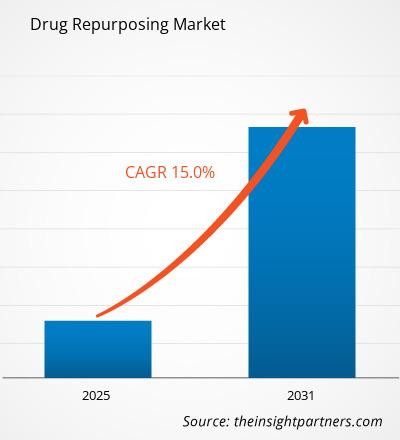
The drug repurposing market size was valued at US$ 31.35 Billion in 2025 and is projected to reach US$ 43.06 Billion by 2034, expanding at a CAGR of 3.59% during 2026–2034. The market continues to gain strategic importance as pharmaceutical companies seek cost-efficient approaches to identify new therapeutic applications for existing drugs. Growing emphasis on shortening development timelines, improving clinical success rates, and maximizing lifecycle value of approved molecules supports sustained market expansion across multiple therapeutic areas.
North America is expected to remain the leading regional market throughout the forecast period, registering an estimated CAGR of 3.4–3.8%. Strong pharmaceutical research capabilities, advanced regulatory pathways supporting supplemental approvals, and increasing adoption of computational drug discovery platforms continue to strengthen regional leadership. According to the drug repurposing market report, collaborations among biotechnology firms, healthcare providers, and academic research institutions further accelerate drug repurposing initiatives across oncology, neurological disorders, and rare diseases.
Drug Repurposing Market Assessment and Insights
- North America: Holds 39–43% drug repurposing market share in 2025, growing at a CAGR of 3.4–3.8% during 2026–2034, driven by a strong pharmaceutical innovation ecosystem, AI-enabled drug discovery, and favorable regulatory support for commercialization.
- US: Accounts for 84–88% of the North American drug repurposing market in 2025, expanding at a 3.5–3.9% CAGR due to increasing investment in drug repurposing research, advanced pharmaceutical R&D capabilities, and supportive regulatory pathways.
- Europe: Represents 27–31% share in 2025, growing at a 3.2–3.6% CAGR, led by Germany, the UK, and France through collaborative biomedical research, expanding translational medicine initiatives, and strong academic–industry partnerships.
- Asia Pacific: Holds 21–25% share in 2025, expanding at a 4.3–4.7% CAGR, led by China, Japan, and India with expanding pharmaceutical manufacturing, increasing biotechnology investments, and growing clinical research activities.
- Largest Segment: Oncology holds the largest drug repurposing market share in 2025, growing at a 3.8–4.2% CAGR due to increasing evaluation of existing compounds for targeted cancer therapies and sustained demand for cost-effective treatment development.
- High Growth Segment: Hospitals are projected to register the fastest growth at a CAGR of 4.0–4.4% during 2026–2034, driven by expanding precision medicine programs and increasing participation in drug repurposing-focused clinical research.
- Key companies analyzed in detail: Astellas Pharma Inc.; Biovista, Inc.; Novartis AG; AbbVie Inc.; Pfizer Inc.; NuMedii, Inc.; Abbott Laboratories; F. Hoffmann-La Roche Ltd; Johnson & Johnson; Bristol-Myers Squibb Company.
Source: The Insight Partners' analysis based on proprietary research, government publications, company annual reports, investor presentations, industry databases, and expert interviews.
Drug repurposing has evolved from serendipitous observations in clinical practice to systematic discovery approaches that leverage artificial intelligence, bioinformatics, genomics, and real-world data. Pharmaceutical firms are combining the use of computational screening with translational research to discover potential therapeutic compounds, mitigating risks associated with their research endeavors. Collaboration among biotech firms, universities, contract research organizations, and health care providers is becoming more robust, thus facilitating validation of existing drugs through different disease indications.
The prospects of the drug repurposing market are optimistic with the involvement of governments, health care providers, and investors who are supporting innovation that is cost-efficient and solves unmet therapeutic needs. Growing pharmaceutical markets are enhancing their capabilities for research, while advances in technology are making it easier to stratify patients and analyze clinical data. Regulators have begun recognizing adaptive clinical evidence and supplementary approvals, which helps promote broader commercialization of repurposed drugs and enables sustainable investments in pharmaceutical firms and biotech companies.
Drug Repurposing Market Report Scope
| Report Attribute | Details |
|---|---|
| Market size in 2025 | US$ 31.35 Billion |
| Market Size by 2034 | US$ 43.06 Billion |
| Global CAGR (2026 - 2034) | 3.59% |
| Historical Data | 2021-2024 |
| Forecast period | 2026-2034 |
Drug Repurposing Market Analysis
Increased pressure on reducing the cost of development of drugs along with increasing clinical productivity is another main reason why drug repurposing has become very important. Safety profile, manufacturing capabilities, and clinical data reduce the time required in developing new drugs much less than what is usually required in conventional drug discovery processes. Increase in the prevalence rate of cancers, neurodegenerative diseases, and other chronic illnesses has been another factor pushing pharmaceutical organizations toward finding out the new applications of existing medications.
Collaborations between pharmaceutical companies, academic laboratories, biotech firms, health care companies, and technology companies specialized in artificial intelligence have increased in the drug repurposing market ecosystem. Such collaborations allow organizations involved in drug repurposing efforts to gain access to biological data bases, patients' data, biomarker discoveries, and clinical expertise.
The level of competitiveness keeps on growing as leading players in the pharmaceutical industry use large clinical portfolios and sophisticated analytics technology to spot new sources of income. Novartis AG, Pfizer Inc., AbbVie Inc., F. Hoffmann-La Roche Ltd, Astellas Pharma Inc., and Johnson & Johnson keep intensifying their efforts in research collaboration and therapeutic pipeline diversification. Specialized innovators such as Biovista, Inc. and NuMedii, Inc. become increasingly reliant on artificial intelligence and computational biology to facilitate the process of discovering novel drugs and indications.
Funding flows towards companies that use digital drug discovery technology to integrate genomics databases, electronic medical records, molecular modeling and predictive analytics to repurpose therapies. Companies continue signing licensing deals, making acquisitions, and establishing research partnerships and public-private partnerships to enhance competitive position. Companies that have the ability to integrate clinical experience, big data science, regulatory know-how, and global commercial network will be able to preserve competitive advantage through the forecast period.
● REPORT CUSTOMIZATION
Tailor This Report To Align With Your Specific Business Requirements
This report can be customized to align precisely with your business objectives, scope, and target markets. Customization options include tailored segmentation, geography, competitive analysis, and strategic insights to support informed decision-making.
Customize This Report →WHAT YOU CAN ADJUST
- ● Segmentations
- ● Geography
- ● Competitive Analysis
- ● Language Preferences
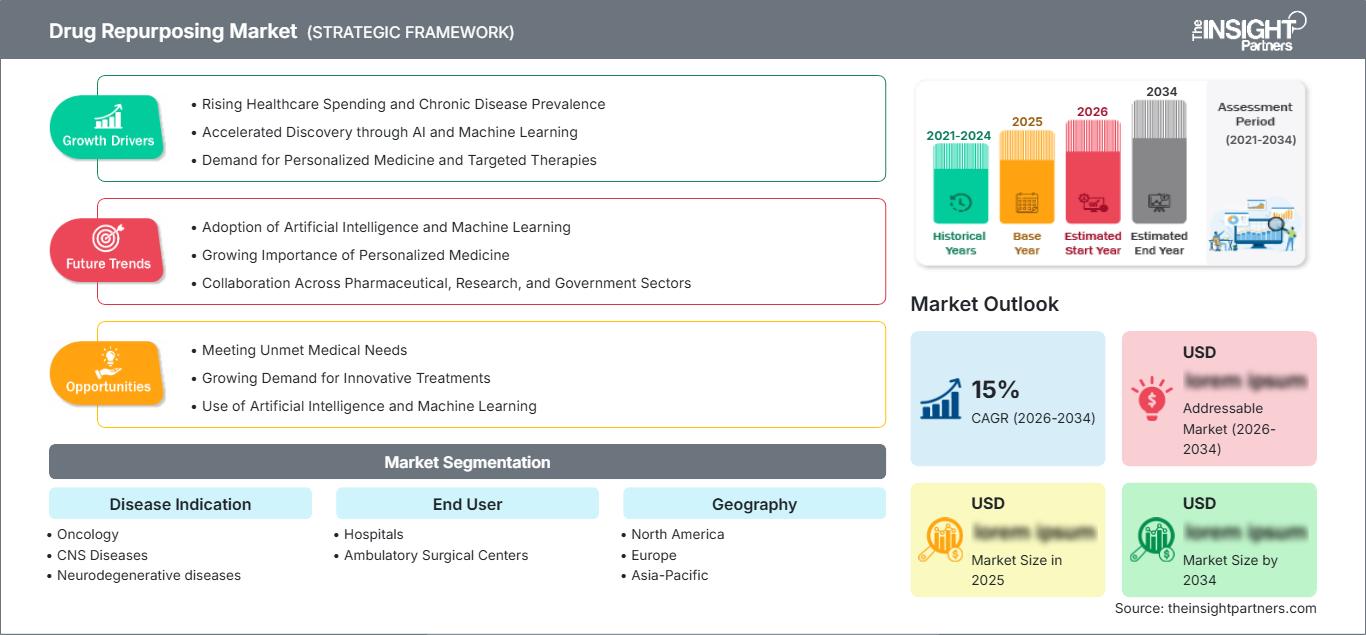
Drug Repurposing Market: Strategic Insights
Regional Insights
North America Drug Repurposing Market
North America accounted for 39–43% of the global drug repurposing market in 2025 and is anticipated to register a CAGR of 3.4–3.8% during 2026–2034. Strong pharmaceutical research infrastructure, high clinical trial activity, and widespread integration of artificial intelligence into drug discovery continue to support regional expansion.
The area is also blessed with substantial collaboration among pharmaceutical firms, biotechnology organizations, universities, and health care facilities. Investment in precision medicines, development of orphan drugs, and translational research makes it even easier to find new uses for already existing drugs.
U.S. Drug Repurposing Market
The U.S. represents 84–88% of the North American market and is projected to expand at a CAGR of 3.5–3.9% through 2034. The country's mature pharmaceutical ecosystem and advanced regulatory environment encourage continued investment in repurposing strategies across multiple therapeutic areas.
Drug development by major pharma companies, biotech firms, and universities through collaboration in the field of computational drug discovery, biomarker identification, and clinical validation is gaining popularity. The increasing use of real-world data is not only helping with identification but also commercializing repurposed medicines.
Europe Drug Repurposing Market
Europe held approximately 27–31% of the global drug repurposing market in 2025 and is forecast to record a CAGR of 3.2–3.6% during the assessment period. Strong public research funding and collaborative innovation programs continue driving pharmaceutical research across the region.
The UK is a notable contributor to the process because of its well-developed biomedical research system, clinical trials, and growing use of artificial intelligence in pharmaceutical research and innovation. University-industry collaborations play an important role in fostering drug repurposing.
Germany dominates the drug repurposing market in Europe because of its powerful pharmaceutical production, highly developed biotech industry, and major advances in translational medicine. The country's focus on precision healthcare and collaborative industrial research drives growth in drug repurposing efforts.
France, Italy, and Spain contribute to regional development through growing biotech industries, government-supported research programs, and increased involvement in multicenter clinical trials. Collaboration among healthcare systems of different European countries helps accelerate the assessment of approved drugs for new indications.
APAC Drug Repurposing Market
Asia Pacific accounted for 21–25% of global revenue in 2025 and is expected to witness the fastest regional expansion with a CAGR of 4.3–4.7% through 2034. Rising pharmaceutical investments and expanding biotechnology capabilities continue to strengthen regional competitiveness.
China remains the largest regional drug repurposing market due to substantial investments in pharmaceutical innovation, artificial intelligence, and drug manufacturing. Increasing government support for domestic research continues to improve commercialization opportunities for repurposed therapies.
Japan maintains strong growth through advanced pharmaceutical research and established healthcare infrastructure, while South Korea expands computational drug discovery capabilities through biotechnology innovation. India strengthens its position with growing contract research activities and cost-efficient clinical development, whereas Australia contributes through internationally recognized medical research institutions and collaborative life sciences programs.
Middle East & Africa Drug Repurposing Market
The Middle East & Africa (MEA) drug repurposing market is expected to witness steady growth at a CAGR of approximately 3.1–3.5% during the forecast period, driven by gradual improvements in healthcare infrastructure and increasing pharmaceutical investments. Although the region currently represents a relatively smaller share of global revenue compared to developed markets, ongoing modernization efforts are creating a more favorable environment for market expansion.
Saudi Arabia remains at the forefront of regional growth, supported by its ambitious healthcare transformation programs under Vision 2030. The country is actively investing in domestic pharmaceutical manufacturing, regulatory enhancements, and digital healthcare systems, which are improving accessibility to advanced therapies and fostering innovation. Similarly, the United Arab Emirates is strengthening its position by developing robust clinical research ecosystems and encouraging partnerships with global biotechnology firms. These initiatives are enabling the faster introduction of innovative treatment approaches and enhancing the region’s attractiveness for clinical trials.
South Africa continues to play a critical role as a leading research hub within Africa, supported by strong academic institutions, international collaborations, and a focus on infectious disease research. The country’s established clinical trial capabilities make it a key destination for pharmaceutical research activities. Meanwhile, other countries across the MEA region are gradually upgrading healthcare systems, increasing healthcare spending, and prioritizing access to essential medicines. Collectively, these developments are opening new opportunities for pharmaceutical companies, particularly those focusing on cost-effective drug development and emerging therapeutic solutions.
Segmentation Analysis
Disease Indication
Disease indication remains the primary basis for market development, with Oncology representing the largest segment and expected to register a CAGR of 3.8–4.2% during 2026–2034. Rising global cancer prevalence, increasing precision medicine initiatives, and continuous evaluation of approved molecules for new oncological applications continue to support sustained segment leadership.
- Oncology: Strong clinical demand, expanding biomarker-driven therapies, and increasing investment in targeted cancer treatment programs continue driving extensive evaluation of existing pharmaceutical compounds for new oncology indications.
- CNS Diseases: Pharmaceutical companies increasingly investigate established therapies to address complex neurological conditions through improved efficacy, reduced development timelines, and greater utilization of advanced computational drug discovery platforms.
- Neurodegenerative Diseases: Rising prevalence of Alzheimer's disease, Parkinson's disease, and related disorders encourages research organizations to evaluate approved medicines capable of addressing progressive neurological degeneration with lower clinical development risks.
End User
Hospitals remain central to drug repurposing implementation because they support clinical research, patient recruitment, evidence generation, and multidisciplinary therapeutic decision-making across numerous disease indications.
- Hospitals: Large patient populations, integrated clinical research infrastructure, and access to multidisciplinary specialists enable efficient validation of repurposed therapies while supporting precision medicine and post-marketing evidence generation.
- Ambulatory Surgical Centers: Growing outpatient treatment volumes and increasing adoption of specialized therapies encourage gradual utilization of repurposed medicines, particularly where shorter treatment pathways and improved patient convenience are prioritized.
Opportunity Snapshot
| Segment Name | Revenue Contribution | Trend Tag | Adoption Stage |
| Hospitals | High | Precision Oncology | Mature |
| Ambulatory Surgical Centers | Medium | Outpatient Care | Scaling |
Drug Repurposing Market Growth Drivers and Impact Analysis
Expansion of Artificial Intelligence in Drug Candidate Identification
Artificial intelligence, machine learning, and network-based computational biology are transforming how pharmaceutical companies identify new therapeutic indications for approved drugs. Advanced algorithms rapidly analyze molecular interactions, genomic datasets, electronic health records, and published clinical evidence to prioritize high-potential candidates for further validation. This significantly reduces the time and resources required compared with conventional discovery approaches. As pharmaceutical organizations continue investing in digital research capabilities, artificial intelligence is becoming an essential competitive differentiator. The technology also improves decision-making during preclinical assessment, enabling companies to optimize research portfolios, accelerate clinical development, and increase the probability of successful regulatory approvals for repurposed therapies.
Growing Burden of Chronic and Complex Diseases
The increasing prevalence of oncology, central nervous system (CNS), and neurodegenerative diseases is driving demand for faster-access therapies. Drug repurposing offers an efficient solution by enabling the use of existing medicines with established safety profiles for new indications. This approach helps reduce development timelines, lower costs, and minimize clinical risk compared to traditional drug discovery.
Governments, healthcare systems, and research institutions are increasingly supporting repurposing initiatives as a practical way to expand treatment options, particularly in areas with high unmet medical needs. Additionally, advancements in data analytics and clinical research methods are further improving the identification and validation of repurposed therapies, strengthening their role in modern healthcare.
Collaborative Research Models Accelerating Clinical Translation
Strategic collaboration between pharmaceutical companies, biotechnology firms, academic institutions, hospitals, and contract research organizations has become a major growth catalyst for the market. These partnerships combine scientific expertise, proprietary compound libraries, advanced analytics, and clinical trial capabilities to identify promising therapeutic opportunities more efficiently. Public-private research initiatives further strengthen knowledge sharing and improve access to funding for translational medicine projects. As collaborative innovation expands globally, organizations are increasingly capable of validating repurposed drug candidates across multiple disease indications while improving commercialization efficiency and strengthening long-term market competitiveness.
Drug Repurposing Market Future Trends
Greater Integration of Real-World Evidence into Development Strategies
The drug repurposing market forecast indicates that real-world evidence is expected to play an increasingly important role in identifying potential drug repurposing opportunities. Healthcare databases, insurance claims, electronic medical records, and patient registries provide valuable insights into treatment outcomes that may reveal previously unrecognized therapeutic benefits. Pharmaceutical companies are investing in advanced analytics to integrate these diverse datasets into discovery programs. As regulatory agencies continue recognizing high-quality real-world evidence, organizations will increasingly combine observational data with clinical research to accelerate supplemental approvals and optimize lifecycle management strategies for established pharmaceutical products.
Expansion of Precision Medicine-Driven Repurposing Programs
The increasing alignment of drug repurposing strategies with precision medicine initiatives is a notable drug repurposing market trend. These initiatives leverage genetic, molecular, and biomarker information to identify patient populations most likely to benefit from existing therapies. Advances in genomic sequencing and companion diagnostics enable researchers to evaluate approved medicines within highly targeted clinical settings. This approach supports improved treatment outcomes while reducing unnecessary exposure to ineffective therapies. Continued investment in biomarker discovery and personalized healthcare is expected to create new commercial opportunities for pharmaceutical companies pursuing differentiated repurposing strategies across oncology and neurological diseases.
Drug Repurposing Market Opportunities
Expanding Repurposing Programs for Rare and Orphan Diseases
Rare diseases present significant opportunities for pharmaceutical companies because many conditions lack approved therapies despite increasing scientific understanding of their biological mechanisms. Repurposing approved drugs offers a practical pathway for addressing these unmet medical needs while minimizing development risks and shortening regulatory timelines. Incentives associated with orphan drug programs, including market exclusivity and accelerated review mechanisms in several jurisdictions, further enhance investment attractiveness. Organizations capable of combining advanced computational screening with focused clinical research can establish differentiated portfolios while improving patient access to specialized treatments.
Strategic Investments in Emerging Pharmaceutical Markets
Emerging economies are strengthening pharmaceutical manufacturing, biotechnology innovation, clinical research infrastructure, and healthcare access, creating favorable conditions for expanded drug repurposing activities. Companies establishing research collaborations, licensing agreements, and regional clinical development programs can benefit from diverse patient populations, competitive operating costs, and growing government support for biomedical innovation. Increasing digital health adoption and improvements in regulatory capabilities further enhance commercialization potential. Early investment in these developing markets enables pharmaceutical organizations to diversify revenue sources while strengthening long-term global competitive positioning.
Recent Developments
- March 2025: ZonMw and FAST launched the Drug Repurposing Venture Challenge to support researchers and startups in developing commercial strategies for repurposing existing medicines into new therapeutic indications, particularly for rare diseases.
- September 2025: Predictive Oncology Inc. partnered with nonprofit Every Cure to leverage AI-driven platforms for identifying new uses of FDA-approved drugs across multiple cancer indications, accelerating drug repurposing through data-driven screening technologies.
- August 2024: Rejuvenate Biomed collaborated with SAS to develop AI-powered drug repurposing discovery tools on the SAS Viya platform, enabling systematic identification of new therapeutic applications for existing drugs across age-related diseases.
Frequently Asked Questions

- Comprehensive Market Sizing and Forecast Analysis
- Detailed Segmentation Analysis
- In-Depth Market Dynamics Assessment
- Regional and Country-Level Insights
- Competitive Landscape and Company Benchmarking
- Strategic Business Intelligence
Recent Reports
Testimonials

The Insight Partners' SCADA System Market report is comprehensive, with valuable insights on current trends and future forecasts. The team was highly professional, responsive, and supportive throughout. We are very satisfied and highly recommend their services.
RAN KEDEM Partner, Reali Technologies LTDs
I requested a report on a very specific software market and the team produced the report in a few days. The information was very relevant and well presented. I then requested some changes and additions to the report. The team was again very responsive and I got the final report in less than a week.
JEAN-HERVE JENN Chairman, Future Analytica
We worked with The Insight Partners for an important market study and forecast. They gave us clear insights into opportunities and risks, which helped shape our plans. Their research was easy to use and based on solid data. It helped us make smart, confident decisions. We highly recommend them.
PIYUSH NAGPAL Sr. Vice President, High Beam Global
The Insight Partners delivered insightful, well-structured market research with strong domain expertise. Their team was professional and responsive throughout. The user-friendly website made accessing industry reports seamless. We highly recommend them for reliable, high-quality research services
YUKIHIKO ADACHI CEO, Deep Blue, LLC.
This is the first time I have purchased a market report from The Insight Partners.While I was unsure at first, I visited their web site and felt more comfortable to take the risk and purchase a market report.I am completely satisfied with the quality of the report and customer service. I had several questions and comments with the initial report, but after a couple of dialogs over email with their analyst I believe I have a report that I can use as input to our strategic planning process.Thank you so much for taking the extra time and making this a positive experience.I will definitely recommend your service to others and you will be my first call when we need further market data.
JOHN SUZUKI President and Chief Executive Officer, Board Director, BK Technologies
I wish to appreciate your support and the professionalism you displayed in the course of attending to my request for information regarding to infectious disease IVD market in Nigeria. I appreciate your patience, your guidance, and the fact that you were willing to offer a discount, which eventually made it possible for us to close a deal. I look forward to engaging The Insight Partners in the future, all thanks to the impression you have created in me as a result of this first encounter.
DR CHIJIOKE ONYIA MANAGING DIRECTOR, PineCrest Healthcare Ltd.Reason to Buy
- Informed Decision-Making
- Understanding Market Dynamics
- Competitive Analysis
- Identifying Emerging Markets
- Customer Insights
- Market Forecasts
- Risk Mitigation
- Boosting Operational Efficiency
- Strategic Planning
- Investment Justification
- Tracking Industry Innovations
- Aligning with Regulatory Trends





 Get Free Sample for