
Gluten Free Food Market Trends, Share & Demand by 2034
Coverage: By Product Type (Bakery Products, Confectionery Bars, Pasta and Noodles, Breakfast Cereals, Snacks, RTE and RTC Meals, and Others); Distribution Channel (Supermarkets and Hypermarkets, Convenience Stores, Online Retail, and Others), and Geography
- Status : Data Released
- Report Code : TIPRE00011919
- Category : Food and Beverages
- No. of Pages : 150
- Available Report Formats :


- Last update date : May 22, 2026


2025 Market Size
US$ 7.96 Bn
Base year value
2034 Forecast
US$ 19.04 Bn
Projected by 2034
CAGR 2026-2034
10.18 %
Growth rate
Addressable Market
US$ 120.00 Bn
(2026-2034)
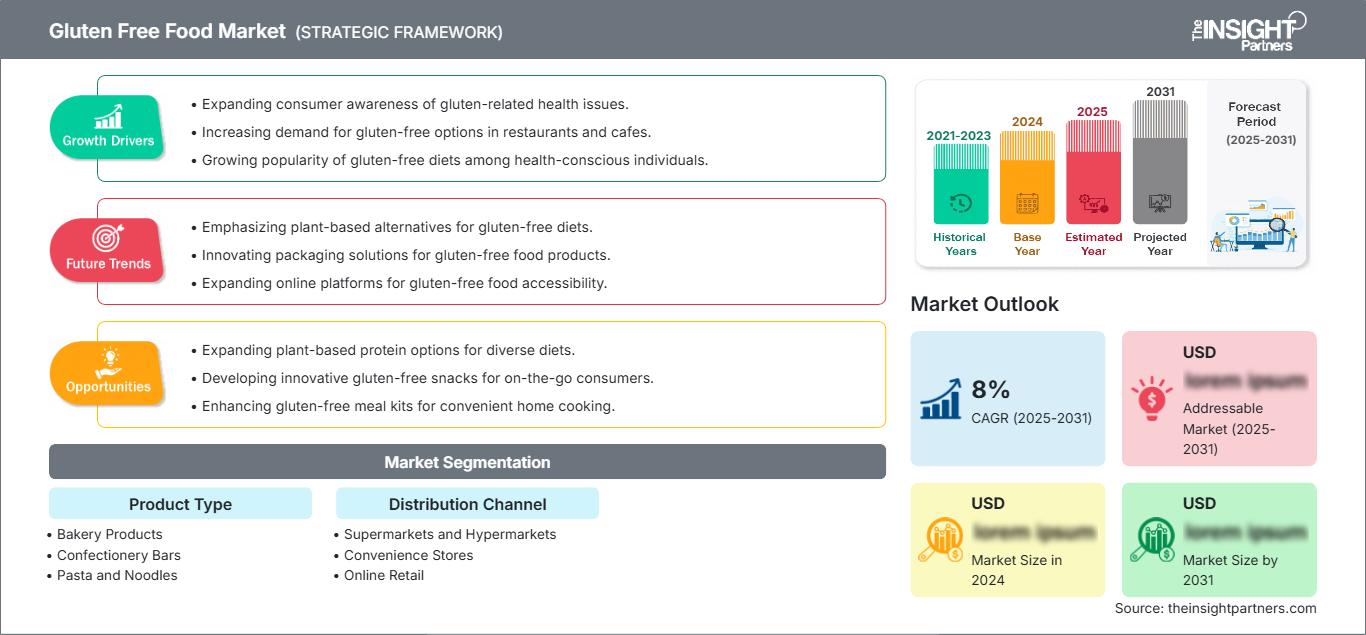
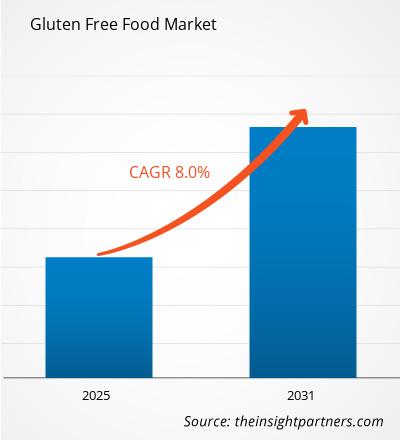
The global gluten-free food market size is projected to reach US$ 19.04 billion by 2034 from US$ 7.96 billion in 2025. The market is anticipated to register a CAGR of 10.18% during the forecast period 2026–2034.
Key market dynamics include the rising clinical diagnosis of celiac disease and non-celiac gluten sensitivity, a burgeoning better-for-you lifestyle trend among non-allergic consumers, and significant advancements in food processing technology. Additionally, the market is expected to benefit from the expansion of clean-label movements, the integration of gluten-free options into mainstream ready-to-eat segments, and increasing availability across both organized retail and e-commerce platforms in emerging economies.
Gluten Free Food Market Analysis
The gluten-free food market analysis indicates a shift from niche medical necessity to a mainstream health and wellness lifestyle. The market trends show a move away from traditional wheat substitutes toward nutrient-dense ancient grains such as quinoa, sorghum, and millet. Strategic opportunities are emerging in the functional gluten-free segment, where products are fortified with vitamins, minerals, and probiotics to address the nutritional gaps often found in restrictive diets. The analysis also notes that market expansion is heavily dependent on overcoming taste and texture barriers; recent innovations in hydrocolloids and enzyme technology are closing the sensory gap between gluten-free and conventional products. Competitive differentiation now hinges on clean-label transparency, ensuring cross-contamination-free supply chains and securing third-party gluten-free certifications to build high consumer trust.
Gluten Free Food Market Overview
Gluten-free products have evolved from dry, crumbly specialty items found only in pharmacies to premium, artisanal staples available in every grocery aisle. The market encompasses a vast array of categories, including bakery goods, pasta, snacks, and even gluten-free beverages like craft beers. Both global food conglomerates and agile D2C startups compete in this space, leveraging diverse plant-based sources like almond, chickpea, and cassava flours. Growing demand for portable wellness has led to a surge in gluten-free grab-and-go snacks and meal replacements. North America currently leads the market in revenue due to high awareness and established diagnostic rates, while Asia-Pacific region is the fastest-growing due to rapid urbanization and a rising middle class adopting Western dietary patterns. The US market is the most developed, driven by health-focused millennials and the broad availability of functional snacks. Competition among brands is fueling greater flavor variety and the inclusion of superfoods like collagen and ancient grains. This maturity centers on product diversification, catering to lifestyle consumers seeking digestive wellness.
Market Assessment and Insights
- Global market for Gluten Free Food was valued at US$ 7.96 Billion in 2025
- Annual market size is expected to reach US$ 19.04 Billion by 2034
- Total addressable market (TAM) during 2026-2034 is projected to reach approximately US$ 120.00 Billion
- Market is anticipated to register a CAGR of 10.18% during the forecast period
- The United States represents a key market, supported by Expanding consumer awareness of gluten-related health issues., Increasing demand for gluten-free options in restaurants and cafes., Growing popularity of gluten-free diets among health-conscious individuals., as well as evolving industry dynamics
- Market analysis covers North America, Europe, Asia-Pacific, South and Central America, Middle East and Africa, with growth evaluated across the forecast period
- Market opportunities such as Expanding plant-based protein options for diverse diets., Developing innovative gluten-free snacks for on-the-go consumers., Enhancing gluten-free meal kits for convenient home cooking. are expected to influence market dynamics and addressable market
- Report profiles industry participants, including Kinnikinnick Foods, Schar, Canyon Bakehouse, Bobs Red Mill, Newmans Own Organics, Annies, Amys, Boulder Brands, Glutino, General Mills, while analyzing competitive strategies and innovation developments
-
Source: The Insight Partners' analysis based on proprietary research, government publications, company annual reports, investor presentations, industry databases, and expert interviews.
● REPORT CUSTOMIZATION
Tailor This Report To Align With Your Specific Business Requirements
This report can be customized to align precisely with your business objectives, scope, and target markets. Customization options include tailored segmentation, geography, competitive analysis, and strategic insights to support informed decision-making.
Customize This Report →WHAT YOU CAN ADJUST
- ● Segmentations
- ● Geography
- ● Competitive Analysis
- ● Language Preferences
Gluten Free Food Market: Strategic Insights
-
Get Top Key Market Trends of this report.This FREE sample will include data analysis, ranging from market trends to estimates and forecasts.
Gluten Free Food Market Drivers and Opportunities
Market Drivers:
- Rising Prevalence of Celiac Disease and Gluten Intolerance: Improved diagnostic tools and clinical awareness are significantly increasing the patient pool requiring a strict gluten-free diet.
- Health and Wellness Lifestyle Adoption: A growing segment of the population perceives gluten-free diets as more natural or beneficial for digestion and weight management, even without a medical diagnosis.
- Expansion of Mainstream Retail and E-commerce: The shift from specialty health stores to supermarkets and online platforms has made gluten-free products highly accessible and affordable for the general public.
Market Opportunities:
- Innovation in Ready-to-Eat (RTE) Meals: There is high demand for convenient, high-quality gluten-free frozen and chilled meals that do not compromise on flavor.
- Untapped Potential in Emerging Markets: Developing regions in Asia and Latin America offer significant growth prospects as Westernized food habits and health consciousness rise.
- Targeting the Foodservice Industry: Partnering with restaurants and fast-food chains to offer certified gluten-free menus represents a major growth avenue for B2B suppliers.
Gluten Free Food Market Report Segmentation Analysis
The gluten-free food market share is analyzed across various segments to provide a clearer understanding of its structure, growth potential, and emerging trends. Below is the standard segmentation approach used in industry reports:
By Product Type:
- Bakery Products: Includes bread, cakes, and cookies. This remains the largest segment as manufacturers improve the elasticity and shelf-life of gluten-free dough.
- Confectionery Bars: A rapidly growing category focused on high-protein and energy bars that cater to the fitness and grab-and-go snack market.
- Pasta and Noodles: Significant growth is seen here through the use of legumes like lentils and chickpeas to provide a high-protein, wheat-free alternative.
- Breakfast Cereals: Modern formulations now include ancient grains like amaranth and buckwheat to provide crunchy, fiber-rich morning options.
- Snacks: Encompasses chips, crackers, and pretzels, where innovation focuses on bold flavors and allergen-free processing.
- RTE and RTC Meals: Ready-to-Eat and Ready-to-Cook meals are gaining traction among busy professionals looking for safe, cross-contamination-free dinner solutions.
- Others: Includes condiments, sauces, and flour blends used for home baking and specialized culinary applications.
By Distribution Channel:
- Supermarkets and Hypermarkets: The dominant volume driver, benefiting from dedicated gluten-free aisles and the expansion of private-label healthy food ranges.
- Convenience Stores: Offers a growing range of gluten-free snacks and individual servings for urban consumers on the move.
- Online Retail: The fastest-rising channel, allowing consumers to access a wider variety of niche brands and bulk-buy staple items.
- Others: Includes specialty health food stores, pharmacies, and direct-to-consumer subscription models.
By Geography:
- North America
- Europe
- Asia Pacific
- South & Central America
- Middle East & Africa
Gluten Free Food Market Report Scope
| Report Attribute | Details |
|---|---|
| Market size in 2025 | US$ 7.96 Billion |
| Market Size by 2034 | US$ 19.04 Billion |
| Global CAGR (2026 - 2034) | 10.18% |
| Historical Data | 2021-2024 |
| Forecast period | 2026-2034 |
| Segments Covered |
By Product Type
|
| Regions and Countries Covered |
North America
|
| Market leaders and key company profiles |
|
Gluten Free Food Market Players Density: Understanding Its Impact on Business Dynamics
The Gluten Free Food Market is growing rapidly, driven by increasing end-user demand due to factors such as evolving consumer preferences, technological advancements, and greater awareness of the product's benefits. As demand rises, businesses are expanding their offerings, innovating to meet consumer needs, and capitalizing on emerging trends, which further fuels market growth.
Gluten Free Food Market Share Analysis by Geography
Asia-Pacific is expected to grow fastest in the coming years. Emerging markets in South & Central America, the Middle East, and Africa also have many untapped opportunities for gluten-free manufacturers to expand.
The gluten-free food market is undergoing a significant transformation, moving from a medical niche for celiac patients to a global lifestyle choice. Growth is driven by the rising prevalence of digestive sensitivities, a surge in clean-label demand, and the expansion of the high-quality artisanal bakery sector. Below is a summary of market share and trends by region:
North America
- Market Share: Holds the largest share globally, anchored by a mature retail environment and extensive consumer awareness regarding celiac disease and gluten sensitivity.
- Key Drivers:
- High clinical diagnosis rates and strong promotion of gluten-free diets by health influencers and celebrity nutritionists.
- Mainstreaming of gluten-free options in large-scale grocery chains and the presence of dominant industry players like General Mills and Conagra.
- Increasing adoption of gluten-free snacks and convenience foods among health-conscious millennials.
- Trends: Rapid scaling of high-protein and keto-friendly gluten-free variations, alongside the successful adoption of non-GMO and organic certifications to appeal to premium demographics.
Europe
- Market Share: A highly significant segment, driven by strict EU labeling regulations and a long-standing tradition of free-from food production in countries like Italy and Germany.
- Key Drivers:
- Robust government initiatives and medical support systems that facilitate the early diagnosis of gluten-related disorders.
- Established processing infrastructure for traditional gluten-free staples like pasta, bread, and pastries.
- High consumer trust in national celiac associations and their respective certification symbols.
- Trends: A strategic shift toward improving the sensory quality of gluten-free products, focusing on artisanal sourdoughs and ancient grain blends to mimic conventional textures.
Asia-Pacific
- Market Share: The fastest-growing region, with China and India acting as massive emerging markets for gluten-free adoption.
- Key Drivers:
- Rapid urbanization and rising disposable incomes are leading to a preference for Westernized packaged foods and premium healthy snacks.
- Increasing awareness of gluten intolerance in countries like Australia and Japan, supported by expanding diagnostic facilities.
- Growing influence of digital commerce and social media trends promoting wellness-oriented diets.
- Trends: Heavy reliance on e-commerce platforms and a rising domestic production of gluten-free items using regional grains like rice, millet, and buckwheat.
South and Central America
- Market Share: Emerging market with a growing artisanal industry in countries like Brazil and Argentina.
- Key Drivers:
- Modernization of local food industries and increasing availability of gluten-free flour blends in urban centers.
- Rising interest in digestive health and the perceived benefits of a gluten-free lifestyle among middle-to-high income segments.
- Improvement in regional labeling standards, making it easier for consumers to identify safe products.
- Trends: Growth of boutique gluten-free bakeries and the introduction of local traditional snacks, such as cheese bread, into the formal gluten-free market.
Middle East and Africa
- Market Share: Developing market with deep cultural roots in naturally gluten-free grains, transitioning toward formalized commercial production.
- Key Drivers:
- Strategic investments in smart food manufacturing to reduce reliance on imported specialty goods.
- High demand for shelf-stable gluten-free staples and infant nutrition in rapidly expanding urban populations.
- Growing prevalence of lifestyle-related health awareness in the Gulf Cooperation Council (GCC) countries.
- Trends: Formalization of the informal health food market and a focus on high-nutrient, gluten-free cereal products for the pediatric and geriatric segments.
High Market Density and Competition
Competition is intensifying due to the presence of established leaders such as Dr. Schär AG, General Mills, Inc., and The Hain Celestial Group. Regional experts and niche players like Barilla (Italy) and Hero Group (Switzerland), alongside North American innovators such as Enjoy Life Foods and Amy’s Kitchen, also contribute to a diverse and rapidly expanding market landscape.
This competitive environment pushes vendors to differentiate through:
- Functional Branding: Positioning gluten-free food as a superior nutritional choice by emphasizing added vitamins and ancient grain content.
- Expanded Product Portfolios: Moving beyond basic bread to include gourmet confectionery, probiotic-rich snacks, and specialized infant nutrition.
- Supply Chain Integrity: Manufacturers manage the entire process from farm to fork to ensure zero cross-contamination and meet ethical clean-label standards.
Opportunities and Strategic Moves
- Partner with high-end retail channels and e-commerce platforms to tap into the surging demand for allergen-friendly and artisanal snacks in Asia-Pacific and North American markets.
- Incorporate sustainable sourcing and plant-based proteins to appeal to environmentally conscious Gen Z and millennial consumers seeking ethical and healthy food alternatives.
Major Companies operating in the Gluten Free Food Market are:
- Kinnikinnick Foods
- Schar
- Canyon Bakehouse
- Bob's Red Mill
- Newman's Own Organics
- Annies
- Amys
- Boulder Brands
- Glutino
- General Mills
Disclaimer: The companies listed above are not ranked in any particular order.
Gluten Free Food Market News and Recent Developments
- In May 2025, Kameda LT Foods, a joint venture between LT Foods, an Indian-origin global FMCG company in the consumer food space, and Kameda Seika, a leading Rice Cracker and Rice innovation company in Japan, continues to build and expand its roasted gluten-free snack range under the brand Kari Kari with the launch of a new product, ‘Krispy Hopu’ with the happy flavour ‘Sweet and Salty’.
- In January 2024, English Bay Blending and Fine Chocolates announced that they had acquired Kinnikinnick Foods, a local, Edmonton Region food producer and market leader of gluten-free products. This acquisition will build on English Bay’s three current areas of expertise: protein bars, chocolate, and dry blends, expanding its business streams to include gluten-free baked goods.
Gluten Free Food Market Report Coverage and Deliverables
The Gluten Free Food Market Size and Forecast (2021–2034) report provides a detailed analysis of the market covering below areas:
- Gluten Free Food Market size and forecast at global, regional, and country levels for all the key market segments covered under the scope
- Gluten Free Food Market trends, as well as market dynamics such as drivers, restraints, and key opportunities
- Detailed PEST and SWOT analysis
- Gluten Free Food Market analysis covering key market trends, global and regional framework, major players, regulations, and recent market developments
- Industry landscape and competition analysis covering market concentration, heat map analysis, prominent players, and recent developments in the gluten-free food market.
- Detailed company profiles
Frequently Asked Questions

- Comprehensive Market Sizing and Forecast Analysis
- Detailed Segmentation Analysis
- In-Depth Market Dynamics Assessment
- Regional and Country-Level Insights
- Competitive Landscape and Company Benchmarking
- Strategic Business Intelligence
Recent Reports
Testimonials

The Insight Partners' SCADA System Market report is comprehensive, with valuable insights on current trends and future forecasts. The team was highly professional, responsive, and supportive throughout. We are very satisfied and highly recommend their services.
RAN KEDEM Partner, Reali Technologies LTDs
I requested a report on a very specific software market and the team produced the report in a few days. The information was very relevant and well presented. I then requested some changes and additions to the report. The team was again very responsive and I got the final report in less than a week.
JEAN-HERVE JENN Chairman, Future Analytica
We worked with The Insight Partners for an important market study and forecast. They gave us clear insights into opportunities and risks, which helped shape our plans. Their research was easy to use and based on solid data. It helped us make smart, confident decisions. We highly recommend them.
PIYUSH NAGPAL Sr. Vice President, High Beam Global
The Insight Partners delivered insightful, well-structured market research with strong domain expertise. Their team was professional and responsive throughout. The user-friendly website made accessing industry reports seamless. We highly recommend them for reliable, high-quality research services
YUKIHIKO ADACHI CEO, Deep Blue, LLC.
This is the first time I have purchased a market report from The Insight Partners.While I was unsure at first, I visited their web site and felt more comfortable to take the risk and purchase a market report.I am completely satisfied with the quality of the report and customer service. I had several questions and comments with the initial report, but after a couple of dialogs over email with their analyst I believe I have a report that I can use as input to our strategic planning process.Thank you so much for taking the extra time and making this a positive experience.I will definitely recommend your service to others and you will be my first call when we need further market data.
JOHN SUZUKI President and Chief Executive Officer, Board Director, BK Technologies
I wish to appreciate your support and the professionalism you displayed in the course of attending to my request for information regarding to infectious disease IVD market in Nigeria. I appreciate your patience, your guidance, and the fact that you were willing to offer a discount, which eventually made it possible for us to close a deal. I look forward to engaging The Insight Partners in the future, all thanks to the impression you have created in me as a result of this first encounter.
DR CHIJIOKE ONYIA MANAGING DIRECTOR, PineCrest Healthcare Ltd.Reason to Buy
- Informed Decision-Making
- Understanding Market Dynamics
- Competitive Analysis
- Identifying Emerging Markets
- Customer Insights
- Market Forecasts
- Risk Mitigation
- Boosting Operational Efficiency
- Strategic Planning
- Investment Justification
- Tracking Industry Innovations
- Aligning with Regulatory Trends





 Get Free Sample for