
Grid Computing Market Growth, Size & Forecast by 2034
Coverage: by Offering (Hardware, Services); End-User (BFSI, Medical & Life Science, Manufacturing, and Utility & Power), and Geography (North America, Europe, Asia Pacific, and South and Central America)
- Status : Data Released
- Report Code : TIPRE00003173
- Category : Electronics and Semiconductor
- No. of Pages : 150
- Available Report Formats :


- Last update date : September 16, 2026


2025 Market Size
US$ 2,475.31 Mn
Base year value
2034 Forecast
US$ 4,775.73 Mn
Projected by 2034
CAGR 2026-2034
7.58 %
Growth rate
Addressable Market
US$ 32,676.08 Mn
(2026-2034)
The Grid Computing Market is evolving as enterprises distribute processing across interconnected servers, edge environments, and centralized infrastructure to improve utilization and workload flexibility. The market was valued at US$ 2,475.31 Million in 2025 and is projected to reach US$ 4,775.73 Million by 2034, expanding at a CAGR of 7.58% during 2026–2034. Increasing adoption of analytics, AI, simulation, and high-performance workloads is strengthening demand for coordinated computing resources.
North America remains a major regional market, supported by hyperscale infrastructure, enterprise modernization, and strong adoption of distributed analytics. The Grid Computing Market size is expected to expand at a CAGR of 7.2–8.1% during 2026–2034. Investments in data center capacity, edge infrastructure, cybersecurity, and workload orchestration are creating favorable conditions for wider deployment across BFSI, manufacturing, healthcare, and utilities.
Grid Computing Market Assessment and Insights
- North America: North America is expected to hold a 34–38% share in 2025 and grow at a CAGR of 7.2–8.1% between 2026–2034, supported by mature cloud infrastructure, enterprise AI adoption, high-performance workloads, and established technology ecosystems.
- US: The US is expected to represent 79–83% of North American demand in 2025 and expand at a CAGR of 7.3–8.2% during 2026–2034, driven by hyperscale investment and enterprise modernization.
- Europe: Europe is estimated to account for 25–29% share in 2025 and grow at a CAGR of 6.7–7.6% between 2026–2034, with Germany, the UK, France, and the Netherlands supported by industrial digitization, data sovereignty requirements, and advanced computing programs.
- Asia Pacific: Asia Pacific is projected to capture 25–29% share in 2025 and expand at a CAGR of 8.1–9.0% during 2026–2034, led by China, Japan, South Korea, and India through manufacturing digitization and expanding cloud infrastructure.
- Largest Segment: Hardware is estimated to command a 58–63% market share in 2025 and expand at a CAGR of 7.0–7.8%, reflecting sustained demand for scalable processing infrastructure.
- High Growth Segment: Services are estimated to represent a 37–42% market share in 2025 and expand at a CAGR of 8.0–8.8%, supported by orchestration, integration, optimization, and managed infrastructure requirements.
- Key companies analyzed in detail: Apple Inc., DataSynapse Inc., Dell Inc., Hewlett Packard, Intel Corporation, Microsoft Corporation, Oracle Corporation, SAS Institute Inc., Sun Microsystems, Sybase.
Source: The Insight Partners' analysis based on proprietary research, government publications, company annual reports, investor presentations, industry databases, and expert interviews.
The Grid Computing Market has advanced from its roots in tightly coupled clusters to more diverse architectures featuring CPUs, accelerators, virtualization, cloud computing, and edge computing. The hardware vendors design their equipment with parallel processing capabilities, memory throughput, network connections, and power consumption in mind, whereas the software layer focuses on task scheduling and resource aggregation. These trends drive the shift from server-only purchases to full-fledged computing ecosystems.
In the future, distributed artificial intelligence, sovereign computing, industrial analytics, and edge computing will likely expand the addressable market further. Resilient digital infrastructures and data localization policies create an emphasis on geographically diverse computing. Investments in high-bandwidth networks, orchestration solutions, and power-efficient data centers could help with adoption in developing markets, especially those that experience rapid digital transformations in manufacturing, utilities, and finance industries.
Grid Computing Market Report Scope
| Report Attribute | Details |
|---|---|
| Market size in 2025 | US$ 2,475.31 Million |
| Market Size by 2034 | US$ 4,775.73 Million |
| Global CAGR (2026 - 2034) | 7.58% |
| Historical Data | 2021-2024 |
| Forecast period | 2026-2034 |
Grid Computing Market Analysis
Demand is becoming more affected by the Grid Computing Market growth facilitated by AI-assisted analytics, scientific workloads, simulation, enterprise databases, and real-time operations. Businesses will be able to utilize the resources together rather than creating separate capacity for every application, improving efficiency and preventing unnecessary infrastructure. The ecosystem covers processors, servers, storage, networking, virtualization, middleware, orchestration software, systems integration, and managed services. Consequently, procurement is increasingly driven not only by processing performance but also by interoperability, workload portability, security, and lifecycle.
The supply of the Grid Computing Market becomes more dependent on accelerators, high bandwidth networking, modular server design, and software-defined infrastructure. Hardware vendors are competing on performance per watt, scalability, memory architecture, and integration, while the providers of services compete on deployment skills and workload optimization. The manufacturing capacity for cutting-edge processors and networking hardware remains strategically significant since the supply issues may have negative influence on project timing and infrastructure cost.
The competitive position in the Grid Computing Market report depends increasingly on the ability of the company to combine the infrastructure with software and services. Dell Inc. and Hewlett Packard meet the infrastructure requirements of enterprises and high performance computers, while Intel Corporation provides processing technologies. Microsoft Corporation and Oracle Corporation contribute to the software and cloud infrastructure with distributed infrastructure capability. The contribution of Apple Inc. and others includes special computing architectures, which depend largely on end-user applications.
Some technology lineages, such as DataSynapse Inc., SAS Institute Inc., Sun Microsystems, and Sybase, become significant players in Grid Computing Market with respect to workload management, analytics, enterprise computing, or distributed application infrastructure. Currently, investments are directed increasingly towards AI-ready infrastructure, orchestration, edge computing, and hybrid approaches.
● REPORT CUSTOMIZATION
Tailor This Report To Align With Your Specific Business Requirements
This report can be customized to align precisely with your business objectives, scope, and target markets. Customization options include tailored segmentation, geography, competitive analysis, and strategic insights to support informed decision-making.
Customize This Report →WHAT YOU CAN ADJUST
- ● Segmentations
- ● Geography
- ● Competitive Analysis
- ● Language Preferences
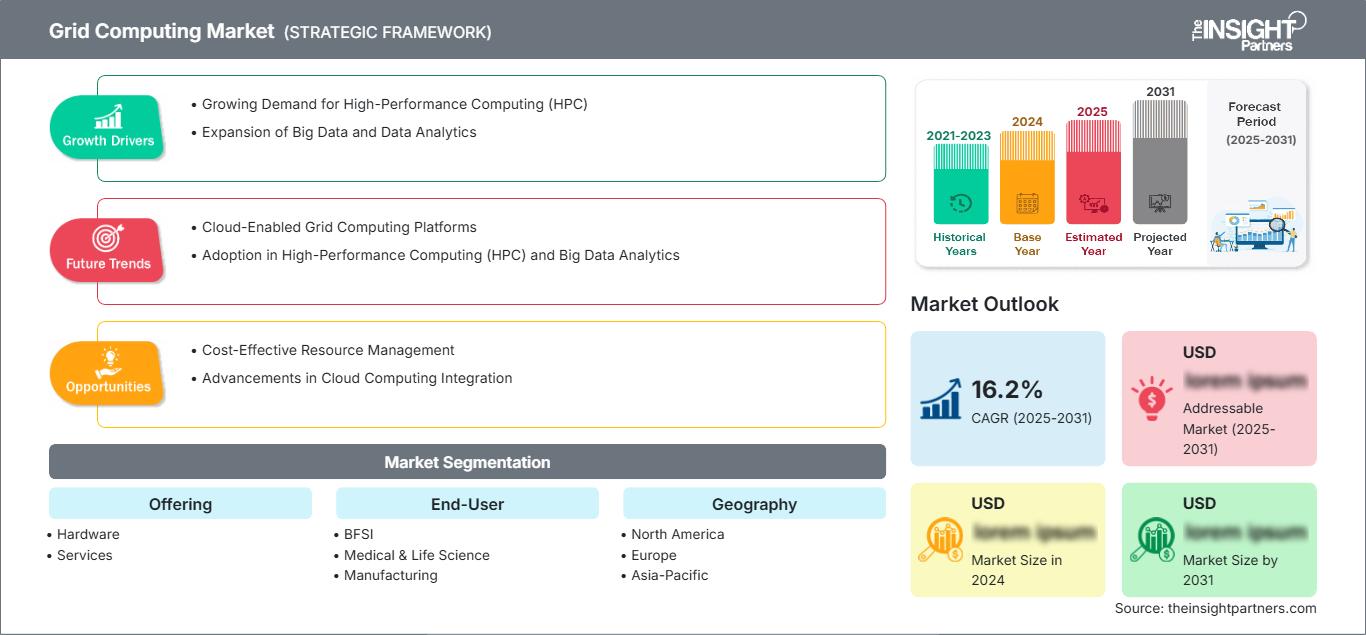
Grid Computing Market: Strategic Insights
Regional Insights
North America Grid Computing Market
North America is estimated to account for 34–38% of the Grid Computing Market share in 2025 and is projected to expand at a CAGR of 7.2–8.1% through 2034. North America is still the primary consumer market, thanks to hyperscale data centers, adoption of AI in enterprises, high-performance computing, and cloud computing infrastructure. Canada plays its part by contributing through research computing, financial services, telecommunication, and digitization in the resource sector.
Modernization of enterprises will increase the demand for distributed resource pools in BFSI, healthcare, manufacturing, and utility sectors. Mature networking infrastructure and systems integration expertise add value in this region. Initiatives for digital infrastructure in federal and state governments will drive investments into secure and scalable computing solutions. Data governance needs are driving hybrid architecture, which allows sensitive operations to run close to the users while keeping the compute infrastructure in central locations.
U.S. Grid Computing Market Market
The US represents approximately 79–83% of North American Grid Computing Market demand in 2025 and is expected to grow at a CAGR of 7.3–8.2% through 2034. Major businesses are now utilizing cloud, local, and edge computing infrastructure to enable AI, analytics, simulation, cybersecurity, and real-time applications. These businesses include Microsoft Corporation, Oracle Corporation, Dell Inc., Intel Corporation, and Hewlett Packard. Application developments are now focusing on distributed AI inference, financial analytics, scientific computing, industrial automation, and large-scale data processing. There is an increasing trend among utilities in the adoption of distributed computing architecture, enabling coordination of data and analytics across geographically scattered sites. Investments in AI infrastructure have created more demand for accelerated computing and high-speed interconnects. As a result, the US market is moving towards workload-aware computing infrastructure, whereby resource scheduling, data locality, security, and energy efficiency become important procurement criteria along with processor performance.
Europe Grid Computing Market Market
Europe is estimated to hold a 25–29% Grid Computing Market share in 2025 and expand at a CAGR of 6.7–7.6% through 2034. The UK and Germany are leading markets, supported by advanced enterprise computing, industrial digitization, research infrastructure, and data sovereignty requirements. France, Italy, Spain, and the Netherlands also contribute through manufacturing, public-sector modernization, financial services, and scientific applications.
There is good cloud adoption, finance services digitization, AI development, and government investments in high performance computing in the UK. The increasing trend of demand is towards a system architecture that combines centralized processing with localized data management.
Germany continues to be an important industrial country where automotive, engineering, chemicals, and manufacturing applications need distributed analytics and simulations. There is investment in computing scalability due to industrial automation and Industry 4.0 initiatives.
France, Italy, and Spain are creating increasing demand for advanced computing through manufacturing renewal, energy systems, telecoms, health analytics, and public sector digital transformation.
APAC Grid Computing Market Market
APAC is estimated to represent 25–29% of the Grid Computing Market share in 2025 and grow at a CAGR of 8.1–9.0%. China dominates the regional market, followed by Japan, South Korea, India, and Australia. Automation of manufacturing, semiconductor ecosystem, growth of cloud services, and digitization efforts of the government are some of the adoption factors.
China will have advantages owing to its investment in large-scale computing and AI technology, whereas Japan and South Korea focus on advanced manufacturing and electronics. India is working to expand its enterprise cloud and analytics capabilities, while Australia has research and mining-related uses of the technology among others.
Middle East & Africa Grid Computing Market Market
Middle East and Africa demand is developing from a smaller base, with regional growth estimated at a CAGR of 6.5–7.5% through 2034. Saudi Arabia leads regional adoption, followed by the UAE and South Africa, supported by digital transformation, cloud infrastructure, energy modernization, and smart-city programs.
The countries such as Saudi Arabia and UAE are making huge investments into digital infrastructure and AI-driven solutions, whereas South Africa serves as the regional center of finance, telecommunications and enterprise computing. RoMEA is going through telecom transformation, digitization of the government sector and industrialization. The energy-intensive use cases and geographical dispersion of business lead to potential for distributed resources management and local computations.
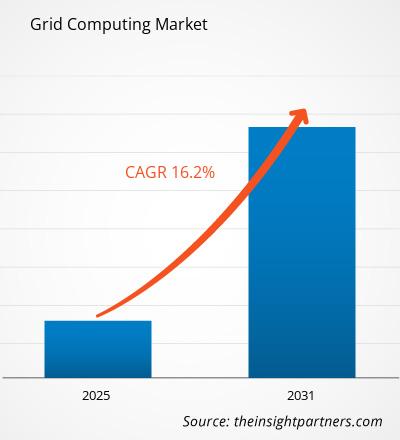
Segmentation Analysis
Offering
The Offering segment is expected to expand at a CAGR of 7.2–8.0% during 2026–2034. The Grid Computing Market scope increasingly includes integrated hardware platforms, infrastructure deployment, workload orchestration, integration, optimization, and managed services. Customers are evaluating solutions based on scalability, interoperability, security, performance, and lifecycle economics rather than individual components.
- Hardware: Hardware remains the principal investment category, encompassing servers, processors, storage, and networking equipment required to construct distributed computing environments. Demand is linked to workload density, accelerator adoption, capacity expansion, and infrastructure refresh cycles.
- Services: Services support architecture design, integration, orchestration, workload optimization, monitoring, and managed operations. Their strategic importance is increasing as enterprises require specialized skills to coordinate heterogeneous resources across cloud, on-premises, and edge environments.
End-User
The End-User segment is projected to grow at a CAGR of 7.4–8.2% during 2026–2034. Adoption varies according to workload intensity, data sensitivity, infrastructure maturity, and operational requirements. BFSI and manufacturing remain significant users, while medical and life science and utility applications increasingly require distributed analytics, simulation, and real-time processing capabilities.
- BFSI: Banks and financial institutions use distributed computing for risk analytics, fraud detection, portfolio modeling, stress testing, and transaction processing. Resource pooling supports computationally intensive workloads while maintaining controlled access to sensitive financial data.
- Medical & Life Science: Research organizations and healthcare institutions require scalable computing for genomics, medical imaging, drug discovery, and clinical analytics. Distributed processing can shorten computational cycles and support collaboration across research environments.
- Manufacturing: Manufacturers use distributed resources for digital twins, predictive maintenance, engineering simulation, robotics, and production analytics. Local processing combined with centralized resources supports faster operational decisions and efficient utilization of computing infrastructure.
- Utility & Power: Utilities apply distributed computing to forecasting, grid analytics, asset monitoring, outage management, and renewable integration. Geographic dispersion makes coordinated processing particularly valuable for systems managing large volumes of operational data.
Opportunity Snapshot
| End-User | Revenue Contribution (High/Medium/Low) | Trend Tag | Adoption Stage |
|---|---|---|---|
| BFSI | High | Risk Analytics | Mature |
| Medical & Life Science | Medium | Genomic Computing | Scaling |
| Manufacturing | High | Digital Twins | Scaling |
| Utility & Power | Medium | Grid Analytics | Scaling |
Grid Computing Market Growth Drivers and Impact Analysis
AI and High-Performance Workloads Require Elastic Compute Capacity
The rapid expansion of AI, advanced analytics, simulation, and data-intensive applications is increasing demand for infrastructure capable of allocating computing resources dynamically. Grid architectures allow organizations to combine available processing capacity across servers, locations, and infrastructure domains, reducing dependence on fixed workloads. This model is particularly relevant where demand fluctuates significantly between training, inference, analytics, and operational applications. The impact extends beyond hardware purchases because organizations require orchestration, scheduling, networking, and monitoring capabilities to maintain performance. As workload diversity increases, infrastructure strategies are likely to prioritize flexible resource allocation, heterogeneous processing, and workload portability. This encourages vendors to develop integrated platforms capable of coordinating CPUs, accelerators, storage, and networking within unified operational frameworks.
Enterprise Data Growth Is Increasing the Need for Distributed Processing
Enterprise data is expanding across applications, connected devices, industrial systems, customer platforms, and operational technology. Centralizing every workload can create latency, bandwidth, security, and cost challenges, particularly when data is generated continuously at geographically dispersed locations. Grid computing provides an alternative by allowing processing resources to operate across multiple nodes while remaining coordinated through software. Manufacturing, utilities, healthcare, and financial services can therefore process data closer to its source when latency or governance requirements demand localization. The resulting impact is increased investment in distributed infrastructure, networking, storage, and orchestration tools. Vendors able to integrate these layers can address more complex deployment requirements, while enterprises gain greater flexibility in balancing local processing with centralized computational capacity.
Hybrid Infrastructure Strategies Are Expanding Resource Pooling Requirements
Enterprises increasingly operate combinations of on-premises infrastructure, private cloud, public cloud, and edge resources. Managing these environments independently can create underutilization, duplicated capacity, and inconsistent governance. Grid computing addresses part of this challenge by coordinating available resources and directing workloads toward suitable processing environments. The commercial impact is particularly significant for organizations with variable computational demand or strict data residency requirements. Hybrid strategies also create opportunities for service providers to deliver infrastructure integration, workload optimization, monitoring, and managed operations. Over time, procurement is expected to shift toward platforms that can abstract infrastructure differences while preserving security and operational control. This transition can expand the services component of the market and increase the value of software-defined resource management.
Grid Computing Market Future Trends
Federated Computing Will Connect More Distributed AI Resources
Grid Computing Market trends are likely to increasingly reflect federated architectures in which computing resources remain distributed while workloads, data access, and processing tasks are coordinated through intelligent software. Instead of moving every dataset to a central environment, enterprises can execute selected workloads closer to their origin and exchange only required results. This approach can reduce bandwidth pressure and improve governance for sensitive information. Future platforms are expected to incorporate policy-aware scheduling, automated workload placement, accelerator selection, and observability across heterogeneous environments. Such capabilities will be relevant to healthcare, finance, manufacturing, and utilities where data sovereignty and latency influence infrastructure decisions. Integration with AI orchestration tools should further improve resource utilization and make distributed processing more accessible to organizations without specialized high-performance computing teams.
Energy-Aware Scheduling Will Become a Strategic Infrastructure Capability
Energy consumption is becoming a more important variable in computing infrastructure decisions as enterprises expand AI and high-performance workloads. Future architectures are expected to incorporate energy-aware scheduling that directs workloads according to processor efficiency, cooling availability, electricity costs, and facility conditions. This can encourage computing resources to operate where the required performance can be delivered with lower energy intensity. Data center operators may increasingly combine workload orchestration with power management, thermal monitoring, and renewable-energy availability. Such capabilities can also improve infrastructure utilization by shifting non-urgent processing to periods or locations with favorable operating conditions. The trend is likely to create additional demand for software capable of coordinating compute, networking, storage, and facility-level information within a single optimization framework.
Grid Computing Market Opportunities
Distributed Infrastructure for Industrial Digital Twins
Manufacturing provides an attractive investment opportunity because digital twins, simulation, machine vision, robotics, and predictive maintenance generate computational requirements across plants and centralized engineering environments. Vendors can develop packaged distributed computing architectures that combine local processing with centralized analytics, reducing latency while preserving access to larger computational pools. The opportunity extends to systems integration, application modernization, monitoring, and lifecycle services. Companies targeting automotive, aerospace, chemicals, electronics, and heavy industry can prioritize modular deployments that scale by production line or facility. Grid Computing Market Forecasts should therefore consider manufacturing as an important route for expansion because the sector combines high data generation, complex workloads, and measurable productivity objectives. Partnerships between infrastructure suppliers, industrial automation companies, and software providers can improve deployment economics.
Localized Compute for Regulated and Data-Sensitive Industries
Healthcare, financial services, government, and critical infrastructure require computing architectures that reconcile performance with data governance. Localized or sovereign computing environments can provide a route for processing sensitive information without transferring all workloads to centralized public infrastructure. Investment opportunities exist in secure orchestration, isolated infrastructure, workload scheduling, encryption, and managed services designed for regulated applications. Providers can differentiate through compliance capabilities, auditability, interoperability, and flexible deployment models rather than processing capacity alone. Enterprises can also reduce infrastructure concentration risk by distributing workloads across controlled environments. This opportunity is particularly relevant in regions strengthening data localization requirements and digital sovereignty policies. Providers that combine secure infrastructure with transparent workload management can address procurement requirements where governance is as important as computational performance.
Recent Developments
- March 2026: Dell Technologies announced advancements to the Dell AI Factory with NVIDIA, reporting more than 4,000 customers and introducing updates across AI data platforms, infrastructure, and services. The company positioned the expanded portfolio around moving enterprise AI from experimentation into production, with integrated compute, networking, storage, automation, and professional services supporting scalable workloads.
- November 2025: Microsoft Corporation described its Fairwater AI data center architecture, connecting geographically distributed sites into an AI superfactory. The Atlanta facility joined a network including Wisconsin and other planned US locations, using dedicated high-speed connectivity to coordinate processing across sites. The architecture illustrates the movement toward interconnected computing facilities rather than isolated data center deployments.
- October 2025: Oracle Corporation introduced OCI Zettascale10, a distributed AI computing architecture connecting hundreds of thousands of NVIDIA GPUs across multiple data centers. The company stated that the platform can support multi-gigawatt AI workloads and is designed around high-bandwidth, low-latency networking. The development demonstrates the increasing emphasis on geographically coordinated compute resources for large-scale AI processing.
Frequently Asked Questions

- Comprehensive Market Sizing and Forecast Analysis
- Detailed Segmentation Analysis
- In-Depth Market Dynamics Assessment
- Regional and Country-Level Insights
- Competitive Landscape and Company Benchmarking
- Strategic Business Intelligence
Recent Reports
Testimonials

The Insight Partners' SCADA System Market report is comprehensive, with valuable insights on current trends and future forecasts. The team was highly professional, responsive, and supportive throughout. We are very satisfied and highly recommend their services.
RAN KEDEM Partner, Reali Technologies LTDs
I requested a report on a very specific software market and the team produced the report in a few days. The information was very relevant and well presented. I then requested some changes and additions to the report. The team was again very responsive and I got the final report in less than a week.
JEAN-HERVE JENN Chairman, Future Analytica
We worked with The Insight Partners for an important market study and forecast. They gave us clear insights into opportunities and risks, which helped shape our plans. Their research was easy to use and based on solid data. It helped us make smart, confident decisions. We highly recommend them.
PIYUSH NAGPAL Sr. Vice President, High Beam Global
The Insight Partners delivered insightful, well-structured market research with strong domain expertise. Their team was professional and responsive throughout. The user-friendly website made accessing industry reports seamless. We highly recommend them for reliable, high-quality research services
YUKIHIKO ADACHI CEO, Deep Blue, LLC.
This is the first time I have purchased a market report from The Insight Partners.While I was unsure at first, I visited their web site and felt more comfortable to take the risk and purchase a market report.I am completely satisfied with the quality of the report and customer service. I had several questions and comments with the initial report, but after a couple of dialogs over email with their analyst I believe I have a report that I can use as input to our strategic planning process.Thank you so much for taking the extra time and making this a positive experience.I will definitely recommend your service to others and you will be my first call when we need further market data.
JOHN SUZUKI President and Chief Executive Officer, Board Director, BK Technologies
I wish to appreciate your support and the professionalism you displayed in the course of attending to my request for information regarding to infectious disease IVD market in Nigeria. I appreciate your patience, your guidance, and the fact that you were willing to offer a discount, which eventually made it possible for us to close a deal. I look forward to engaging The Insight Partners in the future, all thanks to the impression you have created in me as a result of this first encounter.
DR CHIJIOKE ONYIA MANAGING DIRECTOR, PineCrest Healthcare Ltd.Reason to Buy
- Informed Decision-Making
- Understanding Market Dynamics
- Competitive Analysis
- Identifying Emerging Markets
- Customer Insights
- Market Forecasts
- Risk Mitigation
- Boosting Operational Efficiency
- Strategic Planning
- Investment Justification
- Tracking Industry Innovations
- Aligning with Regulatory Trends





 Get Free Sample for