
Interactive Flat Panels Market Growth, Trends & Demand by 2034
Coverage: by Technology (LCD, LED, Others); Panel Type (Resistive, Capacitive, Electromagnetic, Others); End-User (Education, Corporate, Healthcare, Retail, Hospitality, Others); and Geography (North America, Europe, Asia Pacific, and South and Central America)
- Status : Data Released
- Report Code : TIPRE00010118
- Category : Electronics and Semiconductor
- No. of Pages : 150
- Available Report Formats :


- Last update date : September 21, 2026


2025 Market Size
US$ 16.95 Bn
Base year value
2034 Forecast
US$ 20.61 Bn
Projected by 2034
CAGR 2026-2034
2.20 %
Growth rate
Addressable Market
US$ 170.35 Bn
(2026-2034)
The Interactive Flat Panels Market is undergoing a measured transition from conventional display hardware toward connected collaboration platforms for classrooms, workplaces, healthcare facilities, and customer-facing environments. The market is valued at US$ 16.95 Billion in 2025 and is projected to reach US$ 20.61 Billion by 2034, expanding at a CAGR of 2.20% during 2026–2034. Demand is increasingly shaped by touch capability, integrated computing, wireless collaboration, and application-specific software ecosystems.
North America remains a strategically important adoption center, with Interactive Flat Panels Market size supported by established education technology budgets, enterprise modernization, and replacement of legacy projection systems. The regional market is estimated to expand at a 3.0–3.8% CAGR from 2026–2034. Large school districts, hybrid-work infrastructure, and corporate meeting-room upgrades provide durable demand, while standardized procurement increasingly favors manageable, interoperable displays.
Interactive Flat Panels Market Assessment and Insights
- North America: North America is expected to retain a leading position, representing a 34–38% Interactive Flat Panels Market share in 2025 and growing at a 3.0–3.8% CAGR between 2026–2034, supported by education digitization and enterprise collaboration upgrades.
- US: The US accounts for a 72–76% share of North American revenue in 2025 and is projected to expand at a 3.1–3.9% CAGR between 2026–2034, led by schools and corporate campuses.
- Europe: Europe is estimated at a 24–28% share in 2025, with the UK, Germany, France, Italy, and Spain supporting deployment; the region is expected to grow at a 2.4–3.1% CAGR between 2026–2034.
- Asia Pacific: Asia Pacific represents a 29–33% share in 2025 and is projected to record a 4.0–4.8% CAGR between 2026–2034, with China, Japan, South Korea, and India shaping demand.
- Largest Segment: LCD is the largest technology category, with a 68–72% market share in 2025 and a 2.0–2.8% CAGR between 2026–2034, reflecting broad installed-base compatibility.
- High Growth Segment: Wireless connectivity holds a 40–45% market share in 2025 and is expected to grow at a 5.5–6.5% CAGR between 2026–2034 as collaboration becomes device-agnostic.
- Key companies analyzed in detail: BenQ Corporation, Boxlight Corporation, Elo Touch Solutions, Inc., Hitachi Digital Media Group, Koninklijke Philips N.V., LG Electronics Inc., NEC Display Solutions, Ltd., Panasonic Corporation, Samsung Electronics Co., Ltd., Sharp Electronics Corporation.
Source: The Insight Partners' analysis based on proprietary research, government publications, company annual reports, investor presentations, industry databases, and expert interviews.
In terms of technical development, the Interactive Flat Panels Market has progressed from large-sized digital whiteboards to computing and collaboration endpoints. LCD panels have retained their leading position due to the maturity of production technologies, high resolution, touch sensitivity, and proven deployment cost economics. At the same time, capacitive and electromagnetic sensors increase the range of available designs, while embedded operating systems, USB-C ports, wireless casting capabilities, cameras, microphones, and device management software become key criteria for product differentiation.
The future growth will probably not be even in geographical terms. The formation of new education systems in India and Southeast Asian countries will allow new deployments, while mature markets in North America and Europe will need replacements and standardization in enterprises. The procurement strategy based on the importance of accessibility, cybersecurity, interoperability, energy efficiency, and support during lifecycle may affect the choice of vendors.
Interactive Flat Panels Market Report Scope
| Report Attribute | Details |
|---|---|
| Market size in 2025 | US$ 16.95 Billion |
| Market Size by 2034 | US$ 20.61 Billion |
| Global CAGR (2026 - 2034) | 2.20% |
| Historical Data | 2021-2024 |
| Forecast period | 2026-2034 |
Interactive Flat Panels Market Analysis
Interactive flat panels market expansion will be driven by education digital transformation, collaborative solutions and presentation system upgrades. Purchase decision-making starts from display panel and touch component suppliers, further proceeding through electronics assembly, operating system installation, software companies, distribution channels, installation service and managed services provider. Purchasing decision becomes to focus more on deployment process rather than on individual panels, hence interoperability, warranty service, mounting options, connectivity, devices management become critical purchase factors.
Current supply trends depend on LCD panels availability, semiconductors, controller hardware, touch sensors and logistics expenses. Manufacturing centers located in Asia bring benefits for vendors through economies of scale, meanwhile international brands compete on calibration, industrial design, software integration and post-sale support services. Price fluctuations of panels may have significant impact on implementation of projects, due to fixed budgeting in education and public sectors.
Competitive Analysis is characterized by a fragmented market among a few large display companies and collaboration vendors. The key focus for BenQ Corporation is on software and display ecosystems for education purposes, whereas LG Electronics Inc., Samsung Electronics Co., Ltd., Koninklijke Philips N.V., and Sharp Electronics Corporation rely on their extensive commercial display portfolio. Elo Touch Solutions, Inc. brings to the market its knowledge of touch displays, while Boxlight Corporation is competing with solutions for classrooms.
The strategic investments are being made in embedded intelligence, wireless collaboration, device management platforms, and cybersecurity. The relevance of Panasonic Corporation and Hitachi Digital Media Group is ensured by professional display expertise, and NEC Display Solutions, Ltd. and other traditional players get an advantage due to institutional relationships. Nowadays, positioning of products should be considered based on total cost of ownership, ease of deployment, software compatibility, and timely services, not only based on the resolution.
● REPORT CUSTOMIZATION
Tailor This Report To Align With Your Specific Business Requirements
This report can be customized to align precisely with your business objectives, scope, and target markets. Customization options include tailored segmentation, geography, competitive analysis, and strategic insights to support informed decision-making.
Customize This Report →WHAT YOU CAN ADJUST
- ● Segmentations
- ● Geography
- ● Competitive Analysis
- ● Language Preferences
Interactive Flat Panels Market: Strategic Insights
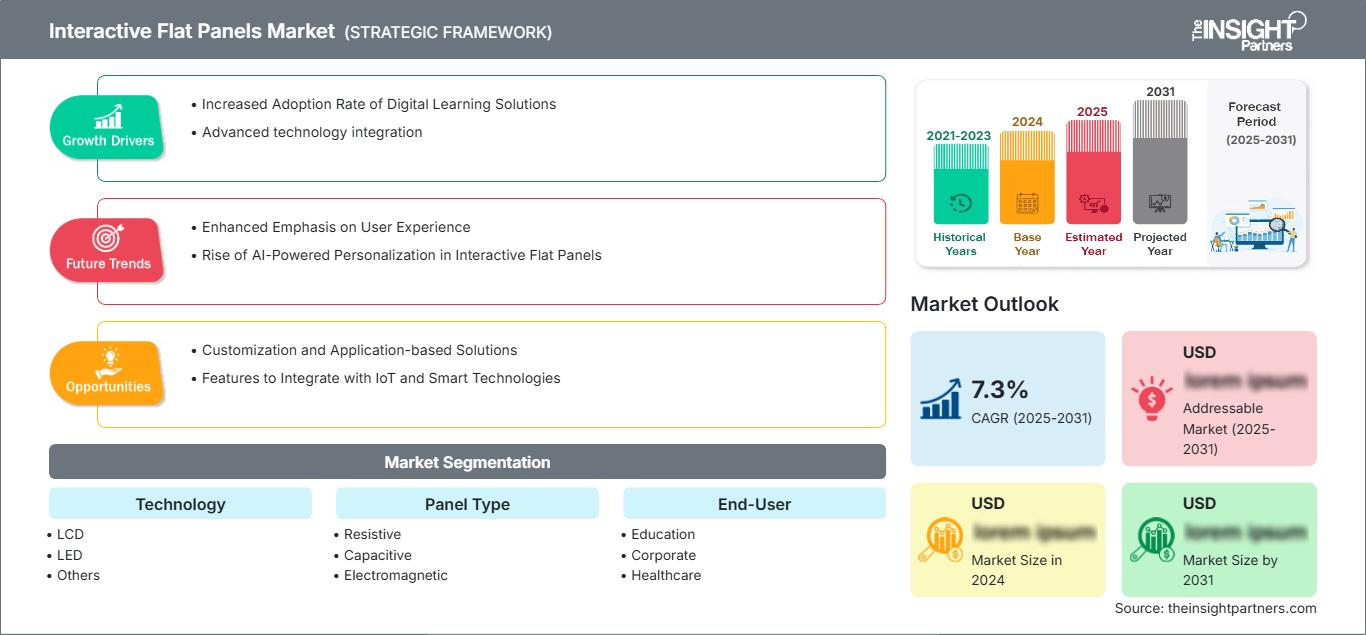
Regional Insights
North America Interactive Flat Panels Market
North America represented a 34–38% share of the Interactive Flat Panels Market in 2025 and is projected to expand at a 3.0–3.8% CAGR through 2034. The region benefits from established digital classrooms, corporate meeting infrastructure, and relatively high enterprise spending on audiovisual technology. Replacement of projectors and aging interactive boards remains an important demand mechanism.
The US is responsible for 72-76% of revenue in the region, whereas Canada participates with its involvement in educational modernization projects and commercial applications. There is an increasing need for the management of devices remotely, wireless presentation capabilities, accessibility, and compatibility with already existing productivity platforms. Big schools are usually standardizing their campus and thus providing volume opportunity, whereas companies are installing panels in conference rooms and innovation zones.
U.S. Interactive Flat Panels Market
The U.S. accounted for 72–76% of North American Interactive Flat Panels Market revenue in 2025 and is expected to grow at a 3.1–3.9% CAGR through 2034. Education continues to be an important deployment segment, fueled by the modernization of classrooms, while corporates purchase more and more interactive collaboration solutions for their meeting rooms and training centers.
Among the vendors represented in the educational and corporate segments, we can see BenQ Corporation, Boxlight Corporation, LG Electronics Inc., Samsung Electronics Co., Ltd., and Elo Touch Solutions, Inc. Application trends are evolving in the direction of wireless presentation capabilities, annotation, conferencing support, and central management. Districts prefer standard solutions with fixed hardware and software configurations, while businesses prefer displays that fit naturally into conferencing and productivity environments.
Europe Interactive Flat Panels Market
Europe held an estimated 24–28% share in 2025 and is forecast to grow at a 2.4–3.1% CAGR through 2034. The UK represents the major national market, with Germany, France, Italy, and Spain being next in terms of use of learning programs and enterprise collaboration software solutions. This region attaches relatively great importance to energy efficiency, accessibility, privacy, and lifecycle management.
The UK market is driven by procurement of classroom technology solutions and digitization of higher education institutions. Corporations are utilizing the software in training rooms and distributed offices as well. Germany represents a combination of procurement culture in industry and modernization of education, generating demand for reliable and manageable solutions. France continues to focus on digitization of classrooms, while Italy and Spain offer additional opportunities in the form of school modernization, corporate collaboration, hospitality, and public sector projects.
APAC Interactive Flat Panels Market
APAC represented 29–33% of global Interactive Flat Panels Market revenue in 2025 and is expected to grow at a 4.0–4.8% CAGR through 2034. China is the leading market, while Japan, South Korea, India, and Australia provide additional demand through education, enterprise technology, and public infrastructure modernization.
Industrial digitization and education technology programs support regional adoption. India offers particularly strong room for new installations, while China benefits from domestic electronics manufacturing and large institutional deployments. Japan and South Korea emphasize advanced display integration, whereas Australia combines education procurement with corporate adoption. Wireless connectivity, embedded operating systems, and centralized administration are increasingly important across the region.
Middle East & Africa Interactive Flat Panels Market
Middle East and Africa is projected to expand at a 4.2–5.0% CAGR through 2034. Saudi Arabia and UAE are the dominant regions for deployment, driven by smart city initiatives, education modernization, hospitality spending, and technologically advanced public infrastructure. South Africa forms the major sub-Saharan region, with the remainder of MEA driven by projects.
Deployment of energy and infrastructure provides opportunities for deployment of interactive displays in control rooms, training centers, colleges and universities, healthcare organizations, and customer service facilities. The UAE has technologically advanced commercial infrastructure, while the Saudi Arabia leverages education projects along with major development projects. The South Africa drives deployment demand by corporate and university deployments. Companies that have regional service network and environmental durability will be competitive in such deployments.
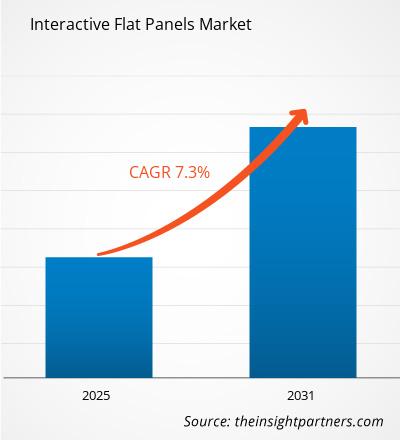
Segmentation Analysis
Technology
Technology remains central to the Interactive Flat Panels Market scope because panel architecture determines brightness, resolution, power requirements, viewing performance, and production economics. LCD is expected to maintain leadership, with the technology segment projected to grow at a 2.0–2.8% CAGR between 2026–2034. LED-based solutions can gain selective traction where high brightness, modularity, or large-format applications justify higher system costs.
- LCD: LCD remains the dominant technology because mature manufacturing, broad component availability, 4K support, and established touch integration provide a balanced proposition for education, corporate, and institutional installations.
- LED: LED solutions address premium large-format requirements where brightness, visibility, modular construction, and architectural integration are prioritized over conventional classroom economics.
- Others: Alternative technologies occupy specialized applications where design flexibility, contrast, thinness, or application-specific performance outweigh the scale advantages associated with mainstream LCD manufacturing.
Panel Type
Panel Type influences interaction precision, durability, writing experience, and multi-user functionality. The segment is expected to advance at a 2.6–3.4% CAGR between 2026–2034 as buyers increasingly evaluate touch performance alongside display quality. Capacitive and electromagnetic systems can gain selective adoption where precision, stylus support, and responsive collaborative interaction are strategic requirements.
- Resistive: Resistive panels remain relevant for controlled-touch environments and applications where straightforward input functionality, robustness, and compatibility with specific legacy workflows influence procurement decisions.
- Capacitive: Capacitive panels benefit from intuitive multi-touch interaction, responsive gestures, and familiar smartphone-like behavior, supporting education, corporate collaboration, retail engagement, and interactive content.
- Electromagnetic: Electromagnetic technology serves precision writing and stylus-intensive applications, making it relevant where detailed annotation, technical visualization, and natural handwriting are central workflows.
- Others: Other panel approaches address specialized environments requiring alternative sensing characteristics, physical configurations, or application-specific interaction methods.
End-User
End-User segmentation captures distinct procurement priorities across education, corporate, healthcare, retail, hospitality, and other environments. The segment is expected to grow at a 2.8–3.6% CAGR through 2034. The Interactive Flat Panels Market scope is widening as buyers move beyond presentation toward collaborative work, patient communication, interactive commerce, and experience-oriented installations.
- Education: Education remains the principal deployment environment, driven by classroom modernization, collaborative instruction, digital curriculum integration, and standardized purchasing across schools, colleges, and universities.
- Corporate: Corporate demand centers on meeting rooms, training facilities, executive spaces, and collaboration hubs requiring wireless presentation, conferencing integration, annotation, and centralized device management.
- Healthcare: Healthcare applications include patient education, staff training, clinical visualization, and administrative collaboration, with procurement emphasizing hygiene, reliability, security, and integration.
- Retail: Retail deployments support interactive product information, assisted selling, digital engagement, and experiential merchandising, particularly where touch interaction can complement physical customer journeys.
- Hospitality: Hospitality applications include conference facilities, guest engagement, training, event management, and interactive information, with demand linked to premium service environments.
- Others: Other users include government, transportation, public institutions, and specialized facilities where interactive visualization supports communication, training, or operational coordination.
Opportunity Snapshot
| End-User | Revenue Contribution | Trend Tag | Adoption Stage |
|---|---|---|---|
| Education | High | Smart Classrooms | Mature |
| Corporate | High | Hybrid Collaboration | Scaling |
| Healthcare | Medium | Clinical Training | Scaling |
| Retail | Medium | Interactive Selling | Scaling |
| Hospitality | Medium | Digital Events | Scaling |
| Others | Low | Public Collaboration | Emerging |
Interactive Flat Panels Market Growth Drivers and Impact Analysis
Expansion of smart classroom infrastructure
Educational demand for these products will be a consistent factor since the interactive panels have replaced multiple devices such as projectors, whiteboards, and additional collaboration tools with one classroom endpoint. This demand trend will apply more to those districts that have standardized their technology needs throughout multiple schools, allowing for mass purchasing of these technologies. In addition, as digital learning programs become more popular, the demand for the functions of touch annotations, multimedia presentations, screen share capabilities, and lessons recording increases. Therefore, the public education budget can change from purchasing the standalone hardware to classroom technology programs. This will allow the vendors to get more money out of each installation as they can help with training, device management, and compatibility. This trend also works more effectively for education systems that are newly established and have room for growth in this area.
Hybrid work and distributed collaboration requirements
Corporate adoption is changing due to distributed team workforces that need consistent collaboration experience at office space, training space, and common working spaces. Interactive panel acts as a hardware interface for note-taking, content delivery, video conferencing, and group decision making, thus reducing the need for additional presentation hardware. Market adoption goes beyond the first installation because the uniform meeting room design architecture pushes companies to copy the design across different locations. Wireless capability becomes more relevant due to the growing use of laptop computers and other mobile devices within meetings, while the centralized management enables information technology departments to manage fleets from distance. Thus, the demand moves towards integration solutions that can integrate with common conferencing and productivity platforms. This trend is beneficial for vendors who offer protocol-compliant solutions without complicated deployment.
Rising demand for touch-enabled customer and professional experiences
Interactive displays are entering environments where engagement, information delivery, and aided decision-making are just as important as visualization. Retailers can utilize touch technology for product discovery, sales, and service, while healthcare providers can use touch to educate patients and provide training for their staffs. Hospitality companies can apply touch technology for events, event management, and guest information. This widens the application beyond the traditional classroom and conference room environment, lessening the dependency on one end user. The commercial appeal of the technology is further enhanced when the company views the displays as a component of its digital experience initiative rather than just hardware. Touch accuracy, compatibility with content management systems, ruggedness, and peripheral device connectivity become the factors in the purchase decision. Vertical solutions incorporating hardware, software, installation, and maintenance can be created by the suppliers as the technology matures within its specific applications.
Interactive Flat Panels Market Future Trends
Embedded AI and on-device intelligence
The Interactive Flat Panels Market trends are moving toward displays with embedded artificial intelligence that can process selected workloads locally. Future products are likely to incorporate stronger processors, neural processing capabilities, intelligent annotation, automated transcription, content summarization, language assistance, and contextual classroom tools. Local processing can reduce dependence on continuous cloud connectivity while improving responsiveness and supporting privacy-sensitive environments. Education buyers may prioritize lesson preparation and personalized learning functions, whereas corporate users can apply AI to meeting notes, action tracking, and content organization. The competitive implication is significant because hardware specifications alone become less decisive when software intelligence shapes daily workflows. Vendors will increasingly compete around user experience, model integration, security controls, and update policies. Successful offerings should make AI features practical, transparent, and manageable rather than adding isolated functions that increase complexity without improving productivity.
Interoperable wireless collaboration ecosystems
Wireless interoperability is expected to become a defining design priority as users move between laptops, tablets, smartphones, conferencing systems, and cloud applications. Future interactive displays will increasingly support multiple casting protocols, USB-C connectivity, device discovery, multi-source viewing, and secure enterprise authentication within one workflow. This evolution can reduce cable dependence and simplify meeting-room or classroom setup, particularly in facilities with diverse device fleets. Software-defined control layers may also allow administrators to configure policies, monitor connectivity, schedule updates, and manage content across large deployments. Vendors that create open integration architectures can gain an advantage where customers resist proprietary ecosystems. The trend will also encourage greater separation between display hardware and collaboration software, enabling organizations to refresh one layer without replacing the entire installation. Such flexibility can support longer equipment lifecycles and improve investment efficiency.
Interactive Flat Panels Market Opportunities
Verticalized solutions for healthcare and specialized facilities
Healthcare and specialized professional environments offer an opportunity to develop purpose-built interactive display packages rather than general-purpose panels. Vendors can target patient education, clinical training, multidisciplinary meetings, simulation rooms, and administrative coordination with configurations optimized for security, hygiene, durability, and integration. Interactive Flat Panels Market Forecasts can support investment prioritization toward applications where the value of collaboration exceeds basic display functionality. Partnerships with healthcare software providers, system integrators, and facility-management companies can accelerate adoption by reducing implementation complexity. Products designed around controlled access, remote administration, and compatibility with established enterprise infrastructure may command stronger customer consideration than consumer-oriented alternatives. Suppliers can also differentiate through service-level agreements, replacement planning, and fleet management. The opportunity is particularly attractive for vendors seeking diversification beyond education and conventional corporate meeting rooms.
Regional channel expansion in emerging education markets
Emerging education markets provide an avenue for vendors to combine hardware expansion with local implementation capabilities. India, Southeast Asia, the Middle East, and selected African markets are suitable targets where classroom digitization remains uneven and institutional modernization is ongoing. Investment should focus on distributor networks, installation partners, teacher training, financing options, and multilingual software support rather than hardware availability alone. The strongest strategies will adapt screen sizes, connectivity packages, warranties, and service models to local procurement conditions. Vendors can also develop standardized education bundles that simplify purchasing across schools and universities. Partnerships with regional technology integrators can shorten sales cycles and improve after-sales responsiveness. As organizations move from pilot classrooms toward larger deployments, suppliers with dependable service infrastructure can convert individual projects into repeat procurement programs and establish durable regional positions.
Recent Developments
- April 2026: NITEK launched a next-generation interactive flat panel powered by Android 16, described as the first such interactive display in Gujarat. The new panel is designed to enhance interactive learning, presentations and collaborative work through a modern Android-based platform, offering users an upgraded experience for education, corporate and institutional environments. The launch highlights NITEK’s focus on bringing newer operating-system technology and smart interactive-display capabilities to the Indian market.
- June 2026: Clear Touch launched the 6000 Nova Series, a modular interactive flat panel designed to extend the lifecycle of interactive displays and reduce the need for full-panel replacement. Its hot-swappable Core Module houses the processing architecture, chipset and physical ports, allowing organizations to perform hardware upgrades or repairs without removing or replacing the 4K display. The design targets common failure points such as the TV board and internal firmware, while optical bonding technology helps protect the backlight and provides a smooth, low-latency writing experience.
- August 2026: ViewSonic appointed Actis Technologies as its Value Added National Distributor for ViewBoard interactive displays (Interactive Flat Panels) in India, aiming to expand market reach and improve nationwide access to its interactive display portfolio. With more than five decades of AV and IT distribution experience, a presence across over 60 Indian cities and a strong channel network,
Frequently Asked Questions

- Comprehensive Market Sizing and Forecast Analysis
- Detailed Segmentation Analysis
- In-Depth Market Dynamics Assessment
- Regional and Country-Level Insights
- Competitive Landscape and Company Benchmarking
- Strategic Business Intelligence
Recent Reports
Testimonials

The Insight Partners' SCADA System Market report is comprehensive, with valuable insights on current trends and future forecasts. The team was highly professional, responsive, and supportive throughout. We are very satisfied and highly recommend their services.
RAN KEDEM Partner, Reali Technologies LTDs
I requested a report on a very specific software market and the team produced the report in a few days. The information was very relevant and well presented. I then requested some changes and additions to the report. The team was again very responsive and I got the final report in less than a week.
JEAN-HERVE JENN Chairman, Future Analytica
We worked with The Insight Partners for an important market study and forecast. They gave us clear insights into opportunities and risks, which helped shape our plans. Their research was easy to use and based on solid data. It helped us make smart, confident decisions. We highly recommend them.
PIYUSH NAGPAL Sr. Vice President, High Beam Global
The Insight Partners delivered insightful, well-structured market research with strong domain expertise. Their team was professional and responsive throughout. The user-friendly website made accessing industry reports seamless. We highly recommend them for reliable, high-quality research services
YUKIHIKO ADACHI CEO, Deep Blue, LLC.
This is the first time I have purchased a market report from The Insight Partners.While I was unsure at first, I visited their web site and felt more comfortable to take the risk and purchase a market report.I am completely satisfied with the quality of the report and customer service. I had several questions and comments with the initial report, but after a couple of dialogs over email with their analyst I believe I have a report that I can use as input to our strategic planning process.Thank you so much for taking the extra time and making this a positive experience.I will definitely recommend your service to others and you will be my first call when we need further market data.
JOHN SUZUKI President and Chief Executive Officer, Board Director, BK Technologies
I wish to appreciate your support and the professionalism you displayed in the course of attending to my request for information regarding to infectious disease IVD market in Nigeria. I appreciate your patience, your guidance, and the fact that you were willing to offer a discount, which eventually made it possible for us to close a deal. I look forward to engaging The Insight Partners in the future, all thanks to the impression you have created in me as a result of this first encounter.
DR CHIJIOKE ONYIA MANAGING DIRECTOR, PineCrest Healthcare Ltd.Reason to Buy
- Informed Decision-Making
- Understanding Market Dynamics
- Competitive Analysis
- Identifying Emerging Markets
- Customer Insights
- Market Forecasts
- Risk Mitigation
- Boosting Operational Efficiency
- Strategic Planning
- Investment Justification
- Tracking Industry Innovations
- Aligning with Regulatory Trends





 Get Free Sample for