
API Testing Market Growth, Trends & Forecast by 2034
Coverage: By Component (Solution, Service); Deployment (Cloud-Based, On-Premise); Vertical (IT and Telecommunications, BFSI, Retail and E-commerce, Media and Entertainment, Healthcare, Manufacturing, Government, Others) , and Geography (North America, Europe, Asia Pacific, and South and Central America)
- Status : Data Released
- Report Code : TIPRE00022409
- Category : Technology, Media and Telecommunications
- No. of Pages : 150
- Available Report Formats :


- Last update date : August 26, 2026


2025 Market Size
US$ 1.44 Bn
Base year value
2034 Forecast
US$ 4.87 Bn
Projected by 2034
CAGR 2026-2034
14.46 %
Growth rate
Addressable Market
US$ 27.04 Bn
(2026-2034)
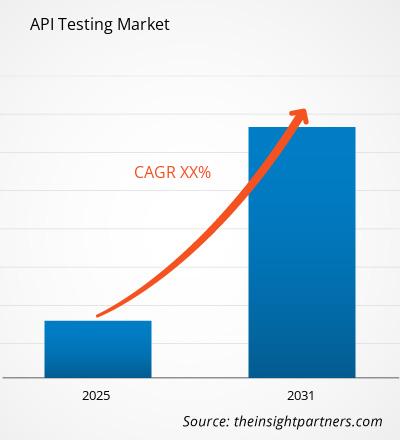
The api testing market was valued at US$ 1.44 Billion in 2025 and is projected to reach US$ 4.87 Billion by 2034, expanding at a CAGR of 14.46% during 2026–2034. The market is benefiting from continued enterprise digital transformation, API-first software architectures, and the growing importance of application interoperability across cloud, mobile, and connected ecosystems. Expanding software release cycles and DevOps adoption are accelerating demand for scalable testing frameworks.
Across North America, enterprises continue to increase spending on automation, cybersecurity validation, and cloud-native application development, supporting the steady expansion of the api testing market size. The region is expected to advance at an estimated CAGR of 13.5–15.0% through 2034. Demand is reinforced by mature technology infrastructure, concentration of software vendors, and increasing implementation of continuous integration and continuous delivery practices.
API Testing Market Assessment and Insights
- North America: Strong enterprise software presence, advanced DevOps adoption, and extensive cloud deployment support regional leadership. Share in 2025 is estimated at 37–39%, with CAGR between 13.5–15.0% during 2026–2034.
- US: High concentration of technology firms and digital platforms sustains leadership. Share of North America in 2025 is estimated at 76–80%, growing at a CAGR of 13.8–15.2% during 2026–2034.
- Europe: Regulatory compliance requirements and enterprise modernization programs support expansion. Share in 2025 is estimated at 26–28%, with CAGR between 12.8–14.2% during 2026–2034. Germany, the UK, and France remain leading markets.
- Asia Pacific: Rapid cloud adoption and expanding software development ecosystems create strong demand. Share in 2025 is estimated at 24–26%, growing at a CAGR of 15.5–17.0% during 2026–2034. China, India, Japan, and South Korea lead regional growth.
- Largest Segment: Solution remains dominant, accounting for 64–68% market share in 2025 as enterprises prioritize automated testing platforms. CAGR is estimated at 13.8–15.0% during 2026–2034.
- High Growth Segment: Cloud-Based deployment demonstrates the fastest expansion with 55–59% market share in 2025 and CAGR of 15.5–17.0% during 2026–2034.
- Key companies analyzed in detail: Astegic, Axway Software SA, Bleum Inc., CA Technologies, Cigniti Technologies Limited, Cygnet Infotech Private Limited, International Business Machines Corporation (IBM), Inflectra Corporation, Infosys Limited, Load Impact AB.
Source: The Insight Partners' analysis based on proprietary research, government publications, company annual reports, investor presentations, industry databases, and expert interviews.
Enterprise software development has progressed from monolithic systems to more modular and service-oriented systems, where application programming interfaces are important integration layers. Testing has thus moved from just functionality testing to security testing, performance testing, and other aspects. Many companies are using automated testing tools that can work in the context of continuous release, making it easier to release software and avoiding any business risks from software and service problems.
Future growth will be facilitated through increased digitalization in emerging economies, the wider use of artificial intelligence in quality assurance processes, and investments in cloud-based development environments. Government digital transformation programs, the need for more stringent data privacy measures, and increased use of third-party application integration will encourage further testing. The focus will be on scalable automation platforms that can handle complex API ecosystems in hybrid and multi-cloud environments.
API Testing Market Report Scope
| Report Attribute | Details |
|---|---|
| Market size in 2025 | US$ 1.44 Billion |
| Market Size by 2034 | US$ 4.87 Billion |
| Global CAGR (2026 - 2034) | 14.46% |
| Historical Data | 2021-2024 |
| Forecast period | 2026-2034 |
API Testing Market Analysis
The api testing market growth trajectory is supported by accelerating application integration requirements across industries. Increasingly, enterprises use APIs to facilitate communication between internal systems, their customers, cloud services, and third parties. With an increase in APIs, companies need some form of validation mechanism that will verify reliability, response accuracy, security compliance, and data integrity. The highest requirement exists among cloud service providers, banks, health care institutions, and digital commerce platforms.
As far as the technology value chain is concerned, there are vendors who offer testing platforms, automation tools, and monitoring tools, and implementation partners who offer integration and customization. Increased adoption of microservices architecture is adding to the complexity of testing, making the need for automated testing platforms all the more prevalent. Continuous testing has become common practice in an agile development environment.
The api testing market analysis indicates a competitive environment shaped by platform innovation, cloud integration capabilities, and automation sophistication. AI attributes are now becoming integrated in vendors' products for boosting test generation, identifying anomalies, and predicting defects. There is also strategic differentiation in the market through low-code user interfaces, scalability, and wide-ranging compatibility with DevOps tools.
Market players like International Business Machines Corporation, Infosys Limited, Axway Software SA, Inflectra Corporation, CA Technologies, and Cigniti Technologies Limited are continually working on improving their platforms and services. On the other hand, market players like Astegic, Bleum Inc., Cygnet Infotech Private Limited, and Load Impact AB specialize in specific testing assignments, performance assessment, and enterprise integration. Investment activity is focused on quality assurance platforms and intelligent automation platforms.
● REPORT CUSTOMIZATION
Tailor This Report To Align With Your Specific Business Requirements
This report can be customized to align precisely with your business objectives, scope, and target markets. Customization options include tailored segmentation, geography, competitive analysis, and strategic insights to support informed decision-making.
Customize This Report →WHAT YOU CAN ADJUST
- ● Segmentations
- ● Geography
- ● Competitive Analysis
- ● Language Preferences
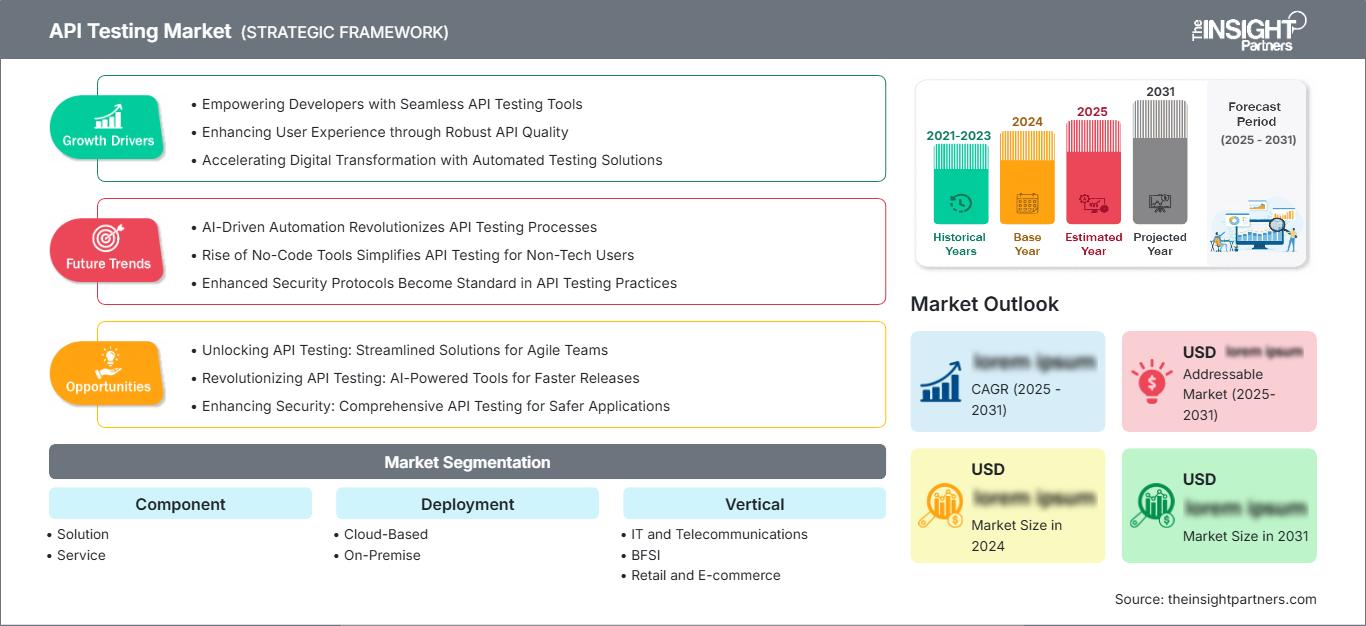
API Testing Market: Strategic Insights
Regional Insights
North America api testing market
North America represents the leading regional market with an estimated 37–39% share in 2025 and a projected CAGR of 13.5–15.0% during 2026–2034. Adoption is fueled by sophisticated software development ecosystems, wide-ranging cloud migrations, and massive DevOps deployments within enterprises. Banks, tech firms, healthcare networks, and retail platforms keep expanding their use of APIs for digital services delivery and customer engagement campaigns.
The area is characterized by good cybersecurity, application modernization, and software quality assurance investments. The rise in hybrid cloud adoption makes things more complex with enterprise applications, boosting the need for automated testing platforms. Venture capital investments, good IT infrastructure, and software innovations ensure continued leadership within the regional ecosystem.
U.S. api testing Market
The United States accounts for approximately 76–80% of the North American market in 2025 and is expected to advance at a CAGR of 13.8–15.2% through 2034. Its position is supported by a large developer community, extensive cloud computing adoption, and significant enterprise technology spending. The country's software ecosystem generates substantial demand for automated testing and continuous integration tools.
The api testing market share held by the US remains dominant due to the presence of major technology providers and digital service enterprises. Organizations increasingly integrate API security testing, performance testing, and compliance validation into software development pipelines. Demand is particularly notable across financial services, healthcare technology, telecommunications, and e-commerce applications that require dependable digital connectivity.
Europe api testing Market
Europe accounts for approximately 26–28% of global revenue in 2025 and is projected to expand at a CAGR of 12.8–14.2% during 2026–2034. Germany maintains its position as the largest market owing to the implementation of digitalization strategies for industry, enterprise software implementation, and the transformation of manufacturing that requires considerable integration and validation capabilities.
The United Kingdom exhibits substantial demand thanks to the innovations in fintech, the use of cloud, and the modernization of digital services. France can leverage the growing enterprise software investment and digitalization projects in the public sector. Italy and Spain further develop their testing needs via the growth of e-commerce, improvements in telecoms, and increasing adoption of API-based business platforms.
APAC api testing Market
Asia Pacific represents approximately 24–26% share in 2025 and is anticipated to record the fastest regional CAGR of 15.5–17.0% during 2026–2034. China maintains leadership through large-scale digital platform deployment, while India benefits from expanding software development services and growing startup activity.
Japan, South Korea, and Australia continue investing in cloud modernization, advanced connectivity, and automation initiatives. Government-backed digital transformation programs and rapid expansion of mobile applications support increasing demand for scalable testing environments throughout the region.
Middle East & Africa api testing Market
The Middle East & Africa market is developing steadily and is expected to grow at a CAGR of 12.5–13.8% during 2026–2034. Saudi Arabia and the United Arab Emirates lead regional adoption through smart city investments, digital government programs, and cloud infrastructure expansion.
South Africa remains an important technology hub supporting enterprise software modernization. Expanding digital services, growing connectivity investments, and increasing enterprise focus on application reliability continue to generate demand for API testing solutions across the broader regional market.
Segmentation Analysis
Component
The Component segment reflects expanding enterprise requirements for both software tools and implementation expertise. The segment is expected to grow at a CAGR of 13.9–15.1% during 2026–2034. Growing automation requirements, increasing software complexity, and broader application integration initiatives support long-term investment. The api testing market scope continues expanding as organizations combine technology platforms with consulting, integration, and managed testing services to improve development efficiency.
- Solution: Represents the dominant category due to demand for automation, security validation, reporting capabilities, and seamless integration into agile and DevOps workflows across enterprise development environments.
- Service: Demand is supported by implementation support, framework customization, managed testing programs, and specialized consulting services, helping organizations optimize testing efficiency and compliance requirements.
Deployment
The Deployment segment is forecast to expand at a CAGR of 14.4–15.8% during 2026–2034. Cloud transformation programs, hybrid computing environments, and scalable software development practices continue influencing deployment preferences. Organizations increasingly evaluate deployment strategies based on flexibility, regulatory requirements, scalability objectives, and infrastructure costs.
- Cloud-Based: Gains strong traction through scalability, lower infrastructure burdens, centralized management, and easier integration with modern development pipelines supporting distributed software teams.
- On-Premise: Maintains relevance among organizations requiring strict control over data management, regulatory compliance, internal security frameworks, and customized deployment architectures.
Vertical
The Vertical segment is expected to register a CAGR of 14.0–15.3% during 2026–2034. Industry-specific digital transformation strategies continue to increase testing requirements. Organizations across sectors prioritize application performance, integration reliability, cybersecurity validation, and seamless customer experiences.
- IT and Telecommunications: Represents the largest demand center owing to extensive API deployment, software platform integration, network modernization, and digital service delivery requirements.
- BFSI: Financial institutions increasingly rely on testing frameworks to support secure transactions, compliance obligations, open banking initiatives, and digital customer experiences.
- Retail and E-commerce: Growing omnichannel commerce strategies increase demand for testing environments capable of validating payment systems, inventory platforms, and customer engagement applications.
- Media and Entertainment: Streaming platforms, digital content distribution networks, and personalized services require reliable API performance and continuous system validation.
- Healthcare: Electronic health records, telehealth platforms, and connected healthcare ecosystems increase demand for secure and compliant application testing capabilities.
- Manufacturing: Industrial digitalization and connected production systems require dependable integrations between operational technologies and enterprise software platforms.
- Government: Public-sector digital services require secure application connectivity, interoperability testing, and dependable performance across citizen engagement platforms.
Opportunity Snapshot
| Segment Name | Revenue Contribution | Trend Tag | Adoption Stage |
| IT and Telecommunications | High | Network APIs | Mature |
| BFSI | High | Open Banking | Scaling |
| Retail and E-commerce | High | Omnichannel Apps | Scaling |
| Media and Entertainment | Medium | Streaming APIs | Scaling |
| Healthcare | Medium | Digital Health | Scaling |
| Manufacturing | Medium | Industrial IoT | Emerging |
| Government | Medium | Citizen Services | Emerging |
API Testing Market Growth Drivers and Impact Analysis
Expansion of API-First Application Development
Organizations now use software architectures that leverage APIs instead of having monolithic systems. This ensures that integration can take place at a quicker rate within various digital channels, cloud computing, mobile devices, and partnerships. Organizations that adopt an increasing number of APIs will find that their validation needs will also become greater. Testing software serves to ensure interoperability, functional performance, reliability, and performance under different operational scenarios. There is increased demand for testing in areas such as finance, telecommunications, health care, and retail because of the significance of application availability on organizational performance.
Growing Focus on Security and Compliance Validation
Cybersecurity worries keep impacting software development approaches for businesses. APIs often act as the bridges between applications, databases, and other services that may pose security risks. Testing is increasingly used to help detect problems related to user authentication, authorization problems, and data-related vulnerabilities. The regulations set by healthcare, finance, and government industries necessitate the use of validation solutions to be compliant with regulatory standards. Security testing solutions are becoming part of the development processes and are no longer separate from them. This allows the implementation of automation tools that can detect risks early during the development process.
Acceleration of DevOps and Continuous Testing Practices
Agile software development and DevOps are two methodologies that have transformed quality assurance in recent years. Teams have been releasing software at a more frequent pace and this requires an automated test environment for rapid deployments. Continuous testing helps increase the release certainty as bugs can be discovered even before deployment. API validation within the development process is also being incorporated by many companies to enable faster results and reduce efforts. With companies competing on their digital experiences, software downtime needs to be reduced as much as possible.
API Testing Market Future Trends
Artificial Intelligence Driven Testing Automation
The api testing market trends landscape increasingly points toward artificial intelligence integration within testing workflows. AI-enabled technologies are expected to automate test case generation, defect prediction, anomaly detection, and performance optimization. These capabilities can significantly reduce manual effort while improving coverage across complex application environments. As organizations manage expanding API portfolios, intelligent automation will support faster validation cycles and improved resource utilization. Vendors are expected to strengthen AI functionality to improve competitiveness and address enterprise requirements for scalable and adaptive testing infrastructures.
Unified Quality Engineering Platforms
Future evolution of the market is going to revolve around creating unified quality engineering platforms incorporating such aspects as functional testing, performance testing, security verification, monitoring, and analytics into one toolset. Increasingly, companies want streamlined management systems that can work in a multi-cloud environment. The main benefit of unified quality engineering environments is improved visibility, governance, and collaboration between developers, testers, and operators. With increasing connectivity of software ecosystems, quality engineering platforms will see increased adoption among large enterprises.
API Testing Market Opportunities
Expansion Across Emerging Digital Economies
Emerging markets continue to present attractive investment opportunities as cloud adoption, mobile connectivity, and digital service delivery expand rapidly. Organizations across Asia, the Middle East, Latin America, and Africa are modernizing software infrastructure and implementing API-centric architectures. The resulting demand for testing frameworks creates favorable conditions for platform vendors, managed service providers, and implementation specialists. Long-term api testing market Forecasts remain supported by increasing enterprise technology spending, public-sector digital transformation initiatives, and rising demand for secure application ecosystems. Vendors capable of delivering scalable and cost-effective solutions can establish strong positions within these high-growth environments and capture expanding enterprise budgets.
Industry-Specific Testing Solutions
Vertical-focused product strategies present substantial opportunities for market participants. Industries such as healthcare, banking, manufacturing, and government face unique regulatory, operational, and interoperability requirements. Customized testing solutions addressing sector-specific needs can provide stronger differentiation and customer retention. Vendors may also expand value by integrating compliance validation, security assessment, and analytics capabilities into specialized platforms. As application ecosystems grow increasingly complex, organizations are expected to prefer solutions tailored to their operational contexts, creating opportunities for premium service offerings and long-term strategic partnerships.
Frequently Asked Questions

- Comprehensive Market Sizing and Forecast Analysis
- Detailed Segmentation Analysis
- In-Depth Market Dynamics Assessment
- Regional and Country-Level Insights
- Competitive Landscape and Company Benchmarking
- Strategic Business Intelligence
Recent Reports
Testimonials

The Insight Partners' SCADA System Market report is comprehensive, with valuable insights on current trends and future forecasts. The team was highly professional, responsive, and supportive throughout. We are very satisfied and highly recommend their services.
RAN KEDEM Partner, Reali Technologies LTDs
I requested a report on a very specific software market and the team produced the report in a few days. The information was very relevant and well presented. I then requested some changes and additions to the report. The team was again very responsive and I got the final report in less than a week.
JEAN-HERVE JENN Chairman, Future Analytica
We worked with The Insight Partners for an important market study and forecast. They gave us clear insights into opportunities and risks, which helped shape our plans. Their research was easy to use and based on solid data. It helped us make smart, confident decisions. We highly recommend them.
PIYUSH NAGPAL Sr. Vice President, High Beam Global
The Insight Partners delivered insightful, well-structured market research with strong domain expertise. Their team was professional and responsive throughout. The user-friendly website made accessing industry reports seamless. We highly recommend them for reliable, high-quality research services
YUKIHIKO ADACHI CEO, Deep Blue, LLC.
This is the first time I have purchased a market report from The Insight Partners.While I was unsure at first, I visited their web site and felt more comfortable to take the risk and purchase a market report.I am completely satisfied with the quality of the report and customer service. I had several questions and comments with the initial report, but after a couple of dialogs over email with their analyst I believe I have a report that I can use as input to our strategic planning process.Thank you so much for taking the extra time and making this a positive experience.I will definitely recommend your service to others and you will be my first call when we need further market data.
JOHN SUZUKI President and Chief Executive Officer, Board Director, BK Technologies
I wish to appreciate your support and the professionalism you displayed in the course of attending to my request for information regarding to infectious disease IVD market in Nigeria. I appreciate your patience, your guidance, and the fact that you were willing to offer a discount, which eventually made it possible for us to close a deal. I look forward to engaging The Insight Partners in the future, all thanks to the impression you have created in me as a result of this first encounter.
DR CHIJIOKE ONYIA MANAGING DIRECTOR, PineCrest Healthcare Ltd.Reason to Buy
- Informed Decision-Making
- Understanding Market Dynamics
- Competitive Analysis
- Identifying Emerging Markets
- Customer Insights
- Market Forecasts
- Risk Mitigation
- Boosting Operational Efficiency
- Strategic Planning
- Investment Justification
- Tracking Industry Innovations
- Aligning with Regulatory Trends





 Get Free Sample for