
Smart Energy Market Size, Growth & Trends by 2034
Coverage: by By Product (Smart Meters, Smart Lightning, and Smart Grids); End-user (Residential, and Non-residential); Installation Type (New Installlation, and Retrofit Installation), and Geography (North America, Europe, Asia Pacific, and South and Central America)
- Status : Data Released
- Report Code : TIPRE00003036
- Category : Electronics and Semiconductor
- No. of Pages : 150
- Available Report Formats :


- Last update date : August 06, 2026


2025 Market Size
US$ 206.61 Bn
Base year value
2034 Forecast
US$ 446.94 Bn
Projected by 2034
CAGR 2026-2034
8.95 %
Growth rate
Addressable Market
US$ 2,924.92 Bn
(2026-2034)
The Smart Energy Market was valued at US$ 206.61 Billion in 2025 and is projected to reach US$ 446.94 Billion by 2034, expanding at a CAGR of 8.95% during 2026–2034. Growth is being shaped by grid digitalization, advanced metering infrastructure, connected lighting, and utility modernization programs that improve load visibility, outage response, energy efficiency, and distributed energy resource integration across residential and non-residential environments.
Across North America, deployment is supported by grid resilience funding, replacement of aging distribution assets, and growing demand for customer-side energy data. The Smart Energy Market size in the region is expected to advance at an estimated 8.3–9.0% CAGR during 2026–2034 as utilities expand advanced metering, grid automation, and demand flexibility platforms for electrification, renewable integration, and peak-load management.
Smart Energy Market Assessment and Insights
- North America accounted for 31–34% share in 2025 and is expected to grow at 8.3–9.0% CAGR between 2026–2034, supported by grid modernization funding, smart meter replacement cycles, DER integration, and utility cybersecurity upgrades.
- US represented 78–82% of North America in 2025 and is projected to grow at 8.4–9.1% CAGR between 2026–2034, driven by AMI, ADMS, and demand response investments.
- Europe held 25–28% share in 2025 and is forecast to grow at 8.0–8.7% CAGR between 2026–2034, with Germany, the UK, France, Italy, and Spain leading smart metering and grid digitalization programs.
- Asia Pacific captured 30–33% share in 2025 and is set to grow at 9.4–10.2% CAGR between 2026–2034, led by China, Japan, South Korea, India, and Australia as utilities invest in digital grids.
- Largest Segment Smart Grids held 43–47% market share in 2025 and is projected to grow at 9.0–9.7% CAGR during 2026–2034 as utilities prioritize automation and resilience.
- High Growth Segment Retrofit Installation accounted for 54–58% market share in 2025 and is forecast to grow at 9.3–10.1% CAGR during 2026–2034 due to asset replacement and modernization demand.
- Key companies analyzed in detail: General Electric Company, ABB Ltd., Siemens AG, Honeywell International Inc., Schneider Electric SE, Aclara Technologies LLC, Landis+Gyr AG, Eaton Corporation plc, Huawei Technologies Co., Ltd., and DEXMA Sensors SL.
Source: The Insight Partners' analysis based on proprietary research, government publications, company annual reports, investor presentations, industry databases, and expert interviews.
Utility operating models are moving from periodical asset inspections towards continuous digital monitoring, predictive maintenance, and customer engagement. Smart meters are becoming grid-edge data nodes, whereas smart grids link sensors, substations, distributed energy resources, and analytic platforms. Production models have started to shift as well, as solution providers integrate hardware, software, and managed services to cut down deployment timelines and ease the shortage in communication modules, transformers, and control systems.
Future applications will likely expand from initial utility-driven pilots to cities, campuses, industrial parks, and prosumer communities. Emerging regions will focus on loss reduction, outage management, and renewable accommodation, whereas regulatory authorities will enable the use of performance-based rates to recover investments in digital grids. Such factors should drive adoption of smart lighting controls, AMI systems, and energy-to-value platforms.
Smart Energy Market Report Scope
| Report Attribute | Details |
|---|---|
| Market size in 2025 | US$ 206.61 Billion |
| Market Size by 2034 | US$ 446.94 Billion |
| Global CAGR (2026 - 2034) | 8.95% |
| Historical Data | 2021-2024 |
| Forecast period | 2026-2034 |
Smart Energy Market Analysis
Demand is rising because utilities need real-time visibility over volatile load profiles, distributed solar, electric vehicles, and behind-the-meter storage. The Smart Energy Market growth outlook is reinforced by the need to defer capital-intensive network expansion through digital monitoring, voltage optimization, and flexible demand programs. Energy efficiency also remains important because digital controls can reduce losses and improve customer consumption awareness.
The ecosystem encompasses meter manufacturers, grid automation solutions providers, telecoms companies, software companies, systems integrators, utilities, regulatory agencies, and energy service providers. The supply chain will increasingly favor solution providers who can offer capabilities in areas such as communication, device management, analysis, and life cycle management. Interoperability, security certification, and scalability are increasingly being considered when procuring solutions at scale.
Competitive positioning is increasingly software-led. Schneider Electric SE, Siemens AG, General Electric Company, ABB Ltd., Honeywell International Inc., and Eaton Corporation plc are strengthening grid management suites, while Landis+Gyr AG and Aclara Technologies LLC retain depth in advanced metering. The Smart Energy Market analysis shows that integrated platforms are preferred where utilities want fewer interfaces and faster deployment governance.
The trend towards investment lies in ADMS, DERMS, meter data management, edge-grid sensors, and AI-enabled forecast solutions. In this regard, Huawei Technologies Co., Ltd. will help meet the communication and digital infrastructure needs, whereas DEXMA Sensors SL is responsible for energy analytics services for business customers. Differentiation strategy implies the following factors: cybersecurity, regulatory expertise, partner networks, and metering benefits translation into outages/efficiency/asset use improvements.
● REPORT CUSTOMIZATION
Tailor This Report To Align With Your Specific Business Requirements
This report can be customized to align precisely with your business objectives, scope, and target markets. Customization options include tailored segmentation, geography, competitive analysis, and strategic insights to support informed decision-making.
Customize This Report →WHAT YOU CAN ADJUST
- ● Segmentations
- ● Geography
- ● Competitive Analysis
- ● Language Preferences
Smart Energy Market: Strategic Insights
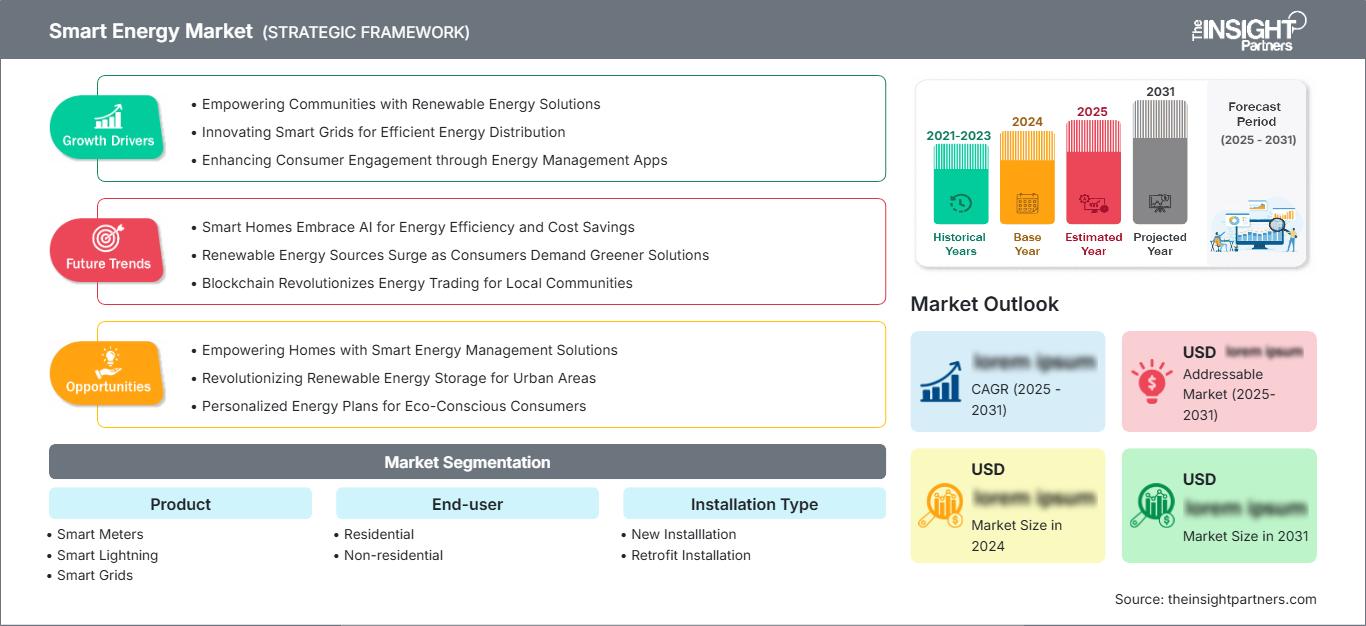
Regional Insights
North America Smart Energy Market
North America held 31–34% share in 2025 and is expected to grow at 8.3–9.0% CAGR during 2026–2034. The Smart Energy Market share is supported by utility spending on grid resilience, advanced metering, outage management, wildfire mitigation, and digital substation programs that improve service reliability under higher electrification and weather-stress conditions.
Regulatory support for modernization and demand flexibility is also important. The region benefits from mature vendor presence, established telecommunications infrastructure, and high customer readiness for digital billing, dynamic pricing, and distributed resource participation. Utilities are using AMI and grid analytics to reduce truck rolls, accelerate restoration, and manage peak loads from electric vehicles, heat pumps, and data centers.
U.S. Smart Energy Market
The U.S. represented 78–82% of North America in 2025 and is projected to grow at 8.4–9.1% CAGR during 2026–2034. The technology is used mainly in AMI upgrade programs, grid automation projects, distributed energy management, and resilience improvements for locations dealing with congestion, storm conditions, and fast load growth due to electrification.
There is a wide range of companies offering the solution: General Electric Company, Honeywell International Inc., Schneider Electric SE, Eaton Corporation plc, Siemens AG, ABB Ltd., Aclara Technologies LLC, and Landis+Gyr AG. Outage prediction, transformer monitoring, EV load control, time-of-use billing, and customer energy portal are typical applications.
Europe Smart Energy Market
Europe accounted for 25–28% share in 2025 and is forecast to grow at 8.0–8.7% CAGR during 2026–2034. While the UK stresses smart meters deployment, flexibility market, and consumer access to their data, Germany is progressing with digital metering gateways, distribution automation, and renewable integration requirements within utility networks.
France, Italy, and Spain still play an important role due to their huge metering deployment base, along with second-generation solutions, smart city street lighting, and digitalization purchases. Italy focuses on replacement-led deployments, France implements smart grid and demand side flexibility programs, while Spain is progressing with analytics-based operations in distribution networks with lots of solar energy.
APAC Smart Energy Market
APAC accounted for 30–33% of the Smart Energy Market share in 2025 and is projected to grow at a 9.4–10.2% CAGR during 2026–2034. China is the leading country due to large-scale grid automation, smart metering, renewable integration, and digital infrastructure spending across transmission and distribution networks.
Japan and South Korea focus on resilience, energy efficiency, and building-level intelligence, while India is scaling prepaid smart metering and loss reduction programs. Australia is adopting digital controls for rooftop solar, storage, and demand response, making the region a high-growth cluster for integrated hardware, communications, and analytics suppliers.
Middle East & Africa Smart Energy Market
The Middle East & Africa is expected to grow at 7.5–8.3% CAGR during 2026–2034. Saudi Arabia is the leading country in grid automation, smart city programs, and renewable capacity additions, which require better monitoring, billing accuracy, and demand management across expanding urban and industrial zones.
The UAE is investing in smart buildings and digital utility services, while South Africa prioritizes metering, revenue protection, and reliability improvements. The rest of the MEA markets are adopting selective smart grid and lighting projects where infrastructure expansion, energy losses, and commercial billing discipline create measurable investment cases.
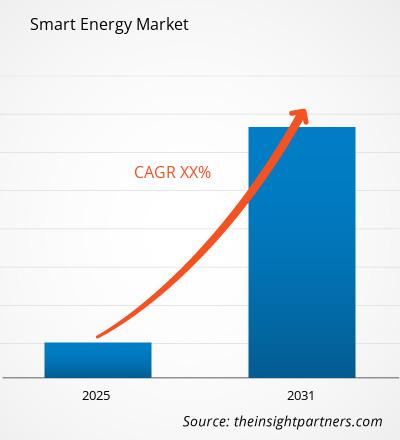
Segmentation Analysis
Product
Product is projected to grow at 8.8–9.5% CAGR during 2026–2034 as utilities and end users combine metering, lighting controls, and grid automation into integrated energy platforms. The Smart Energy Market scope within product demand is widening because buyers require interoperability, cybersecurity, analytics, and lifecycle service support rather than isolated devices.
- Smart Meters remain a foundational product category, enabling interval data, remote reading, outage alerts, and prepaid or dynamic tariff models that improve billing accuracy and customer engagement.
- Smart Lightning supports municipal and commercial efficiency programs through connected controls, occupancy sensing, dimming, and maintenance alerts, making it strategically important for urban energy management.
- Smart Grids represent the largest product segment, combining automation, sensors, software, and communications to manage bidirectional power flows, DER integration, reliability, and asset utilization.
End-user
End-user demand is expected to grow at 8.6–9.3% CAGR during 2026–2034 as residential and non-residential consumers adopt connected energy services. Utilities are encouraging participation through smart billing, demand response, and distributed resource programs, while enterprises use energy intelligence to manage costs, emissions, resilience, and compliance reporting.
- Residential adoption is driven by smart meter rollouts, home energy displays, rooftop solar, EV charging, and dynamic tariffs that help households monitor consumption and shift loads.
- Non-residential users contribute strong revenue through commercial buildings, factories, campuses, and public infrastructure, where energy analytics, lighting control, and resilience planning produce measurable operating savings.
Installation Type
By Installation Type, the Smart Energy Market forecast indicates the segment is expected to grow at an 8.9–9.6% CAGR during 2026–2034 as utilities balance greenfield network expansion with modernization of existing assets. Retrofit programs dominate because aging meters, legacy distribution equipment, and inefficient lighting systems require replacement, while new installations are tied to smart cities, renewable projects, and electrified buildings. Increased investment in grid modernization, energy efficiency, and digital monitoring solutions is further supporting both retrofit and new deployment activity across utility and commercial infrastructure networks.
- New installation demand is linked to smart city districts, new housing, industrial parks, renewable interconnections, and utility expansion projects designed with digital monitoring from commissioning.
- Retrofit Installation is strategically important because most utilities must modernize installed infrastructure, replace aging meters, add communications, and upgrade lighting without disrupting existing operations.
Opportunity Snapshot
| End-user | Revenue Contribution | Trend Tag | Adoption Stage |
| Residential | Medium | Dynamic Tariffs | Scaling |
| Non-residential | High | Energy Analytics | Mature |
Smart Energy Market Growth Drivers and Impact Analysis
Grid Modernization to Manage Electrification
Electrification is increasing load uncertainty in the distribution network, especially in areas where the growth of electric vehicles, heat pumps, data centers, and industrial automation outpaces the normal planning cycle of the grid. Granular consumption information, automated switching, and prediction are required for maintaining the stability of services without overbuilding infrastructure. Smart meters and smart grids decrease human labor, better localize outages, and enable selective reinforcement. The effect of such changes on operations is tangible in the sense that digital technologies allow moving investments from reactive fixes to predictive maintenance.
Rising Need for Demand Flexibility
Flexible demand is turning into a reliable source of power because of peak challenges and fluctuating renewable energy supply. Metering systems, customer portals, and automation enable users to adjust their usage based on changes in prices or grid conditions. This makes better use of current assets and avoids building costly peaking plants. In the case of commercial premises and campuses, involvement in such programs will also provide a way to gain money through flexibility and comply with energy efficiency standards. Companies that link metering information to control systems have opportunities to get more lucrative service agreements.
Utility Focus on Loss Reduction and Revenue Protection
Revenue protection is one of the key motivators in places that have both technical and non-technical losses. The smart meter has tampering alarms, remote disconnections, precise interval measurements, and consumption trend analysis capabilities to assist the utility companies in detecting any theft and defective machines. There are fewer technical losses as a result of distribution automation due to voltage regulation and monitoring of feeders. A good case for investing in smart energy technologies emerges when increased collections pay for the upgrading of infrastructure.
Smart Energy Market Future Trends
AI-Enabled Grid Orchestration
AI-enabled orchestration will become central to Smart Energy Market trends as utilities manage millions of distributed devices, customer resources, and network constraints in near real time. Forecasting models will combine weather, consumption, asset health, and market signals to recommend switching, load curtailment, and maintenance actions. The shift will move decision support from dashboards toward automated workflows with human oversight. Procurement will favor platforms that explain recommendations, protect data, and integrate with legacy control systems.
Grid-Edge Energy Services
Grid edge offerings will flourish with coordination between the meter, the charger, the battery, the inverter, and the building controls as connected assets and not just endpoints. This will give rise to utility and aggregator opportunities in providing flexibility solutions, resilience services, and efficient programs. Businesses will find value in a comprehensive view that considers cost, carbon footprint, and risks involved. The potential will be highest in places where regulations permit third-party involvement, data exchange, and remuneration for load shifting.
Smart Energy Market Opportunities
Commercial Energy Intelligence Platforms
Commercial and institutional buildings represent a high-value opportunity because they combine large loads, emissions reporting pressure, and budget scrutiny. Providers can package sensors, smart lighting, metering, analytics, and advisory services into subscription models that reduce upfront barriers. The strongest propositions will quantify savings, identify equipment faults, and support procurement of renewable electricity. Partnerships with facility managers, energy service companies, and software platforms can accelerate adoption across campuses, retail chains, hospitals, and public buildings seeking measurable operational improvements.
Emerging Market Smart Meter Rollouts
Developing economies provide an opportunity for profitable investments where utilities are under pressure to lower their losses, manage billing, and integrate renewables into the grid. Prepaid meters, remote connection management, and meter data platforms hosted on the cloud provide quick wins where there is a significant loss in collections. Finance structures involving coordination among vendors, utilities, and public sector entities will be crucial because most utilities suffer from a lack of funding.
Recent Developments
- July 2026: Delhi Minister Ashish Sood launches two major energy initiatives to make power infrastructure smart, modern, and environment-friendly.
- November 2025: Calisen Group, the UK’s largest smart meter provider, has announced the launch of its first international operation in Germany with the appointment of new Managing Director Claus Fest and a first-of-its-kind partnership to accelerate the roll out of intelligent metering systems with Energy Metering Germany (EMG). EMG is a competitive Meter Point Operator (MPO) set up by Octopus Group. The deal represents a major milestone in the roll out of smart meters – critical infrastructure for the energy transition in Germany.
- February 2023: Tata Power, one of India’s largest integrated power companies, announced a historic new initiative with an Industry-leading Virtual Power Plant (VPP) and Distributed Energy Management System (DERMS) provider AutoGrid to deploy an AI-enabled smart energy management system focusing on the behavioural demand response across its residential, commercial, and industrial customers in Mumbai. This pioneering program will help address peak demand challenges and support India's clean energy transition and Net Zero Goals. Serving Tata Power’s customers in Mumbai, India’s most populous city, the demand response management program aims to engage 55,000 residential consumers and 6,000 large C&I customers to achieve 75 MW of peak capacity reduction, within the first six months of the rollout, beginning February 2023 , and then continue to scale up to 200 MW by the summer of 2025.
Frequently Asked Questions

- Comprehensive Market Sizing and Forecast Analysis
- Detailed Segmentation Analysis
- In-Depth Market Dynamics Assessment
- Regional and Country-Level Insights
- Competitive Landscape and Company Benchmarking
- Strategic Business Intelligence
Recent Reports
Testimonials

The Insight Partners' SCADA System Market report is comprehensive, with valuable insights on current trends and future forecasts. The team was highly professional, responsive, and supportive throughout. We are very satisfied and highly recommend their services.
RAN KEDEM Partner, Reali Technologies LTDs
I requested a report on a very specific software market and the team produced the report in a few days. The information was very relevant and well presented. I then requested some changes and additions to the report. The team was again very responsive and I got the final report in less than a week.
JEAN-HERVE JENN Chairman, Future Analytica
We worked with The Insight Partners for an important market study and forecast. They gave us clear insights into opportunities and risks, which helped shape our plans. Their research was easy to use and based on solid data. It helped us make smart, confident decisions. We highly recommend them.
PIYUSH NAGPAL Sr. Vice President, High Beam Global
The Insight Partners delivered insightful, well-structured market research with strong domain expertise. Their team was professional and responsive throughout. The user-friendly website made accessing industry reports seamless. We highly recommend them for reliable, high-quality research services
YUKIHIKO ADACHI CEO, Deep Blue, LLC.
This is the first time I have purchased a market report from The Insight Partners.While I was unsure at first, I visited their web site and felt more comfortable to take the risk and purchase a market report.I am completely satisfied with the quality of the report and customer service. I had several questions and comments with the initial report, but after a couple of dialogs over email with their analyst I believe I have a report that I can use as input to our strategic planning process.Thank you so much for taking the extra time and making this a positive experience.I will definitely recommend your service to others and you will be my first call when we need further market data.
JOHN SUZUKI President and Chief Executive Officer, Board Director, BK Technologies
I wish to appreciate your support and the professionalism you displayed in the course of attending to my request for information regarding to infectious disease IVD market in Nigeria. I appreciate your patience, your guidance, and the fact that you were willing to offer a discount, which eventually made it possible for us to close a deal. I look forward to engaging The Insight Partners in the future, all thanks to the impression you have created in me as a result of this first encounter.
DR CHIJIOKE ONYIA MANAGING DIRECTOR, PineCrest Healthcare Ltd.Reason to Buy
- Informed Decision-Making
- Understanding Market Dynamics
- Competitive Analysis
- Identifying Emerging Markets
- Customer Insights
- Market Forecasts
- Risk Mitigation
- Boosting Operational Efficiency
- Strategic Planning
- Investment Justification
- Tracking Industry Innovations
- Aligning with Regulatory Trends





 Get Free Sample for